My wife and I drove to the site of old Fort Cummings in Luna County northeast of Deming this week. We’d heard about it in the last few years and learned more about it from good friend Jack Wilson. Jack is a retired archaeologist, historical researcher and author who submitted a nomination to have the site placed on the National Register of Historic Places in 1975. * The fort was established in 1863 primarily to defend locals and travelers from Apache Indians who roamed that part of southwestern New Mexico. It was abandoned in 1873, then occupied again briefly in the 1880s.
https://en.wikipedia.org/wiki/Fort_Cummings
After reviewing several articles on the Internet about the old fort and looking at Google Earth maps, we set out Wednesday in our four-wheel-drive GMC Sierra pickup along with our dog Chester. As several of the internet articles warned, the road was very rough and not fit for normal passenger vehicles. Nevertheless, after a few miles of jolting bumps over large rocks and small gullies, we came to the site and discovered many interesting things.

All that’s left of the old fort are some crumbling adobe walls, some rock walls and the cemetery. All of the soldiers buried in the cemetery were later re-interred at Fort Leavenworth, Kansas, and there is only one gravestone left. It tells the story of four soldiers who were killed by Apaches on an excursion to get firewood.


The Fort’s site was chosen because of the location of Cooke’s Spring, one of the few reliable sources of water between Mesilla and Tucson. And old well house is still visible, along with a rock corral used by the Butterfield Overland stage that also went through this spot.
The spring and site was found by the Mormon Battalion, which began in 1846 at Council Bluffs, Iowa, and ended in San Diego, CA, in a march by the only religious detachment in U.S. Military history. The battalion, which served in the Mexican-American War, was led from Santa Fe through southwestern New Mexico by Philip St. George Cooke, who en-route named Cooke’s Peak, and the spring at the southeastern end of Cooke’s Range, after himself. https://en.wikipedia.org/wiki/Philip_St._George_Cooke
While I was a journalist in Santa Fe in the 1970s, I knew Cooke’s great grandson, also called Philip St. George Cooke (III), who worked as an information officer for the New Mexico Parks Department. He was an interesting and memorable character, as I am sure his namesake was. The elder Cooke became a Union general in the Civil War.

As I mentioned earlier, the spring was also the reason for a stage stop along the Butterfield Overland Mail stage route through the southwestern United States. https://en.wikipedia.org/wiki/Butterfield_Overland_Mail
This route eventually became part of the Wells Fargo stage route, and for many years, I worked for Wells Fargo and helped bring replicas of the famous Wells Fargo stagecoaches for events in New Mexico.
Another Interesting thing we discovered in researching our trip was that the son of John Butterfield, who established the Butterfield Overland Mail stage route, was credited with writing the music for “Taps” which is the military bugle song played at the end of the day and at military funerals.
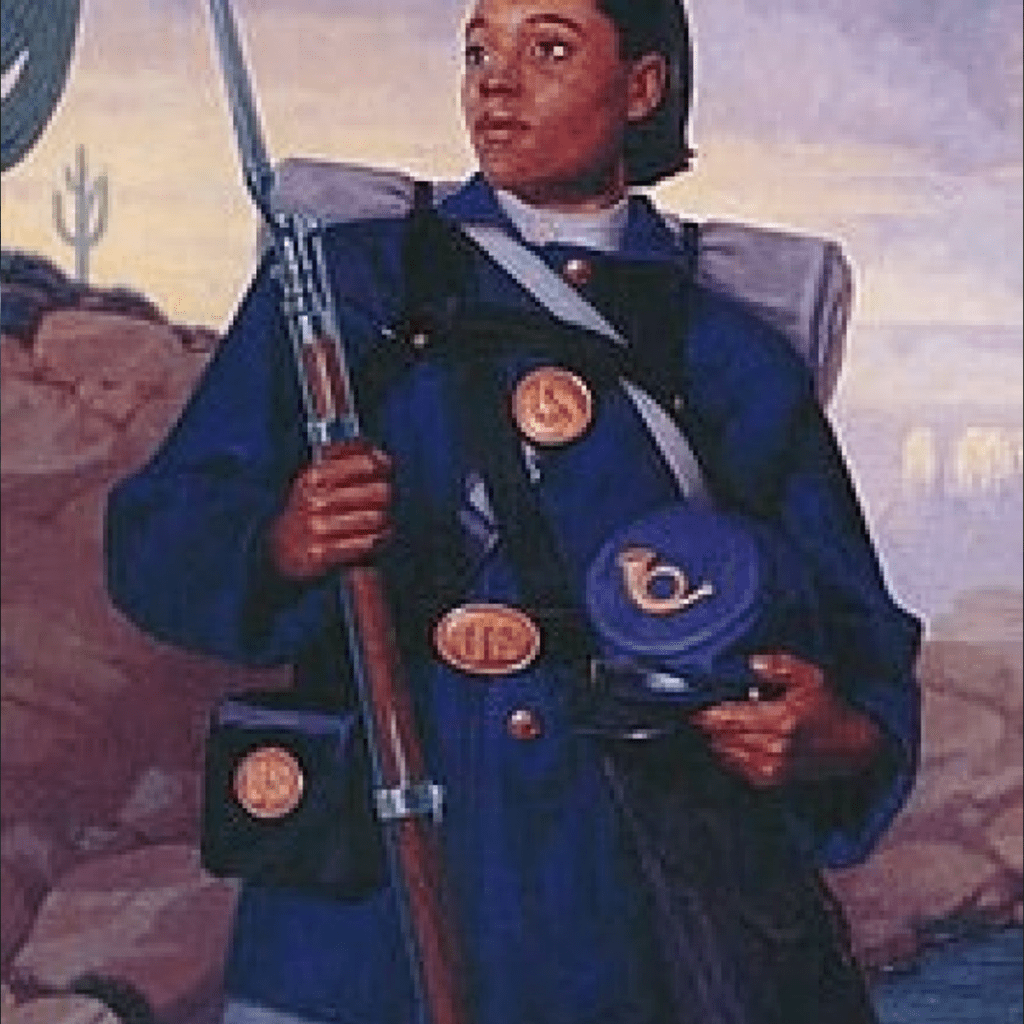
Also of interest is that at Fort Cummings, “Buffalo Soldiers” — black soldiers — were stationed there and at Fort Selden just north of Las Cruces. One of those soldiers was Cathay Williams, a woman who disguised herself as a man to serve from 1866-68 at Fort Cummings. She is believed the be the first black woman to serve as a soldier in the U.S. Military in the 19th century. https://en.wikipedia.org/wiki/Cathay_Williams
And we discovered this final interesting personal connection. At some point during Fort Cummings history, an attempted mutiny was staged. When the soldiers who attempted the mutiny were put on trial, their attorney was Thomas B. Catron, the infamous “Santa Fe Ring” lawyer https://en.wikipedia.org/wiki/Santa_Fe_Ring who represented Interior Secretary Albert B. Fall during Teapot Dome scandal. https://en.wikipedia.org/wiki/Thomas_B._Catron
My wife and I knew his great, great grandson, Fletcher Catron, when we lived in Santa Fe in the 1970s. As I recall, Fletcher frequently took time to defend some of the suspect dealings in which his great great grandfather was allegedly involved.
It just goes to show that when you start poking around with New Mexico history, you’ll never know what you might find.
And of course, the only history that interested Chester was the trail of where a jackrabbit might have run across the desert earlier that day.

*Jack says the Bureau of Land Management, on whose land most of the old fort rests, never took action on his proposal to place the property on the National Historic Register. The BLM has placed some signage with historical information around the property but a more robust interpretive display along with a better preservation plan would be appreciated by visitors.
 aero-cordero.com
I’ve visited a few times and have a book about it. When we took the scout troop they helped preserve a trail. Cool place
LikeLike