On Memorial Day a few years ago, I wrote a blog about Lt. Hans Chorpenning, a cousin of my wife’s mother*, who died on his first mission aboard a B-17G bomber shortly after D-Day in 1944. It was a tragic story of a handsome young man, willing to serve his country in a job that had very low chances of his survival. It’s not unlike thousands of other stories of brave young men and women who died in World War II.

We recently started watching “Masters of the Air,” a series streaming on Apple TV about men in the 100th Bomb Group of the U.S. Army Air Corps who flew B-17s over Europe during World War II. The series, produced by Tom Hanks, Stephen Speilberg and Gary Goetzman, is based on the book of the same name by Donald Miller and is similar in presentation to the series “Band of Brothers.”
Hans’ squadron was the 349th, which was part of the 100th Bomb Group. I highly recommend the series for anyone interested in World War II, especially to learn about the bravery and almost insurmountable odds of survival these young men faced during their missions to stop the Nazi war machine.
In my first blog, I said Hans was navigator on a B-17G named the “Terrible Termite.” My wife did some more research and discovered that the plane’s name was “Pack of Trouble.” We originally thought that the plane was hit by fire from a German fighter plane on June 12, 1944, near Dunkerque and exploded over the English Channel. Further research by my wife showed that the plane’s right wing was instead hit by German flak which started a fire between the No. 3 and No. 4 engine. The right wing broke off, but one crew member, George Sherback, was able to parachute out of the plane before it exploded. He was captured by German soldiers, held in a prison camp and later liberated.
In a memory of the event written by Sherback, he noted that Chorpenning asked him to wait a minute before bailing out to see if a crew member who had been injured in the foot could be helped. When the injured man said nothing more could be done to save him, Sherback bailed out. Chorpenning apparently hesitated a little longer, possibly still hoping to save his buddy, and died seconds later in the explosion. In “Masters of the Air,” there is a similar scene where a crew member trapped in the B-17’s ball turret could not be released by another crew member who concluded he could no longer help and bailed out. That plane crashed a short time later and the ball turret gunner died but the crewman who parachuted lived. It seemed that the slightest hesitation, for whatever reason, could cost you your life during these dangerous missions.
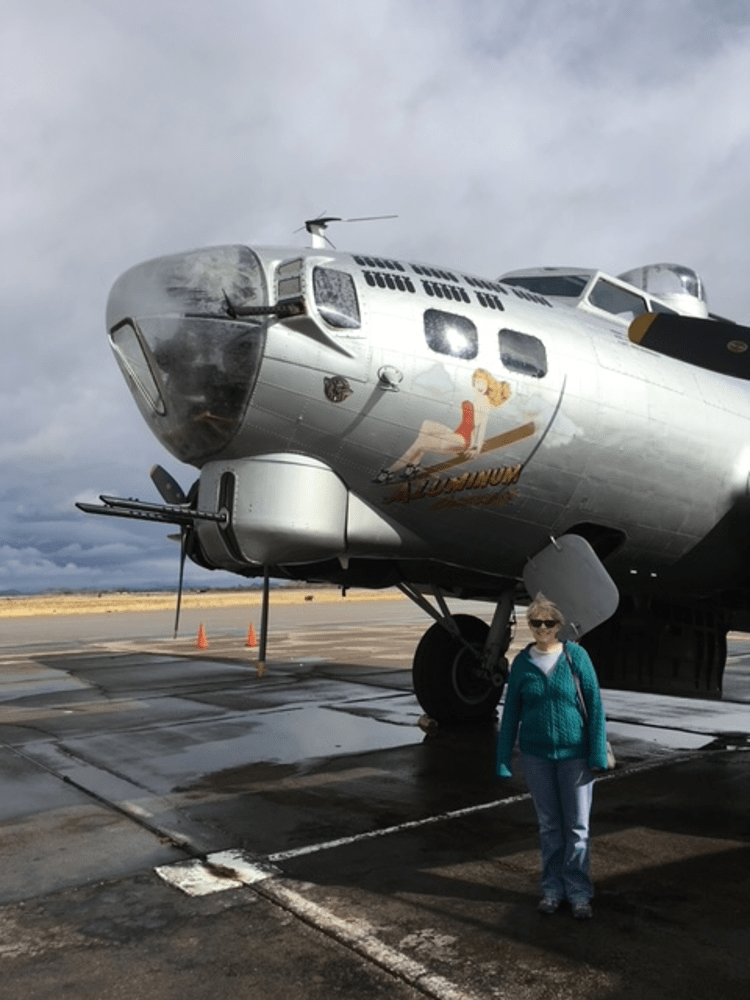
Chorpenning was posthumously awarded the Air Medal and Purple Heart and his body is in the “Tablets of the Missing” section of the Ardennes American Cemetery in Belgium.
We have not finished the series yet, but we’ve concluded that it’s highly likely that Chorpenning knew some of the men of the 100th Bomb Group who were featured in “Masters of the Air,” even though he was on duty in England such a short time before his life was cut short. We hope to learn more as the series continues.

A humbling lesson that I’m getting out of the series is the amount of bravery and sense of duty these men possessed to fly these missions day after day, knowing that the odds were stacked against them.
And another takeaway is the sadness that we still have to face wars around the globe because of men like Hitler who think they have the right to rule the world.
*He may have been my wife’s “second cousin, once removed.” Someone once tried to explain “second cousin once removed” to me and I looked it up online. I’m still confused and probably got it wrong. I guess I should just say Chorpenning and my wife Margo were “related.”
 aero-cordero.com