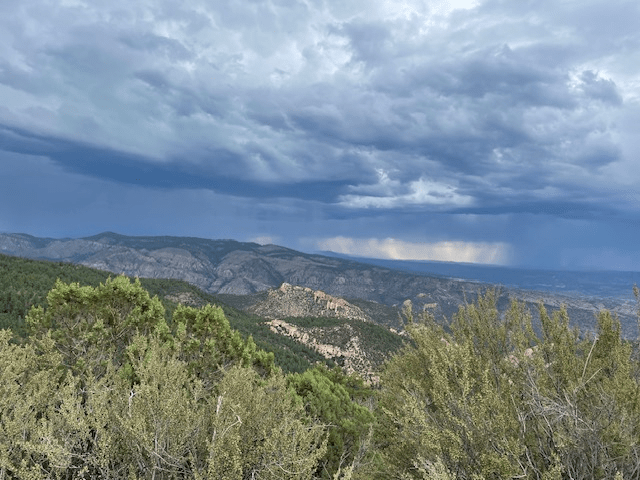
When the word “wilderness” is mentioned, I suspect most people visualize a towering range of snow-capped mountains, unending lush conifer forests, broad meadows with rushing rivers flowing through them and waterfalls tumbling from cliffs into a valley below.
In the Gila Wilderness of southwestern New Mexico, you don’t get much of that. It’s a place many people understandably might not love. On the north facing side of deep canyons, there are spruce and fir forests while cactus, scrub cedar and stunted pinon grow on the opposing south facing slopes. You can go from a valley filled with tall ponderosa pines and grassy meadows to a high Sonoran desert in just a few miles. Rock formations bordering on the grotesque are everywhere. It’s a hard but spectacular place.
In simple terms, the Gila can be described best as a place with incredible contrast.
My wife, daughter and two grandchildren spent three days in the Gila country last week, a visit which helped me appreciate it even more than the first time I saw it. The Gila Wilderness itself turned 100 this year, established in 1924 through the efforts of Aldo Leopold. Despite seemingly more traditionally magnificent potential wilderness areas, the Gila was the first such designation in the United States.

Leopold, a pioneering and visionary ecologist who was assistant district forester for the Southwestern national forests, saw the great beauty in the contrasts of the Gila country and persuaded the fledgling U.S. Forest Service to designate the area as a wilderness in the early 1920s. His vision helped inspire the 1964 Wilderness Act that now preserves the wildness of more than 109 million acres of federal public lands throughout the United States.
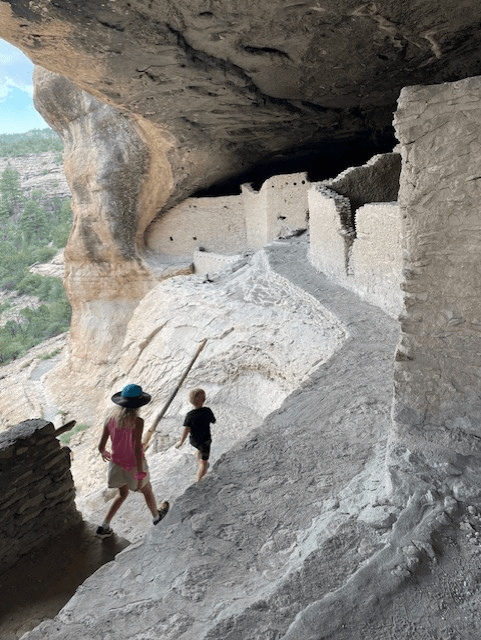
In the heart of the almost 560,000 acres of wilderness is the Gila Cliff Dwellings National Monument, which we visited on our trip. It is where the Mogollon culture of the Puebloan people built rock homes in south-facing caves along one of the canyons leading into the west fork of the Gila River. First believed to have been occupied in the late 1200s, the dwellings were abandoned a mere 30 years later.
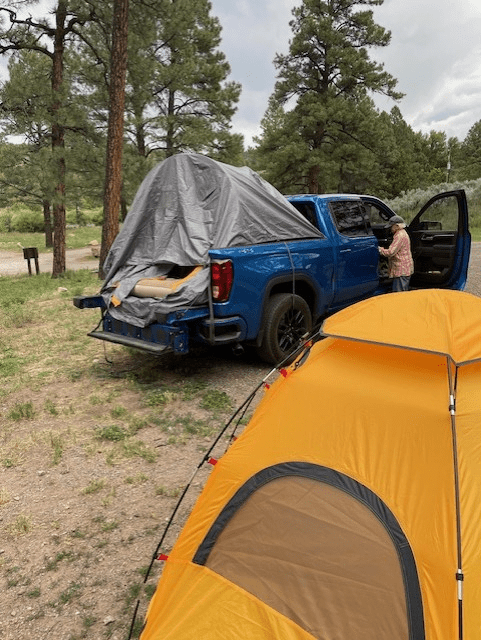
Our trip included one night of overnight camping, which my wife and I used to do a lot when we were first married. I have to admit it’s gotten a bit harder as I’ve aged and my first few hours in the camper tent in the bed of our pickup were not comfortable. But as the night wore on, I enjoyed being able to peek out and see the incredible display of stars overhead and smell the fragrant ponderosa pine forest.
All in all, it was a great experience. Cooking dinner outdoors with a (safe) campfire crackling nearby always makes for a memorable evening. Hikes with grandkids were fun as they learned about the wilderness and the cliff dwellings. Our only real disappointment was not being able to help the two youngsters catch a fish, but we’re working on that for next time we go out. exploring with them
In the meantime, I hope you’ll be able to enjoy a trip to the Gila country soon. I worry about it because it is so fragile now that climate change has diminished the amount of rainfall replenishing the forest each year. Two huge forest fires have ravaged parts of the wilderness, including a tiny creek that I thought was the most spectacular place I’ve ever fished for trout.

Knowing that there is an unspoiled place like this so close to where I live always makes me feel good.
 aero-cordero.com