For some reason that we can’t explain, the hollyhock flowers we have on the east side of our house have exploded into more blooms than we’ve ever seen before from the humble plants that are honestly really close to just being weeds.

We planted some of these years ago and have had a few stragglers show up every year, but not in the number that decided to be so boisterous this year. One of the darker red varieties came from seeds that I took from a spectacular hollyhock plant growing in the front of the historic San Francisco de Asis church in Taos years ago. The others were from seeds gathered here and there from friends and neighbors.
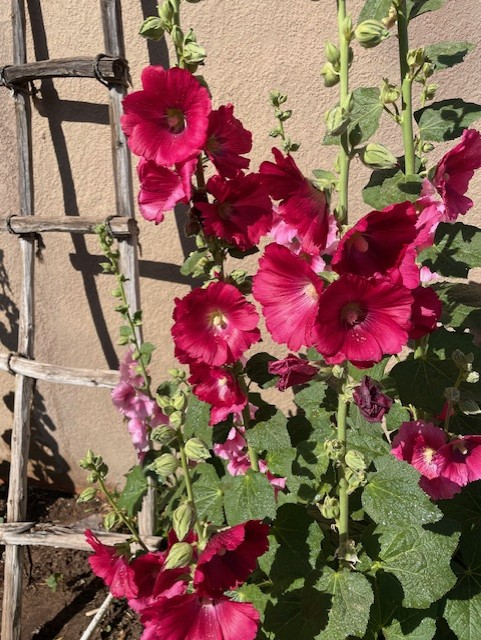
Since the flowers showed up so abundantly this year, I decided to do a little more research on hollyhocks and found some interesting things. They are known as alcea, part of the mallows family. There are more than 60 varieties of hollyhocks and more than 4,200 species of mallows. Unfortunately, one of the most degenerate of those species is okra, which I personally believe should be banned from the earth — but that’s another story. Hollyhocks originated in Asia, where they are still highly valued today.
Most hollyhocks have a two year life, with the first year establishing leaves and a good root system, then the second year showing off their blossoms. When the seed pods dry, they scatter hundreds of seeds on the ground, many of which will spring up the following year.
We’ve always finding hollyhocks around our yard in places we never planted them, like in my wife’s vegetable garden. We left the plant there because hollyhocks are known for attracting pollinators like bees, butterflies and hummingbirds which help spread pollen to make my wife’s annual corn crop produce some mildly edible ears.

The first hollyhock to bloom this year was another volunteer, which wedged itself between our driveway and the dry streambed in the front of the house.

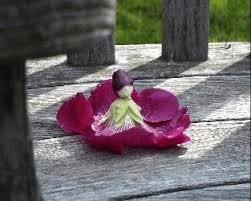
As a kid, I remember my sister making hollyhock ladies, which my wife did as well. There are lots of sites on the Internet on how to make them in several varieties.
I also looked up hollyhock lore and discovered that in New Mexico, they are often called Las Varas de San Jose. Here’s an article I found on the interenet:
In New Mexico, hollyhocks are called “Las Varas de San José,” representing St. Joseph’s staff which, according to legend, was transformed into hollyhocks. According to a legend, God turned St. Joseph’s staff into hollyhocks to signify his approval of his marriage to Mary.
According to sources on the internet, planting hollyhocks near the entrance of your home wards off evil spirits. Another source says they offer strength and endurance.
I also found a reference to hollyhocks on a website called “The Witchery Arts.” It claimed that the flowers “are a positive influence to the witch’s garden, along with fairies, bees, butterflies and white magic.”
I think most flowers are seen as having a positive influence on one’s home and garden — well with the possible exception of deadly nightshade. I think we’ll leave that out of our garden and let Georgia O’Keefe’s paintings give it exposure from afar.
 aero-cordero.com