This blog started off in my mind to determine if there were any cobblestone streets in New Mexico like the ones we encountered on our recent trip to San Miguel, Mexico, where virtually all streets in the historic downtown area are paved in rounded rocks.
I was fairly certain that we’d find none of those in New Mexico, despite Spanish and other European influences in our state’s early history. What was prevalent in most of New Mexico towns were basically just adobe streets that were dusty during the dry times and muddy bogs during the monsoon or winter seasons.
I did, however, suspect that the next closest thing to cobblestone streets would be streets paved with bricks, most likely in cities in eastern New Mexico. Many towns in west Texas that I’m familiar with had brick paved streets, particularly in the downtown areas. Lubbock and Amarillo specifically come to mind. Some brick streets in Lubbock were partially built by the Works Progress Administration, an effort by Franklin D. Roosevelt’s “New Deal” program to pull America out of the Great Depression. None of Amarillo’s streets appear to have been constructed by the WPA.
(An interesting side note I found online said that Lubbock decided it wanted to make itself look better with fancy brick streets when a decision was made to locate what is now Texas Tech University in that city rather than competing northern neighbor Amarillo.)

At any rate, the only old brick streets I could find in eastern New Mexico were in Clovis, apparently not built by the WPA. (I suspect there are others, and if you have knowledge about them, let me know. There are currently brick streets around the Mesilla Plaza, the Albuquerque Old Town Plaza and the Santa Fe Plaza, but those are relatively new, added to give character to these historic locations.)
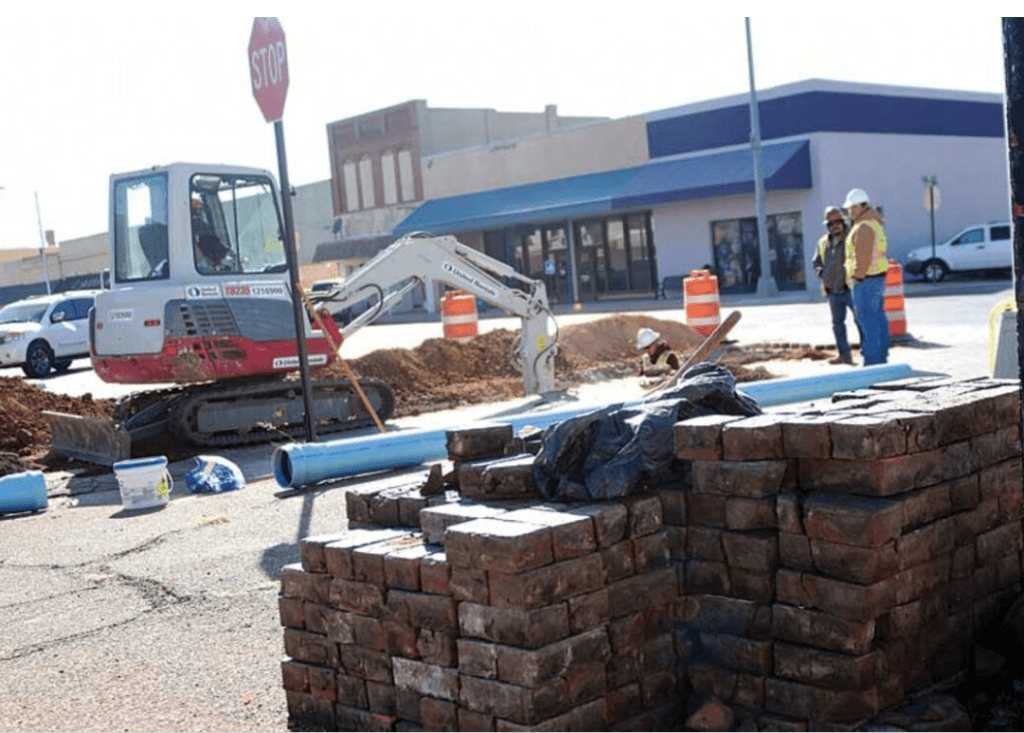
I found an article in the 2018 edition of the Eastern New Mexico news that brick streets in Clovis were being refurbished. Articles I have found only date the brick streets to “the early 1900s.” The area of the brick streets is now a focal point in downtown clovis, including the refurbished “Hotel Clovis” which was claimed by developers to be the tallest building between Dallas and Albuquerque when it was built in 1931.

When doing research on WPA projects to identify possible brick street construction, I discovered that there had been more than 360 construction projects in New Mexico conducted through that program, several here in Las Cruces and in my home town of Ruidoso.
There were several buildings on the New Mexico State University campus that were constructed or expanded by the WPA, including Goddard Hall, Milton Hall, Dove Hall and Kent Hall. Artwork by artist Tom Lee was produced through the WPA program for the Branson Library.
Both the old Court Junior High School Building and the old Dona Ana County Courthouse were partially constructed with WPA program money and there is artwork in the old Branigan library that was funded through the WPA.
In Ruidoso where I grew up, there is an old gymnasium built by the WPA where I once played my only game as a member of the junior high school basketball team. I recall that I forgot which goal was ours and began running toward the wrong one when the coach’s loud yell quickly corrected my lack of directional acuity. That building still stands today as well as an old metal lookout tower in the middle of town where I frequently climbed to take in the views.


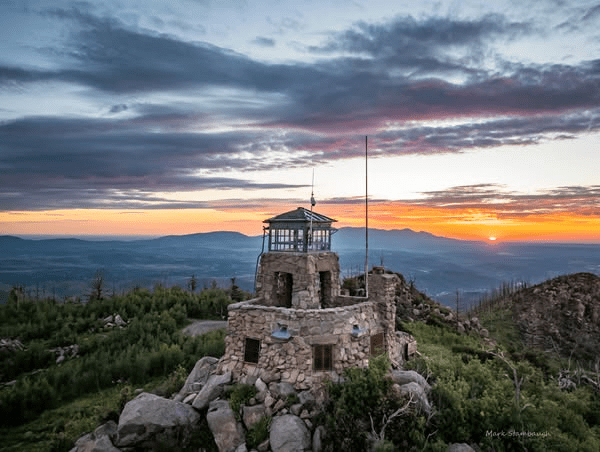
One of the most memorable structures near Ruidoso that was done by the WPA was the Mon Jeau lookout tower, a few miles north of the city on the top of a 9,603 foot high ridge. Beautifully constructed of rock in the late 1936 and then updated in 1940, the tower overlooked the northern part of the Lincoln National Forest. It was seriously damaged during the Little Bear 2012 forest fire which raged through area. It was always one of my favorite places to go when I was growing up in Ruidoso.
 aero-cordero.com