As I’ve done many times in the past, I did a presentation to a group of elementary school students last week about hot air ballooning. I usually did a demonstration with my balloon on the school playground, but since I no longer have a balloon and stopped flying about four years ago, this presentation was just in the classroom.
The students were third graders at White Mountain Elementary in Ruidoso, where you may remember that I’ve done work with the Trout Unlimited “Trout in the Classroom” program. One of the teachers at White Mountain Elementary remembered that I was a hot air balloon pilot and asked me if I’d talk to her class about that. I was honored that she had asked and agreed to do a presentation to about 140 third graders since I had to travel to Ruidoso last week for another event.
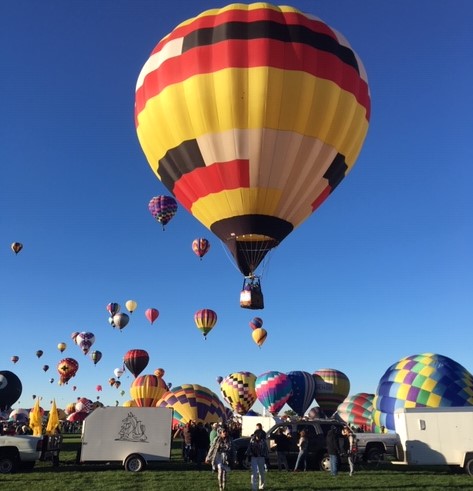
The presentation by PowerPoint went well enough, I thought, based on the attentiveness of most of the eight- or nine-year-olds and the questions they asked. They usually want to know things like how far I fly, how high above the earth can I go, where I can fly and whether I get scared when I’m in the air.
I tried to be sure to answer questions randomly around the group of students gathered in the school cafeteria. Toward the end of my time, there was an especially attentive young girl who kept poking her hand up every time I paused for a new question. I decided to call on her and her question was this:
“Why would you fly in a balloon when you could just walk?” she asked.
I have to admit I was perplexed with that question.
I attempted to answer by rambling on about why we should be curious about discovering new things, like flying, and saying that the view from above would be much more interesting than just walking the three or four miles traveled in a typical balloon flight.
But she did have a bit of a point, except that you usually don’t travel in a hot air balloon just to get somewhere. In fact, most of the time I flew balloons, I never knew exactly where I was going to end up, given the variables of winds at different altitudes. I think that’s one of the things that makes ballooning interesting — it’s an adventure, not just a boring destination-specific exercise.
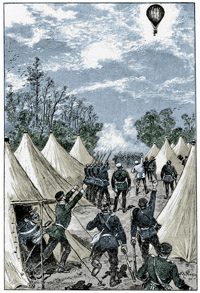
And to add a bit of historical background, some early ballooning did have destinations in mind, such as in the Siege of Paris in 1870-1871 when the Prussian Army surrounded the French city. Unmanned hot air balloons — no doubt following the discoveries by the Montgolfier brothers — flew mail and communications from the inside the city to sympathizers in the surrounding countryside to help with breaking the siege.
But I was really more curious about why this young girl didn’t see the value in pursuing the unknown — like giving humans an opportunity to fly above the earth.
As I pondered her question the rest of the day, I could think of other examples. What if we hadn’t pursued inventing a phone that we could communicate with anyone else on the earth. What if we just continued to use smoke signals to communicate with nearby friends and neighbors? What if we hadn’t invented a phone that we could take with us anywhere?
What if we hadn’t invented things like comfortable homes, plumbing, electricity, heating and cooling so we didn’t have to live in dark, cold caves the rest of our lives.
What if we hadn’t become interested in fire and figured out a way to harness it to cook our meals and heat our homes.
In the end, I’m not sure I ever understood the core of her question. But she was right. Flying in a balloon just to get from point A to point B is a pretty dumb way of doing things, involving a lot of work that good two feet could do more efficiently.
 aero-cordero.com