One hundred years ago on this date, the modern space age began, thanks to a physicist, engineer and inventor who spent much of his time perfecting liquid fuel rockets in the high plains of eastern New Mexico.
Robert H. Goddard’s first liquid fuel rocket launch happened on March 16, 1926, in Auburn, MA, on what he called “Aunt Effie’s farm.” The crude contraption, which he named “Nell,” used gasoline and liquid oxygen as a propellant to blast it upwards for 2.5 seconds before turning downward and crashing in a snow-covered cabbage patch.
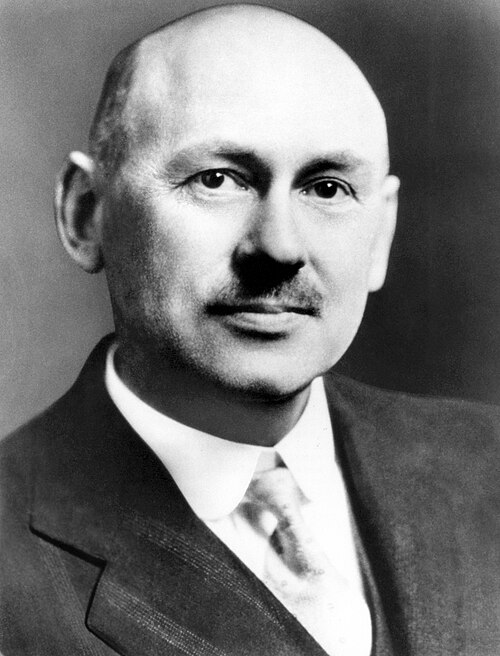
Although not a truly auspicious first attempt, Goddard and his team proved that liquid fuel rockets had the potential to fly higher and further than the solid fuel rockets that had been the staple of Chinese-invented fireworks since the Tang Dynasty 1,000 to 1,400 years earlier.
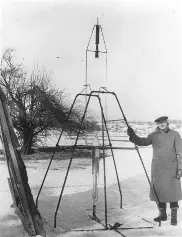
Goddard was an inquisitive young boy, whose experiments at an early age and in college led to fires, smoke, explosions and other minor catastrophes. His interest in space travel began when he was 16 after reading the classic science fiction novel by H.G. Wells, “The War of the Worlds.”
Pursuing his passion through college, Goddard became concerned that the United States was not seeing the potential of his liquid fuel rockets. He also noted that Germany had been interested in his experiments and feared that country would surpass the United States in rocket development.
According to an entry in Wikipedia: “He knew that the Germans were very interested in rocketry and said he “would not be surprised if the research would become something in the nature of a race,” and he wondered how soon the European “theorists” would begin to build rockets.“
Fortunately, some top research colleges were beginning to see the potential of Goddard’s work and enabled him to establish a manufacturing and test facility in 1930 in the Eden Valley near Roswell. The site was ideal because of its remoteness and the ability to conduct experiments without much public attention.
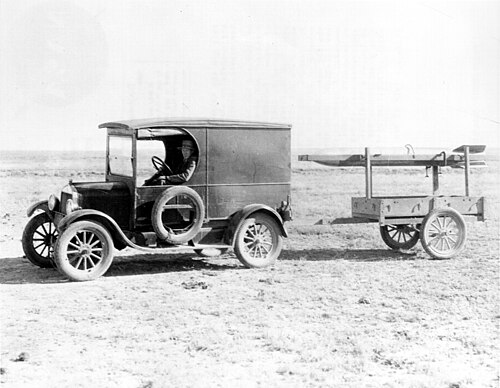
He began designing more and more sophisticated rockets, using gyroscopes, fuel pumps and internal and external devices to steer the devices once they left the launch pad.
Germany continued its research, which led to its formidable V2 liquid fuel rockets used toward the end of World War II. After the war, several of those were captured, reverse engineered and then tested at White Sands Missile Range. It was the beginning of man’s efforts to travel to the moon, which Goddard had envisioned when he began realizing the potential of his rockets.
There is a wonderful display about Goddard and his work in Roswell at that city’s museum, including a replica of the workshop he used to fabricate his rockets. There is also much more about Goddard online, including an extensive Wikipedia entry at:
So this evening if you gaze up at the sky and perchance see a satellite sailing overhead, remember Goddard and his work which began this day 100 years ago and was perfected in our own state.
 aero-cordero.com