I wrote recently about the fact that New Mexico does not have any toll roads, although a “smishing” effort that reached a lot of people in our state claimed that we have one. I got a letter or an e-mail from the scammers suggesting I had not paid a New Mexico toll road fee recently and that I was in big trouble if I did promptly provide my credit card number and other personal information. I declined.
(However, if you read that blog, you’ll learn that one New Mexico’s northern Pueblos made a short-lived attempt to impose a toll fee for motorists passing through its lands in the late 1970s. Here’s the link https://aero-cordero.com/2026/03/31/we-kind-of-had-one/)
And as far as our state highways go, we also are on the short end of the number of tunnels in our state.
As best as I can count, there are three in our state, but only one of which is kept open all year long and used daily.
In the Jemez Mountains north of Albuquerque, there are two tunnels on a state road that is open on a seasonal basis. Those are the Gilman tunnels, carved out of solid rock to originally serve a railroad route into the mountains to transport timber. The two short tunnels were constructed in the early 1900s by the long-defunct Santa Fe Northwestern Railway and named after a railroad executive, William H. Gillman.
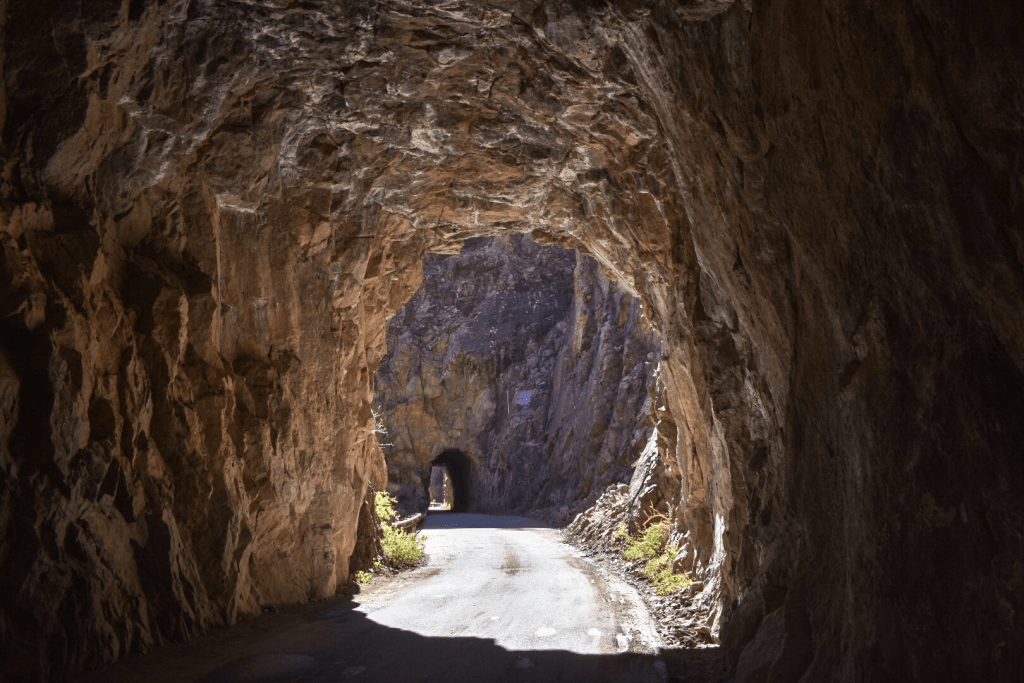
They are both located on New Mexico 285 along the Guadalupe River. You can tell by the high and narrow architecture that they were originally intended for locomotives and rail cars. The state highway connects to an unpaved U.S. Forest Service road a short distance from the two tunnels.
At least two movies have featured the tunnels, “3:10 to Yuma” filmed in 2007 and “The Lone Ranger” made in 2017.
The Santa Fe Northern Railway folded in 1941 after suffering financial difficulties during the Great Depression and experiencing severe damage to its route during flooding in the narrow canyon in the Jemez Mountains in the late 1930s.
The best-known highway tunnel in the state is along U.S. 84 between Alamogordo and Cloudcroft. Opened in 1947, the 528-foot-long tunnels has become a staple of the dramatic drive between the Tularosa Basin desert surrounding Alamogordo and the cool mountains of Cloudcroft at almost 9,000 feet above sea level.
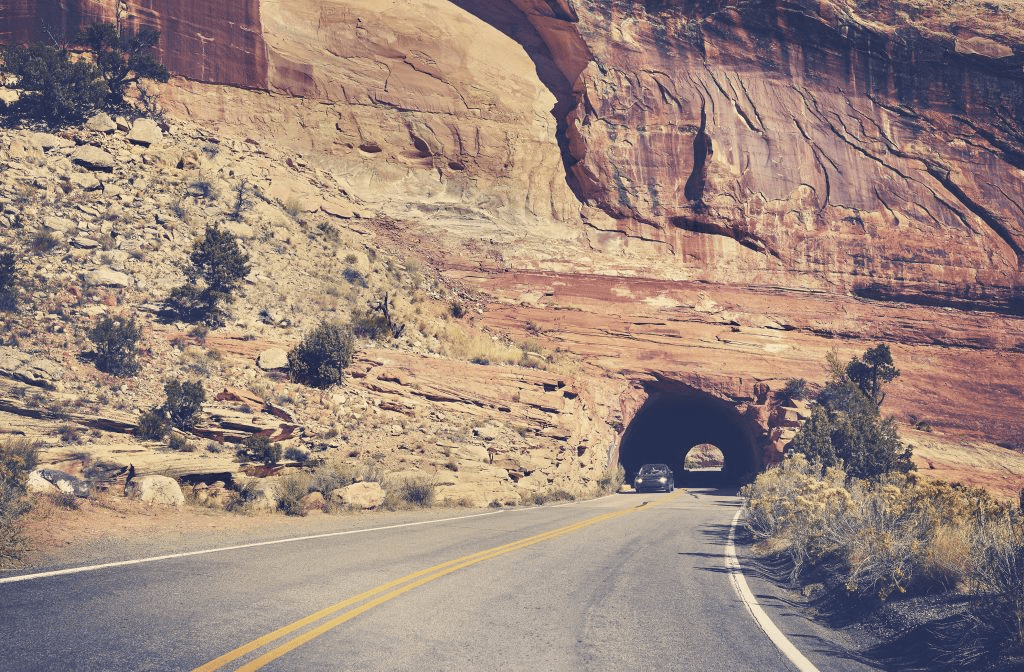
As a newcomer to New Mexico in the 1950s, I vividly remember our family’s first drive through the tunnel, with windows open and our father constantly honking the horn on our pea-soup green Plymouth sedan as we negotiated the short passageway through solid rock. I still shamelessly honk my horn with my children and grandchildren in the car when we drive through it. (I think I even do it when no one else is with me in the car.)
Before 1932, a trip from Alamogordo or Las Cruces to Artesia required drivers to navigate a steep and winding unpaved road up the west side of the Sacramento Mountains, then through the forests on top of the mountains and then along the Rio Penasco to the east.
In 1939, a group of businessmen from Alamogordo, Tularosa and Cloudcroft met with state officials in Santa Fe to propose a faster route. State officials agreed to fund the project, although construction did not begin until eight years later.
At $2 million, it was said to be one of the most expensive sections of highway ever built in New Mexico at the time. The state specified that no section of the road could have more than a 6 percent grade. Two long truck escape ramps were included as part of the construction, along with the famous tunnel. Some Native American artifacts in a cave on top of the tunnel had to be removed as part of the construction.
Amazingly, it was completed in just two years, with the grand opening on Nov. 20, 1949, in a ceremony attended by a crowd estimated at 1,000 people.
Over the years, the tunnel has been reinforced and is still occasionally closed to remove falling debris as the canyon sheds its rock and plant formations.
And it’s still a great place to get in your childhood “honks.”
 aero-cordero.com