A good friend recently sent me an article from a veterans group publication called “Together We Served” regarding use of camels by the U.S. Army in the Southwest in the mid 1800s.
Given that camels and deserts go together like peanut butter and jelly, it wasn’t surprising to find out that many of these creatures ended up in New Mexico’s arid landscape during the U.S. Army’s Camel Corps experiment.
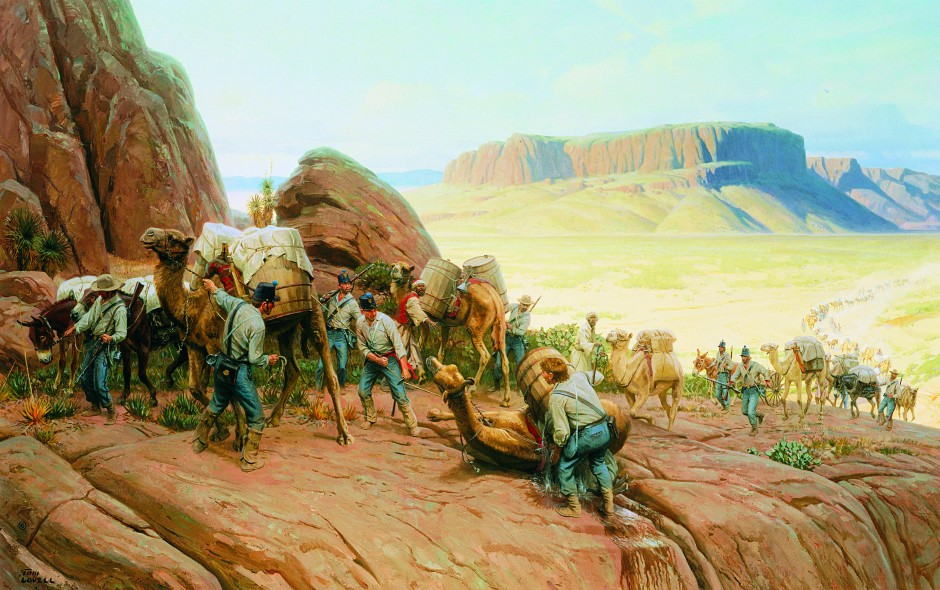
From information I gleaned from various online sources, Congress approved $30,000 (more than $1 million in today’s economy) in 1855 to purchase a herd of camels to determine whether they would be useful to the U.S. Army in transporting supplies around the arid parts of the rapidly expanding West. The camel purchase was encouraged in Congress by then Mississippi Sen. Jefferson Davis, who had learned about previous successful experiments by Army Maj. Henry C. Wayne in using the animals for transporting supplies.
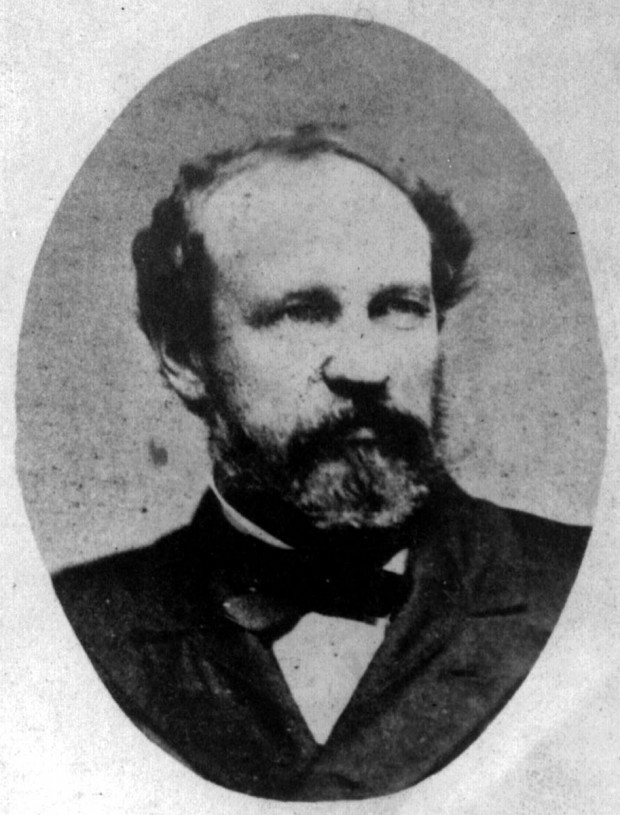
Wayne was dispatched to the Mediterranean to acquire a herd of the animals. According to Wikipedia, 33 camels were purchased in Tunisia, Malta, Greece, Turkey, and Egypt. Along with the purchase of the camels, saddles and other accoutrements, Wayne’s expedition also recruited five camel drivers from Arabia and Turkey. The animals, camel drivers and associated gear were brought to a military installation in San Antonio, TX. Later expeditions to buy more camels and natural births resulted in the Army having up to 70 of them at one point.
The first major use of the beasts was to support a survey for construction of a planned wagon road through the west roughly along the 35th parallel. The party started in San Antonio, went though Fort Davis, El Paso and Albuquerque before heading further west to the Colorado River in Arizona. The camels appeared to be well suited to the journey. None of them died, including one that was bitten on the leg by a rattlesnake. Ironically, five mules died on the same arduous journey.
Another experiment to have the animals haul mail from Fort Mojave, New Mexico Territory, to points west was unsuccessful
The program ended as a result of the Civil War, likely in some part due to the fact that Jefferson Davis, who became president of the Confederate States of America, had pushed forward the camel experiment when he was a member of the U.S. Senate. Another more amusing story is that the industry that supplied mules to the military saw the camels as encroaching on their monopoly and urged Congress to stop the program. An article that I ran across when researching this story called the group “the mule lobby.”
Many of the animals escaped and wandered through the desert Southwest during the time the Camel Corps was operating. There was the legend of the “Red Ghost” in Arizona in which a red-haired beast with a skeleton on its back terrorized communities on the eastern side of the state from the 1880s to the early 1890s. The animal turned out to be a reddish-colored dromedary camel with a human skeleton that had somehow become permanently attached to the animals back when it was being ridden.
Here’s a link about the “Red Ghost” if you want more information:
https://www.google.com/search?q=Red+terror+cam
Famous World War II Gen. Douglas MacArthur, who as a boy lived with his family at Fort Selden north of Las Cruces, said he once spotted a sole wandering camel in the New Mexico desert. And just a few years ago, New Mexico State University hosted several camels at its experimental range northeast of the Dona Ana Mountains. According to a good friend who retired from the NMSU College of Agriculture, Consumer and Environmental Sciences, those animals were not part of an organized program.
Although the camels were well suited as beasts of burden in arid climates, they could also be very cantankerous. An article in the Army Historical Foundation’s website noted that camels in the corps could “demonstrate a violent, aggressive temper when abused or mistreated, literally kicking, biting or stomping an antagonist to death. Camels, like cows, chew a type of cud and when annoyed would often spit a large, gelatinous, foul smelling mass of cud at its detractor.”
My only experience with a camel, other than at a zoo, occurred one fall when I was walking along the bosque trail next to the Rio Grande in Albuquerque’s north valley. In the yard of a large estate, I noticed what I first thought was an odd-shaped horse ambling toward me on the other side of the fence. As it got closer, I realized it was a camel that was clearly interested in me. When it got to the fence, it began this vibrating guttural sound as if its lungs were about to spew out of its chest. I think it expected me to give it a great, but I had nothing with me. After few minutes, it gave up hoping that I would guess what it wanted and wandered off. I’m glad it didn’t spit out a “large, gelatinous, foul smelling mass of cud” at me.
 aero-cordero.com
In Arabia I attended a camel race – sheer anarchy. The camels were milling in a confused muddle when the gun sounded. Off they went with those pointed in the right direction in the lead. They ran with the grace of an adolescent boy. There were a couple of Europeans on the camels.
While camping, my wife once gripped my arm and exclaimed “There is a camel in the tent.” She exaggerated; only the head.
LikeLike