You can always tell a true New Mexico resident by these three behaviors:
When it rains, we stand outside getting wet it to fully immerse ourselves in the rare phenomenon.
We spend too much time deciding whether to order green or red chile on our favorite Mexican dish.
We always complain about how many Texans are around.
In Tuesday’s Albuquerque Journal, there was a story that Texas has erected a razor wire barrier in southern Dona Ana County to keep people in New Mexico from entering the Lone Star State.
For years, many of us in New Mexico secretly wished we could erect some kind of barrier to keep Texans away. They overwhelm our favorite spots like Santa Fe, Ruidoso, the Gila and Pecos Wilderness, Taos, Gallup, our ski areas and our favorite camping, hiking, hunting and fishing spots. This feeling has been evident for decades. Territorial Governor Manuel Armijo, who served three terms from 1824 to 1846, was once quoted as saying: “Poor New Mexico! So far from Heaven, so close to Texas.”
I’m not going to venture into the politics of the issue of border fences. The move to install fencing near Sunland Park was the latest effort by Texas Gov. Greg Abbott to stem the influx of migrants from central and south America into his state. He claims that too many migrants are dodging the barriers he has installed along the Mexico border near El Paso and are now coming to Texas by a more circuitous route through New Mexico.
My first thought about this concerned future trips to see our daughter and grandchildren in Austin. If things get too serious, I guess we’ll have to drive to the northeast corner of the state to cross into Oklahoma, then drive through the Texas panhandle to get to Austin.
And if serious repercussions gain momentum in the Land of Enchantment, maybe we’ll erect anti-Texan barriers on our southern and eastern borders and won’t see as many black and white license plates with a lone star at our favorite places.
Banned in New Mexico?
___________________________________________
Briefly on another subject, I have agreed to serve as an early voting election official again starting this week and going through the election on Nov. 7. I did this last year for the general election. This election is for local races in the various communities in the county, as well as school board positions.
I’m sure it won’t be as intense as the last election, but it will keep me occupied for a couple of weeks and my posts may be limited during that time. I’m sure I’ll have things to discuss when I’ve completed the job.
Sometimes, you get weird inspiration while you’re tossing and turning in bed trying to go to sleep. This is the story of one such inspiration.
In 2018, a total solar eclipse passed directly over my wife’s family farm in Nebraska. We had thought about going there to view it, but making the trip became somewhat complicated. We (mostly my wife) later regretted not making the 12+ hour drive to get to Cozad to view it.
So this year, when we learned there would be an annular eclipse right in our own state in mid-October, we concluded were not going to miss this opportunity. I started thinking about it during one of my not-so-restful nights.
The path of the eclipse went directly over Albuquerque and down further south in the state close to Roswell. We thought about going those places, but decided they were either too far away or would be too crowded. Then I looked at map projecting the path of the eclipse and found the perfect spot for viewing — Corona, NM, where we could see the sun’s corona in a really rural location. And then, on another restless night of sleep, I decided to make things even more interesting — adding add Corona beer to the equation and toasting the event with a bottle of the Mexican lager as the sky darkened to reveal the sun’s corona. I guess we could have added a fourth Corona — infecting ourselves with the Corona virus in Corona, but we thought better of that.
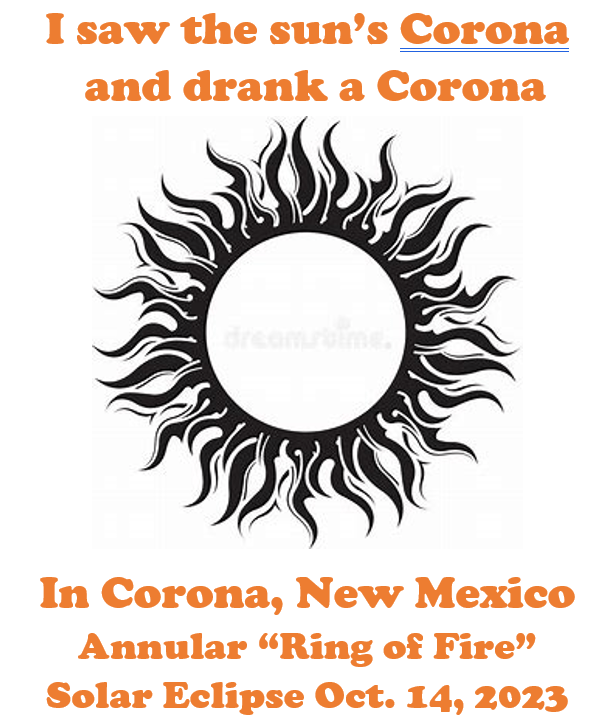
I began designing a t-shirt to fit the occasion. Here’s the design, printed on a black T-shirt:
I casually mentioned my plan to a good friend of ours, thinking he would blow it off as a really goofy idea. To my surprise, he texted me the next day saying he and his wife were interested in joining me and my wife on our adventure.
So the plan was set in motion. I ordered t-shirts, double checked the weather and planned our route so we would be there at the peak of the eclipse. We left early Saturday morning.
If you’ve ever been to (or more likely sped through) Corona, you know there’s not much “there” there. (I used to pass through there frequently when I was in college on my way back and forth from Ruidoso to Albuquerque. I even played high school football there on an all-dirt field that still remains, complete with goat-head stickers and other weeds instead of grass.)
I had surmised that we might be the only people strange enough to have ventured to such an out-of-the-way location to view the celestial spectacle.
I was wrong. When we got close to the central New Mexico village, we started seeing cars stopped along U.S. 54, the main route through that part of the state and the main drag in Corona (population about 250). Some of the vehicles had set up elaborate viewing stations with bazooka-sized telescopes and cameras with lenses as large as the Stanley Cup trophy.
We rolled into town and found a spot near the local Marathon gas station, where several other vehicles had gathered and figured it was as good a spot as we would find with a clear view toward the southeast sky. Even more vehicles rolled in. It became almost comical. The Marathon gas station became the most popular (and maybe only) retail spot in town that day, especially when people needed a restroom. At one point, the line to the unisex bathroom snaked out the front door.
Of course by that time, we were wearing our obnoxious black and orange/yellow t-shirts.
A woman named Angie who said she had lived in Corona for 28 years spotted us and came over to look at the shirts. She said she loved them so much that she wanted to buy one. I have her contact information and I’ll just send it to her for free. I’ll bet if we had worked on it, we could have sold 100 of them at a roadside stand.
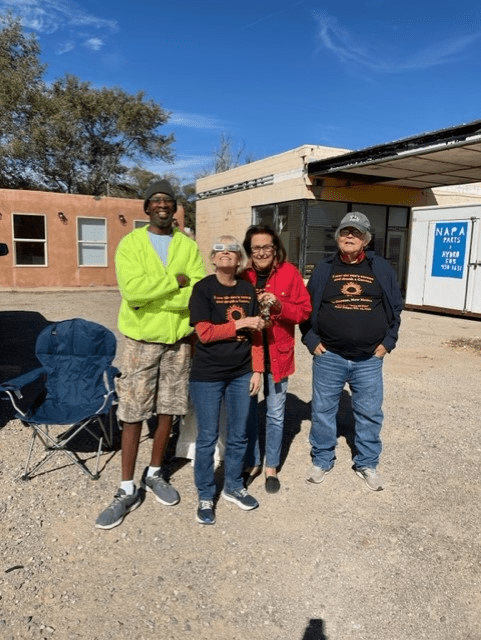
The Lambs and Taylors wearing our t-shirts, and ready to drink a Corona as the annular eclipse approached.
When the eclipse finally happened, we were surprised by two things. First, how cold it got when the sun was mostly blocked out. And even though the center of the sun was perfectly and symmetrically aligned behind the moon, the visible corona provided so much light that it was never anywhere near being dark. The available light was like you’d expect on a heavily overcast day.
We also met up with a really nice guy from El Paso, a former soldier at Fort Bliss named Ed, who cheerfully took pictures of us. I have his e-mail address and am going to try to send him a T-shirt as well.
Our new friend Ed with Margo and our great friends, the Taylors.
Overall, it was a really fun experience, with lots of laughs, a spectacular view of the skies and driving through some really beautiful areas of the state that most of us don’t get to see often enough.
The next really big eclipse is supposed to happen next year and will pass right over our daughter’s home town of Austin, TX. We’re planning to go and it will be fun, but I doubt as weird as the experiences we had in Corona.
What follows is important journalism, loyal readers! It may take a while to read and digest it all.
As I think I’ve mentioned several times in my blogs, I grew up in the southern New Mexico mountain community of Ruidoso in the shadow of Sierra Blanca peak.
Sierra Blanca is the tallest mountain in the southernmost third (maybe southernmost half if you count the Florida keys) of the United States.
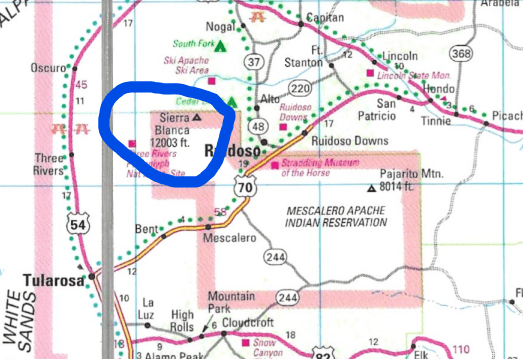
For as long as I could remember, road maps, charts, magazine and newspaper articles, travel brochures, signs and other points of information listed the altitude of the mountain as 12,003 feet.
But somehow, in the last 15 or so years, the “official” height of the mountain has been dumbed down to 11,981 feet — a full 22 feet shorter than what many people were led to believe for years.
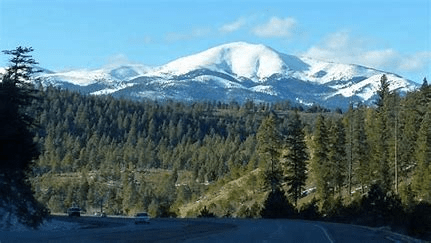
Sierra Blanca, an ancient and complex volcano that dominates the south central New Mexico landscape.
So what happened to those 22 feet? I can’t find the exact period of time when the maps started showing the lower altitude of the mountain top. Maps from the time when I lived in Ruidoso all showed the altitude at 12,003 feet. And I couldn’t find out who or what agency made the decision to officially downsize the altitude.
The newest New Mexico road map I have in my possession is a 1999 Rand McNally “Easy Finder” laminated quick fold edition, which shows the altitude of Sierra Blanca as 12,003 feet. If you can’t trust Rand McNally, who can you trust? (I have a lot more faith in them than Siri on my i-Phone for giving directions and accurate information.)
A section of a 1999 Rand McNally “Easy Finder” road map showing Sierra Blanca at 12,003 ft.
A book we have called “New Mexico Place Names” from 1965 lists Sierra Blanca as having an altitude of 12,003 feet. If I took the time, I’m sure could find many more documents with the 12,003 foot listing for the mountain’s elevation.
So who or what agency made the decision to make the altitude change. My logical thought was the U.S. Geological Survey. I found an 800 number of their website and called it, assuming I would get a mind-numbing and endlessly repeating list of menus with no live human ever answering.
To my surprise, after a number of rings, a real live guy answered the phone and was immediately engaged in my quest for information on this subject. He said he’d been with the agency for almost 40 years and loved weird quests such as mine. A true nerd like me, I suspected. He was very willing to help with my search for the truth.
He checked various sources at the USGS and found several current things showing that the mountain is listed in their current database as 11,981 feet. He scrolled over a digitized map from the 1950s and couldn’t find a pinpoint location for the top of the peak above the 11,950 foot line. He found another database from 1980 listing a height of 11,854. Then he found another document with an altitude of 11,974 listed for the top of Sierra Blanca.
But nothing anywhere in USGS documents he could find showed when the mountain was “downlisted” to its current sub 12,000 mark. (One theory he tossed out was that rising sea levels had reduced the elevation “above sea level.” That would have been a lot of rising of the sea that I think would have been noticed in Miami, New Orleans and a lot of small islands in the South Pacific.)
So what happened? After discussing it further with him, we both concluded that the 12,003 foot mark had been “Chamber of Commerced” way back when. I mean, what sounds better:
“A mountain more than 11,000 feet high”
or
“Soaring more than 12,000 feet above the New Mexico desert”
I think some local promoter from Ruidoso back when we had a sketchy system for determining elevations saw that Sierra Blanca was just shy of 12,000 feet and just fudged the elevation to be higher. Chamber of Commerce stuff, right? We’ll likely never know who that person was. If you have any information about this, I’d LOVE to hear from you. Otherwise, we’ll probably see the issue slide into the realm of conspiracy theories.
In Colorado, there are lots of mountains topping 14,000 feet. There are hikers who work to scale each of the state’s “14ers” in the state each year. (See website www.14ers.com).
At one point, there was dispute over which of Colorado’s two highest mountains was actually higher — Mount Elbert or Mount Massive. There was only 12 feet of difference between them, with Mount Elbert at 14,440 feet getting the nod as the tallest.
“This led to a dispute which came to a head with the Mount Massive supporters building large piles of stones on the summit to boost its height, only to have the Mount Elbert proponents demolish them,” according to an entry on Wikipedia.
In New Mexico, we only have two mountains that top 13,000 feet — Wheeler Peak in Taos County at 13,167 and Truchas Peak at 13,108. Sierra Blanca is the 8th tallest mountain in New Mexico. All the rest of the tall peaks are all in the Sangre de Cristo Range between Santa Fe and the Colorado border.
So far as I know, there has been no effort in New Mexico to place 59 feet of rocks on top of Truchas Peak to make it the tallest.
HOWEVER, maybe’s it’s time to return Sierra Blanca to its 12,000 foot plus glory.
There was a movie produced several years ago starring Hugh Grant entitled “The Englishman Who Went Up a Hill But Came Down a Mountain.” Based loosely on rural legends, residents in a town in Wales near a large hill were upset that the geological feature was just short of the elevation it needed to be categorized a “mountain.” The townspeople came together and organized an effort to pile enough rocks on top of the hill so it would become tall enough to be labeled a mountain. The joint effort succeeded and the hill became a mountain.
So New Mexico, are we up for the task to make Sierra Blanca a “12er?”
I’ve actually hiked to the top of Sierra Blanca (and also to the top of Truchas Peak — both many years ago). Neither hike was a difficult technical climb — just lots of short sprints with lots of breaks to pant and scoop up more oxygen before pressing on. The tops of both of these mountains are barren with a few large rocks strewn around. Maybe enough to cobble together for a 22-foot high mound.
It’s entirely possible that if each of the many hikers who hike to the top of Sierra Blanca each year carried a few small rocks (maybe no bigger six inches in diameter) near the summit and stacked them on top of eachother, there would be a mound that would push the peak’s summit past the 12,000 foot mark.
Yeah, I know, creating a rock pile 22 feet high is a bit of a challenge.
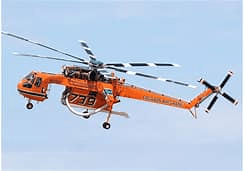
How about this as an alternative? We ask some wealthy person to hire one of those giant sky crane helicopters to carry a load of rocks and some bags of cement to dump on top of the mountain on some moonless night. We’d have to line up a crew team of concrete workers to be flow to the top of the mountain to put the rocks together in a permanent formation, but I’d volunteer for that.
Maybe one of these would do the trick
So if you’re a wealthy person looking for something memorable to do, contact me. We’ll put a plaque on top of the 12,000 + mountain to commemorate your vision.
Otherwise, it’s entirely possible that someone else is going to seize this opportunity by lifting a fully functional McDonald’s fast food outlet up there and just dump it on top of the mountain. I think those stores are at least 22 feet high.
A relative stopped by our home last week to drop off a box containing historical items from my father, Vic Lamb. The box included memorabilia, artwork, old newspapers, business papers and other things his second wife had kept over the years.
There were some things that I expected to find in the box and some that I didn’t. There were several copies of the Ruidoso News that my father and mother owned from the early 1950s to the late 1960s. They’ve been great fun to read through. I enjoyed seeing reports of events, the names of people and local businesses I knew in the then very small town in the mountains of southern New Mexico where I grew up.
In the box, there were a three of his pen and ink drawings and some of his cartoons that I recognized, I’m going to have one of his drawings of an old juniper tree in Ruidoso re-framed sometime in the next month of two. My sister and I remember sitting outside in a meadow on a fall afternoon watching him work on the drawing. He was very talented artistically.
There was also a really old Oliver typewriter that he had acquired sometime in the past, probably after I had gone off to college. Below is a photograph of it. I think it still works, but I’m not sure what I’m going to do with it.
There was a welcome history of his family, which I had been wanting for many years. It confirmed quite a bit of what I knew, but had some other insights that were new and valuable to me.
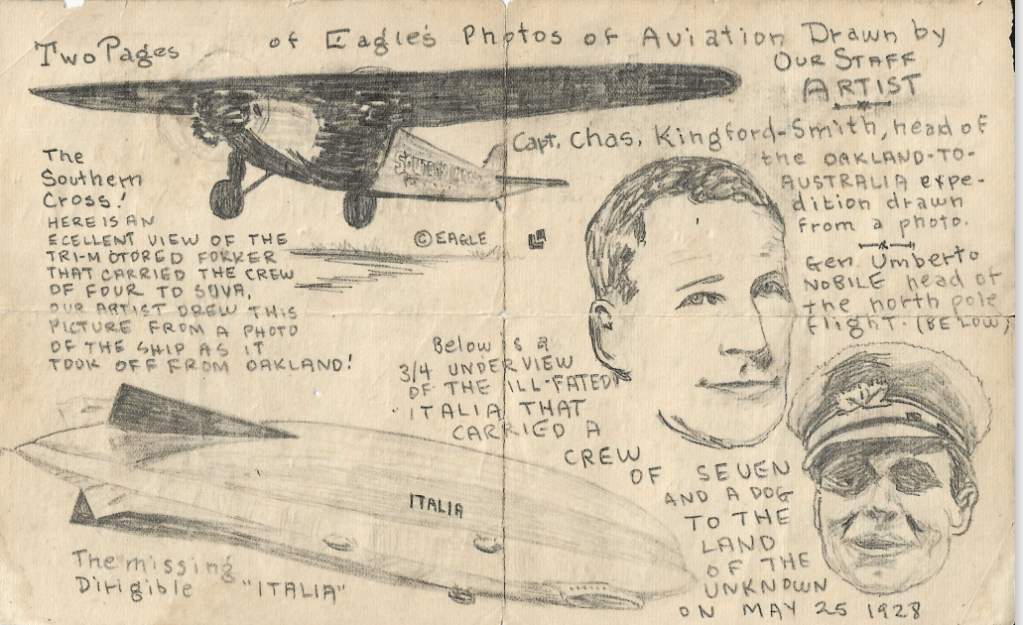
What impressed me the most were some hand-made newspapers that he “published” in 1928 under the name of the “Ellis County Eagle.”
Ellis County is south of Dallas, with Waxahachie the county seat. My father’s “newspapers” claim to have been printed in Ray, Texas, which I cannot find on the map. I suspect it was a suburb of Waxahachie, but I’m not certain. There are other oddly named unincorporated towns of villages on the map in Ellis County, like Maypearl, Italy, Boz, Lone Cedar and Onion Springs, but no Ray I could find.
Anyway, the Ellis County Eagle was all hand created by my father, including articles and illustrations. I’ve copied some of the pages of his publication and included them in this post. They are tattered and have yellowed over time, but I think you can get an idea of his work. In the three copies of his newspaper, there were stories about an attempt to fly an Ford Tri-Motor airplane from the United States to Australia (or maybe the other way). That attempt, along with what I suspect was a failed attempt by an airship to set some kind of flight record, seemed to capture his imagination. I’m not sure where he got details about the flights.
He also put a notice at the top of his front pages when the newspaper was “off the press” at a specific time.
What is amazing is that he produced these when he was just 16 years old. He never finished high school, yet seemed to have good writing skills and a sense of what was newsworthy. He said his father was a newspaperman all of his life. I’m sure he developed his ability to draw cartoons by himself without any guidance from an art teacher. He continued to draw cartoons for the rest of his life before he succumbed to Alzheimer’s in the early 1980s. He included his drawings in several of the newspapers he operated, including the Ruidoso News and a few in the Texas panhandle. He entitled his artwork “Vix Pics”
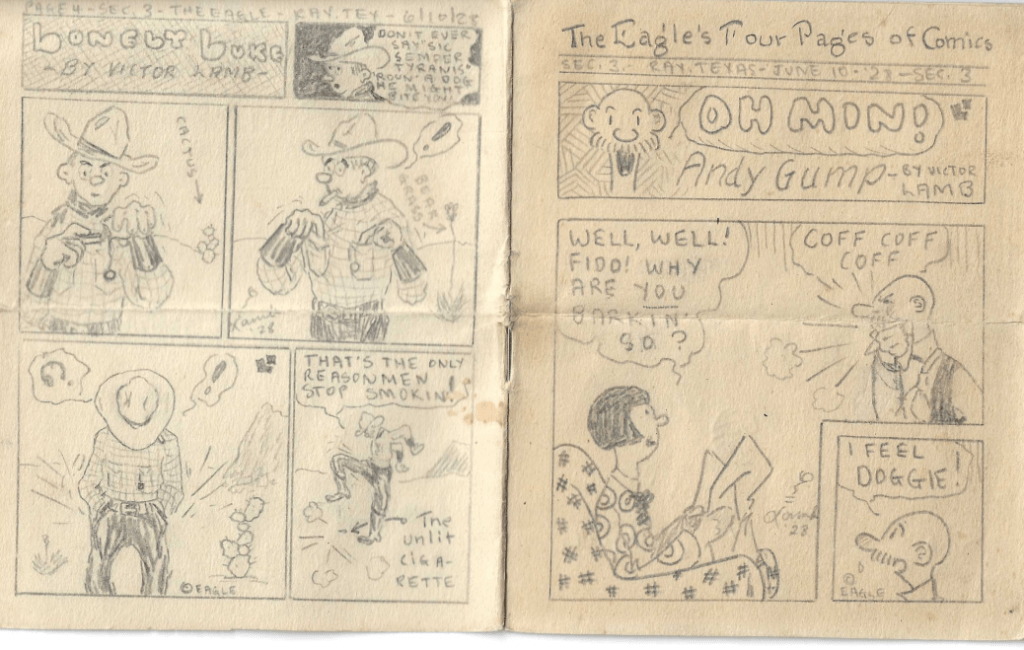
In his “Ellis County Eagle,” he did a Sunday section with its own comics, also shown below.
Granted, his comics were pretty corny, but that was his sense of humor that served him well. over the years.
I’ve already posted some items that I found when reading through some of the old newspapers from 1966-68, and I’m sure I’ll find other entertaining things in the future.
In the meantime, it’s been kind of sad to think about my dad while wishing that I could have spent more time with him learning about his life. He was an eternal optimist, a trait I wish I had inherited.
I guess most young people who are anxious to break out of the nest have a tendency to miss learning more about their parents. I was certainly focused on getting out on my own at the time and I was strapped to the necessity of working full time while putting myself through college in five years.
So young readers, be sure you take time to talk to your parents and learn from them. When you realize you should have done that, it’s probably too late.
While looking through some old issues from 1967 and 1968 of the Ruidoso News — the newspaper that my father and mother ran for almost 20 years — I’ve run across many interesting things. I’ll post a longer article about the newspaper and my father soon. But in the meantime I’ll pass along some things about automobiles of the era.
The weekly report from the police department lists details of various automobile accidents. Many are the result of someone’s car skidding on an icy road and veering into oncoming traffic. In one such incident, the crash was enough to send someone to the hospital.
The crash involved a 1968 Pontiac GTO (the IN car for gearheads at the time) and a 1967 Plymouth. But despite the apparent severity of the crash, the police report said there was a miniscule “$150 damage to each vehicle.”
In another slippery road accident, a Ford pickup smashed into a Porsche. Damage to the Ford was $25 and damage to the expensive German sports car was $400.
In today’s world, I’ll bet damages to those vehicles would have topped $10,000 each (or probably $20,000 in the case of the Porsche.)
In another accident, a woman forgot to engage the parking brake on her 1963 Ford while stopping for an afternoon cocktail at a local pub. While sipping her martini, her sedan rolled across the street and smashed taillight first into the Covered Wagon Curio Store. on Sudderth Drive. According to the police report, damage to the vehicle was $50 and there was “$5 damage to the building.”
And in today’s world, the owner of the building would probably have filed a lawsuit for damages to lost revenue while customers avoided the building during the investigation.
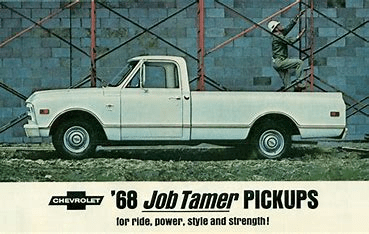
Also in the paper was an ad for a brand new 1968 Chevy half-ton pickup for just $1,998. I spotted an ad on the Internet last week asking more than $80,000 for a professionally restored version of that truck. Average plain old “used” versions of that same truck are fetching around $15,000.
Wish I could find one of these at that price today!
But what really caught my attention was a nationally produced advertisement in the Ruidoso News for a 1967 Chevrolet Impala. I’ll show it below, but the feature being touted in the ad was the smoothness of how the ashtray worked. Never mind that you’re wrecking your lungs while driving and smoking, your hands won’t be overworked when pulling out the receptacle for your cigarette butts. The smooth ride of the ashtray was because of “four shiny little ball bearings” installed in the rack to make its extraction and re-insertion is effortless.
Neither of my wife’s car or our pickup truck even have ashtrays. My classic 1975 BMW 2002 has three of them — two in the back seat and one in the center console, just down a bit from the all important cigarette lighter.
A smooth gliding ashtray — what was really important in those days
My wife’s car has a feature that allows you change the color of the car’s interior accent lighting to six different shades. Maybe in 40 years, someone will make fun of that feature as being trivial as we cruise around in zero pollution vehicles to help fight climate change.
Last week, we took our dog Chester to be groomed. Because he is half poodle, he grows hair, not fur, so he needs to be trimmed every two or three months to not become overly shaggy and matted. He also gets a bath from his groomer when he is trimmed.
When he gets back, he smells very nice and is especially fluffy, encouraging humans to endlessly pet him and enjoy his soft coat.
The day after taking him to the groomer, we drove up to the Cloudcroft area to enjoy turning leaves and cooler mountain air. Chester went with us, always excited to go in the truck somewhere new.
We found a spot along a gravel U.S. Forest Service road that was great for a picnic. Chester leaped out of the truck and immediately began sniffing the area for new and unusual smells.
He first found what we think was a mound of elk or cow poop and began to rub his face in it before we scolded him to retreat from the spot. Within seconds, he found something else more amusing — a mucky pool of water from a nearby spring that had deep, almost black mud at the bottom.
He always relishes taking a dip and wading in shallow water, although he won’t go into anything deep enough that might force him to swim.
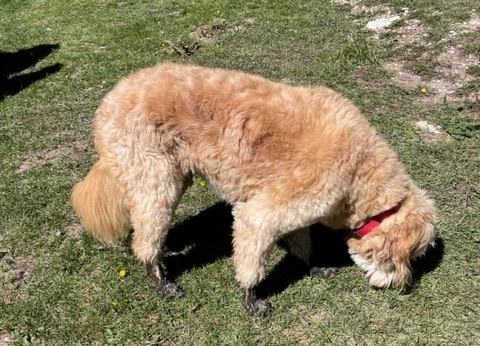
So before we could catch him, he sank all four feet into the muck, drank a sip of the turgid water, then emerged looking like this:
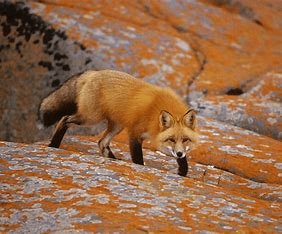
So much for our $85 grooming tab at the dog salon. It looks like someone dipped each of his feet in black paint or tar. Or, except for his floppy ears, he kind of looked like red fox, which has black legs as shown in the photo below.
At any rate, when he got home, he got a second bath in as many days and cleaned up pretty well. I think he enjoyed his first visit to the groomer. He was not happy about the treatment he got from me and my wife when we got home from the mountains. And I’m’ still removing clods of dirt from the back seat of our pickup truck.
For my wife’s birthday, I purchased her a new purse. Now I understand that men buying personal things for spouses, such as purses, can lead a guy into a dangerous minefield. However, I was fairly confident on this acquisition, since it was basically the same purse she had received as a gift from her daughter a few years ago, only a little bit larger and in a more subtle color. She had liked the original purse, but it had become a bit tattered and she agreed it was time to “refresh it.”
After she got it, she began removing things from her old purse and putting them in the slightly larger new one. The new one, however, had many more compartments than the old one. So many, that some compartments may have been left vacant after she finished the transfer.
So what do you do if you have this irrational need to make sure every empty closet space, every drawer, every nook and cranny in you car’s interior, every hook on your peg board in the garage and every compartment in your wallet is filled with something? This brings me to my fly fishing vest. It has a seemingly endless assortment of compartments available for accessories, fly boxes, tippets, leaders, fly flotant, sunglasses, licenses, water bottles, nippers, knives, extra Kleenex, bandanas, lunch and whatever else I could stash in it.
My good friend, associate and colleague from my previous work in marketing, Andrea, could probably help me with this dilemma. She was (and I am sure still is) the queen of organization. She told me a story once about her Christmas wish list when she was still in Middle School that suggested an office filing cabinet would be the most wonderful gift she could receive for the holidays. At a large group meeting some years ago, she was the last person standing when people were being categorized by personality. She was sorted out as the most intensely detail oriented and organized person in the group of about 150 people. She admitted to being slightly embarrassed about it, but I thought it was great — we made a great working pair.
Andrea could probably tell me what I could and should put in every one of the 24 compartments in my fly fishing vest, even if I didn’t use what was in them very often.
However, here’s the problem. When you start stuffing so much stuff into your vest, it becomes heavier and heavier, weighing you down and tiring you out as you trudge up the trail to your perfect fishing spot. And it has other ramifications. When I lost my balance and fell on my back last spring while fishing in the Gila, breaking four ribs and cracking two more, I think the shifting extra weight in my vest from all my unnecessary accoutrements contributed to my loss of balance and toppling over next to the creek.
I did pare down my vest after the fall. I got rid of a small metal net to catch stream insects to help you evaluate the hatch in the water. I tossed some tungsten weights to keep your wet fly at the bottom of deep pools. I got rid of fly goop that made your flies either float better or sink more rapidly. I got read of a stream thermometer that would tell me if water temperatures were conducive to fish feeding. I nixed a heavy tool to help you tie the perfect fishing knot. I weeded out my more than 15 different lengths and strengths of leaders. I parted ways with a file to sharpen fish hooks. I got rid of two extra pairs of sunglasses with differing tints in case the available sunlight changed one way or another. I ditched two or three extra fly boxes for patterns that I had never used on the stream where I was fishing. I got rid of some kind of orange-colored goop that may or may not have been illegal fish attractant.
My much lighter fly-fishing vest on the left and some of the stuff i removed from it on the right
And then I got rid of my beloved “Walton’s Thumb,” a Swiss Army Knife kind of gadget that could cure any problem you had on a stream — trimming fishing line, removing a hook from your elbow, picking out a size 22 emerger pattern from a crowded fly box, screwdrivers to repair your fly reel, and maybe even surgical blades to perform major surgery on your knee after a fall in the wilderness.
It was a magnificent gizmo, weighing almost a full pound by itself. The device was named after Izaak Walton, a 17th century English writer who is viewed as the Godfather of fly fishing because of his book “The Compleat Angler,” first published in 1653.
Walton’s Thumb
I now feel guilty about removing it from my vest, although I really can’t recall using it more than once or twice. I looked for it today in my various bags, tackle boxes and other hiding places in my fishing closet, but could not locate it. I fear I tossed it in the trash in my rush to remove all things unessential from my fishing vest.
I looked on the internet and the original versions are now kind of collector’s items, selling for more than $40 on E-Bay. You can buy a similar replacement with the same name, for about $23, but it’s made with much lighter gauge stainless steel and probably weighs about half of what the original weighed. And I’m sure it doesn’t have the character as the original version.
So now, I’m left with a fishing vest with lots of empty compartments, begging to be stuffed with something. I’m thinking I may eventually restuff one of them with an imitation Walton’s Thumb. And maybe wads of Kleenex will made the rest of the now empty compartments look somewhat useful.
The first time I went with my family to visit Santa Fe in the late 1950s, we ate at a restaurant on the south side of town called Bobcat Bite. It was in a former trading post on the old Las Vegas Highway. According to legend, the restaurant was named for bobcats in the area that would stop by for scraps of food.
The restaurant continued in operation for many years, but closed in 2013. It has since reopened, but I’m not sure if it still feeds area bobcats.
What triggered this topic was a message I got regarding my earlier post on critters in urban settings. Apparently, it’s happening even more these days.
My long-time friend Joel sent me pictures he took last spring of a couple of juvenile bobcats lounging on his back porch in the Sonoma Ranch area. And I mean literally lounging.
Time for an afternoon snooze
A handsome fellow
More snoozing on the porch with a sibling
Then my sister, who lives in Cochiti Lake, recently said she feared that a mountain lion was cruising through her neighborhood. She sent this (rather disgusting) photo of some cat scat to prove something was running around near her house. She later said it was probably just a large adult bobcat, which she sees frequently in her rural area.
Sorry, but I’m not scatalogically qualified to analyze this bit of dung spotted by my sister.
But so far, I have not seen a live bobcat around our home — although I’m certain they are nearby.
However, I did for the first time spot a roadrunner cruising through our neighborhood and crossing a corner of our lot. I see them all the time when driving around areas near the desert on the east side of town, but they seem to have avoided our more lush environment in the valley.
And it turned out — as I have told my children and grandchildren — that it was a good omen. I had lost my money clip with about $25 in it when I went to a nearby store earlier in the day. I was pretty sure I would never see it again. But my wife convinced me that it was worth the effort to go back to the store and see if anyone had turned it in.
To my surprise, the store manager said someone had found it and gave it to him — with money still intact. I took $10 out of the clip and gave it to the store manager and told him to buy a six pack of beer for his staff.
Here’s hoping all of us see more roadrunners — or even bobcats — in the future.
Twice last week, while our daughter and granddaughter were walking to school in their north Austin neighborhood, they spotted an armadillo right in the middle of the urban sprawl. We’ve seen possums and lots of squirrels in Austin before, but the only time I’ve spotted armadillos was in the Texas countryside. We thought this was pretty interesting and immediately claimed it was a sign of good luck, which (for what it’s worth) seemed to be verified through a quick search of the internet.
In addition to good luck, spotting an armadillo also seems to be a harbinger of wealth, fertility and protection, according to various websites.
She managed to snap a picture of most of its armored body rooting around a ground cover landscape.
Patrially obscured armadillo in some ground cover in urban Austin
We’ve always told our kids that spotting a roadrunner in our native New Mexico is a sign of good luck, also verified through a search of the internet. Roadrunners also seem to embody strength, courage, endurance and speed, according to legend. So without any roadrunners nearby, our family in Austin can now look forward to spotting armadillos for good luck.
Native Americans seemed to think that roadrunners were especially crafty because their feet have four toes– two pointing forward and two pointing backwards — which make it difficult for predators to know which way the birds were running. The technical term for their toe arrangement is “zygodactyl.”
After our excitement about the Austin armadillo, two stories about other animals in urban settings popped up in our own state.
The first involved the spotting of a 900-pound, fully-antlered bull moose in the middle of Santa Fe near Fort Marcy Park, where Zozobra had just been burned a few days prior. This really large animal was eventually captured by New Mexico Game and Fish Department officials and relocated closer to wilderness in the northern part of the state.
I have to admit that in all my years of tramping around New Mexico’s forests and wild lands, I never thought I would see a moose here. From what I’ve been able to determine, they were once fairly common in the northern part of the state, but migrated north at some point because of climate change or increasing human presence. However, in recent years, they apparently have moved back into the region, apparently thinking that this was not such a bad place after all.
Friends in Santa Fe say a younger moose was spotted on the road to the Santa Fe Ski Basin last spring. There is speculation that the 900-pound bruiser spotted around Fort Marcy Park was the same animal, but pumped up over some tasty noshing over the summer. Given that moose can be fairly ornery and fast, I would have given this guy a lot of distance had I spotted it.
Moose spotted in downtown Santa Fe last week
And then to top things off, a high school football game in Rio Rancho had to be postponed last weekend because a ground squirrel tunneled too deeply into an underground electrical box and chewed up some live wires that resulted in shorting out the field lights. The squirrel apparently was vaporized in the process of chewing on the hot wires and the game had to be moved to another (squirrel free) stadium while repairs were made.
These animal capers reminded me of a women’s softball game at New Mexico State University that I attended some years ago that was delayed when prairie dogs from a colony adjacent to the ball field began scampering around the diamond during a game. The critters were eventually chased back down their tunnels and remained there until the ninth inning was over. I think steps were taken to permanently move them to another location. There was also a time when plans to install new artificial turf at the NMSU football field had to be delayed because a colony of burrowing owls had taken up residence in the stadium.
As I think I’ve mentioned before, our own neighborhood has hosted foxes, raccoons, skunks and even a pack of javelinas in the past. It makes you realize that nature is never too far away — which I think is a good and entertaining thing.
And if you have any urban animal encounters, let me know and I’ll share them.
My second round of surgery to remove the remainder of a lodged kidney stone is complete and my recovery is much, much easier than the first round. I’m till a little sore and having a couple of other expected after effects, but I think that will clear up soon.
I had lots of time to ponder things while was out of commission and not in a writing mood.
Mostly, I thought about how lucky I was to have a patient, understanding and logical wife in dealing with the labyrinth of issues we had to sort out during the process. And I thought a lot about how difficult it was to go through the steps to get this surgery done. The doctor who performed the surgery was excellent. I can’t say the same for her staff, who repeatedly neglected to call me back when I had questions or concerns, treated my wife rudely and seemed to be pre-occupied with other matters most of the time when I met with them.
I also gave a lot of thought to our dog, Chester. I know we all tend to anthropomorphize our pets, but in my recent observations of Chester during this event, I think he really seemed to express empathy about my condition.
He hovered around me constantly, leaped into the bed to be near me at night on a couple of occasions (he never does this other times), and wanted me to pet him frequently. I’m certain I smelled strange when I came out of the operating room and the hospital, which may explain some of his hovering and attention.
Maybe he was trying a mind trick to make me give him a treat.
When I would sleep in my chair in our “TV Room,” I’d wake up to find him staring at me. It might be just wondering while I smelled differently, why I was sleeping so much or most likely why I hadn’t been giving him frequent treats. Or maybe he was really concerned.
Chester’s top 10 priorities are pretty simple. They are:
Get a treat
Take a morning nap
Go for a walk and get treats from friendly neighbors
Take a mid-morning nap
Go for a ride in the truck and get a beef jerky treat
Take a noon nap
Get a Poochie Cone at Caliche’s
Take an afternoon nap
Get a belly rub
Take a nap before sleeping for the night.
He also likes to perform “zoomies” in the back yard, wade in belly-high nasty water in our irrigation ditches, likes to leap in the air when he sees friends, greets everyone enthusiastically when the front door bell rings (always hoping that the ringer will also be the bearer of a treat, even if it might be an axe murderer). Oh, and did I mention napping?
At any rate, thanks to all of you who were thinking of me. Glad this I done and hope I can go fly fishing again soon.
Yes, I’m still here. It’s just taking longer than I thought to recover from this surgery. And to make it worse, I have to go in for a second procedure later this week that I’m hoping won’t be as painful as the first one.
And I promise not to bore you with all the details of what’s going on in my future blogs. I’ll look for something really off the wall to talk about when I’m back.
This summer, when I managed to bust six ribs and crack two more in a fall in the Gila, the follow-up exam revealed a large kidney stone that I needed to have removed before it further aggravated that organ.
It was too large to pass naturally (I think it was the size of a small bowling ball) so I had an outpatient procedure to remove it last week. My recovery has been a lot more painful than I anticipated, so sitting at a desk and writing has not been in the cards.
I’ll get back to writing again in a week or so, but just wanted any readers to know what was going on.
Driving back from El Paso on Interstate 10 last week made me draw the following conclusions about how others perceive Las Cruces and New Mexico.
“They smoke a lot of pot, they’re in a lot of legal trouble, the only eat Mexican food and they don’t know how to spell very well…”
That’s the vibe you get when you read the billboards heading north out of El Paso when you enter the Land of Enchantment.
I counted at least four cannabis “dispensary” signs along the highway. There were a couple more heading south, as I recall.
From a Las Cruces “dispensary”
Next seemed like an endless stream of lawyer billboards, many promising big settlements for accidents involving large trucks. Others dealt with basic ambulance-chaser matters. I counted at least half a dozen.
Okay, well, the legendary and imaginary Saul Goodman didn’t actually have a billboard down here, but I’ll be he would have, given the opportunity.
And then next were billboards from several local Las Cruces Mexican food restaurants, all promising the best tacos and enchiladas around. If you counted francises which offer fake Mexican food (think McDonald’s, Taco Bell and others), there were at least half a dozen of those.
Then next was a billboard that has bothered me for years. It is for a desolate looking mobile home/RV park on I-10 about halfway between El Paso and Las Cruces. It is called:
“Western Skys RV Park”
Really? Skys and not Skies?
And, adding insult to injury of the English language, another sign promoting the business is spelled SKYS’ with an added superficial possessive apostrophe.
That’s my rant for the month of August. Stay tuned — I’ll have another one next month.
My wife, Margo, was walking our dog Chester last week when she came upon a Little League practice in a park near our home. There were two teams, one practicing shagging flies and the other working on batting.
The one working on catching fly balls needed to hone their skills a bit, she observed.
“They were using whiffle balls, I guess so they wouldn’t get hurt if they got bonked on the head,” she said.
She said the kids were looking up in the air for the ball and waving their gloves around in a frantic manner to catch it.
“Then It would just plop to the ground next to them,” she said.
She said the next group working on batting practice had some great instruction from their coach.
“Remember, you have to take you glove off before you can bat,” he admonished the youngsters.
I’ve been randomly watching the Little League World Series this week. The game on Wednesday between a Texas team and a Washington team was a gem. It was a 0-0 tie after the regulation six innings (for Little League). It finally was won by Texas in the ninth, 1-0
There were some outstanding defensive plays by both teams — stuff you’d expect to see in the big leagues. I think the catcher from Texas will be playing in “the show” some day.
Pitching was great as well. One Texas kid pitched the maximum of 85 throws he could make before he was retired. He managed many strike outs during his effort. A pitcher from Washington was boxed in with three men on base and no outs in two different innings, yet managed to work his way out of the predicament.
Texas players celebrate their 1-0 win over Washington
This made me think about something I believe most New Mexicans don’t know about. In 1956, a team from Roswell won the Little League World Series. I happened to go to college and was friends with one of the kids who played on that team, but never heard him talk about it. My brother-in-law, who lived in Roswell at the time, has a souvenir baseball from the team. He witnessed them boarding the train as they left Roswell for Williamsport, PA, for the series.
Brother in-law Buzz Murrell holding souvenir baseball signed by members of the 1956 Roswell Little League World Series champions.
It is a great feel-good story about a rag-tag bunch of kids from a relatively small town in New Mexico who defeated teams from big city programs around the country on their way to become champions. My hope is to write a short book about it someday.













 aero-cordero.com