They still don’t know much about us…

I was watching an auto auction show on television last week , mostly because there was nothing else interesting on and because it was still too hot to do much outdoors.

During the show, a Chevrolet dealership somewhere in New York, ran an ad boasting that they sold more Corvettes than any other dealership in the country. Part of the ad showed arrows from cities around the nation pointing to the dealership, ostensibly portraying the mass migration of people to buy Corvettes from there.

Albuquerque was one of the points of origin on the map. Only whoever drew up the map apparently didn’t do well in geography. The state’s largest city was spelled: “Alberquerque.”

Then while reading some reviews about the new movie “Oppenheimer,” one writer noted that NBC announced that the first atomic bomb was actually exploded in Los Alamos.

I think we would have noticed that, although the fairly recent Cerro Grande fire made the surrounding forest look like an atomic blast had happened there sometime in the past.

At any rate, I never cease to be amazed by the fact that we’re constantly confused with Arizona or we’re considered to be a foreign country.

And, of course, I’m always finding maps or souvenirs of New Mexico displaying a saguaro cactus.

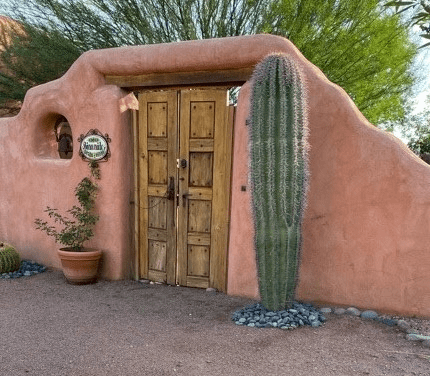
Maybe they spotted this one just a few blocks from my house.

A saguaro adjacent to to a warm west facing adobe wall near our home.

They can grow here, given enough protection from cold weather. And who knows, with this summer’s heat, maybe we’ll have a saguaro forest surrounding us soon.

The bane of bad restaurants…

An interesting article in the Albuquerque Journal last week told the story of an Albuquerque man who had recently celebrated his 100th birthday and claimed that drinking a can of Coors Banquet beer each day was the key to his longevity.

When Coors heard about Robert Nolen, Jr.’s, accomplishment, the company sent him three cases of its beer, a duffle bag of Coors merchandise and a birthday cake that looked like a can of the iconic brew.

At the time I grew into my best beer drinking days in college, Coors was the stuff of legends. You could only buy it in certain states in the west, since it was brewed only at one location in Golden, CO, and could not easily be distributed nationwide. It also required constant refrigeration from brewery to the consumer, which limited its distribution footprint. It was coveted by those who could not get it, even though they probably had never tasted it.

“”Brewed From Pure Rocky Mountain Spring Water,” was its claim to superiority among all those other mass produced beers. It was a siren song to those who had to settle for Budweiser, Miller, Pabst, Schlitz, and others.

I remember when visitors to Western states from back East would make a point to consume as much Coors as they could during their time in the region. I distinctly remember one Easterner telling me that he visited the Coors plant in Golden and that an entire mountain river was piped directly into the brewery, with nary a drop of water from the stream ever to be seen exiting the plant again except in a bottle or can.

My brother-in-law, Fred, had moved from Nebraska to Louisiana in the 1960s to attend school at LSU. When he returned at Christmas or other times to Nebraska (which was a state in which you could buy Coors), he would load up as many cases of the brand as he could squeeze into his vehicle so he would have a good supply of the brew to last for months in Baton Rouge.

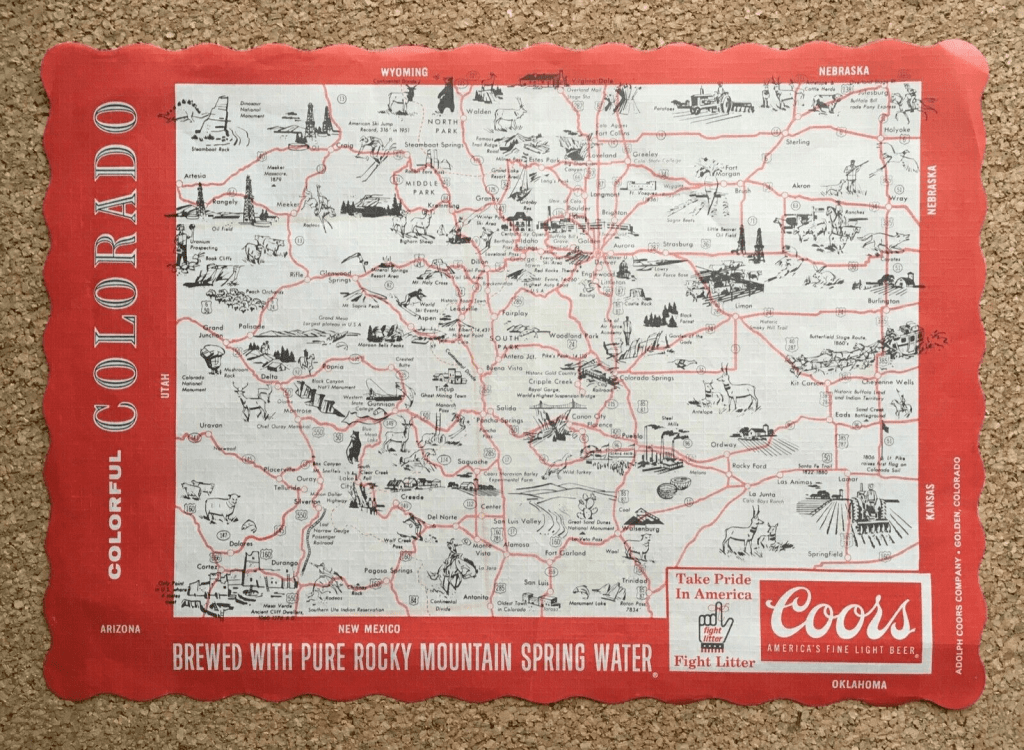
During that time, Coors would distribute free thin paper placemats to local restaurants within their footprint. The placemats for each of the states in their territory showed popular tourist attractions. I found the one below from Colorado on E-bay, with an asking price of $145.

VintageCoors placemat from the 1950s.

These were usually distributed at smaller locally owned restaurants throughout the region. I recall one food critic remarking that if you went to a restaurant using the Coors placemats, it was a sure sign that the food would be sketchy.

“The bane of bad restaurants,” the epicurean authority commented about the placemats.

Well, Coors (although mostly Coors Light) is still my favorite beer. (I was harshly chastised once by a native German friend for my incredibly bad taste for liking Coors and not stout German lagers). Ales are too bitter for my tastes and other brews with things like green chile, chocolate or dump-truck-loads of hops are just not for me. I can tolerate a Mexican lager when roasting green chile in my back yard.

And actually, the best chicken fried steak I ever ate was served on a plate protected by a Coors beer placemat.

I guess that says a lot about my taste — or lack thereof.

And I have a really subtle off-color joke about Coors Light that I’ll share with you privately if you ask.

Cutting edge investigative journalism by yours truly…

You’ve probably heard the old adage that “it’s hot enough to fry an egg on the street.”

Well, here’s a new twist. This week, I read online about a couple of staff members from an Albuquerque television station who wanted to determine if, during our current heat wave, there was enough heat to cook a steak on the dashboard of a parked car with all its windows rolled up.

They succeeded in cooking up a medium rare steak in 90 minues in their car, where the temperature reached 140 degrees. Their experiment was a warning to everyone not to leave children or pets in parked cars during the day.

After reading the story, my keen investigative journalist brain kicked into full throttle and I came up with an even more insightful probe.

If New Mexico is known worldwide for our chile, why not see if our favorite vegetable can be roasted in a hot car? I was called to action, just as I was when I investigated and wrote about Mexican bologna smuggling in Las Cruces. (I’m still awaiting my Pulitzer Prize award for that one.)

So bear with me as I unleash a large volume of data, expert analysis, detailed observation and pure guesswork to come to the startling conclusion (spoiler alert) that roasting chile in your car (or the sidewalk) doesn’t work that well.

Mesilla Park”s top investigative journalist (me) at work on another probing story.

Okay, for the four of you still left reading this blog — because you have nothing else to do on a hot afternoon — here goes:

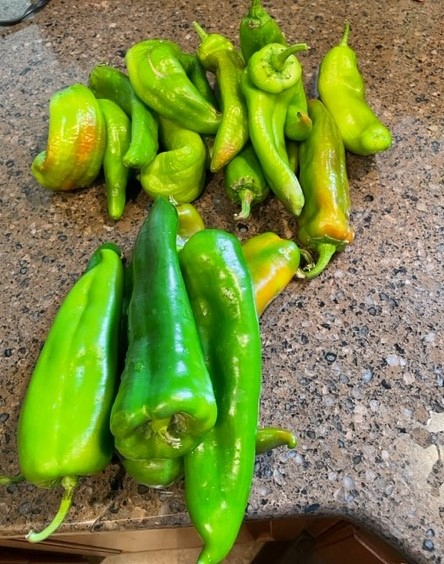
I purchased green chile (just now starting to come in from the fields) from two different sources. All of it was said to be a mild variety.

Innocent chile pods awaiting torture by heat.

When I drove to get the chile, the outside temperature registered on my car was 104 degrees. The shaded back yard of our house had a temperature of 100 (which would rise to 101 by the time the research was completed). The exterior temperature sensor on our truck showed 109 (always a bit optimistic). The interior temperature of our pickup truck at the dashboard was 141, according to a kitchen digital thermometer. (I think it would have gone higher if I had waited another couple of minutes, but I was not willing to roast myself.)

The 141 is hard to read on this digital kitchen temperature probe n the dash of our truck.

I placed some of the two different varieties of in two aluminum foil pans on top of the dashboard and set the timer for 90 minutes.

Roasting on the dashboard of my GMC

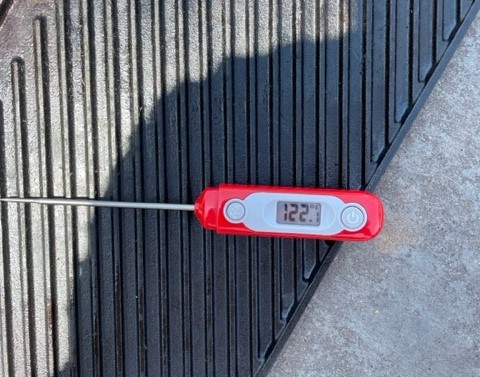
I had also placed a cast-iron griddle that I sometimes use for grilling on the driveway at the front of the house. Its temperature had reached 122 degrees when I placed additional chile on top of it.

Temperature of cast iron griddle on driveway

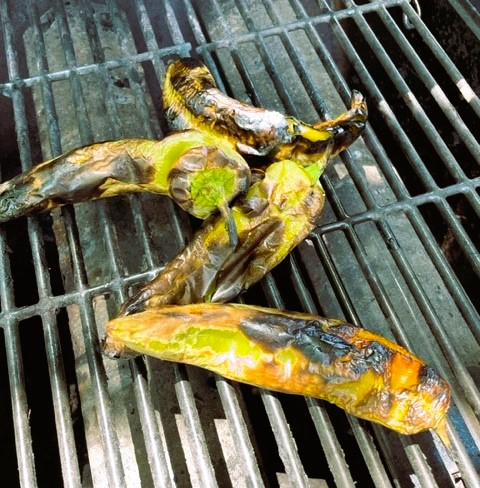
In true scientific method procedure, I also roasted the remaining pods the old fashioned way on the gas barbeque grill. Those took only a few minutes to roast and blister up.

Roasted the traditional way

Things were moving slowly inside the truck and on the griddle on the driveway. The interior of the truck was starting to smell like the Hatch Chile Festival. The chiles were turning a pale color in both locations and getting limp from the heat.

I remembered when I bought the chile from one vendor and proudly explained my planned experiment. He rolled his eyes and smirked, but offered a bit of advice that if the chiles begin to turn white, you’ve roasted the flavor and heat out of them.

As my timer marked 90 minutes, I noticed the experimental pods in both locations were turning white, looking extremely flaccid and appearing very unappetizing. My truck’s interior, however, had an even more pungent Hatch Chile Festival smell.

I pulled both varieties off the dash and the griddle and measured their internal temperatures. Both were at 140 degrees.

There was no blistering of the skin of any of the sun-roasted chiles, so in order to make them easier to peel, I decided to toss them on the grill for a few minutes. Once off the grill, I steamed them for a few minutes and began peeling and taking a small bite out of each one.

The taste was mostly beyond bland and slightly odd — not even as much flavor or heat as an overly ripe bell pepper. Of all the truck or driveway roasted chiles, I only kept two for use in an enchilada dish I made later that evening.

Here’s what they looked like after roasting by sun.

So the conclusion of my investigative reporting is this:

Don’t use the sun, even in our current extreme heat wave, to do the work of the old reliable gas grill or tumble roaster. That is unless you want the interior or your car or truck to smell like the Hatch Chile Festival for the rest of its life.

The little engine that could…

During my career as a journalist for United Press International in the 1970s, one topic that I wrote about many times was the joint effort by the states of New Mexico and Colorado to acquire the old Denver and Rio Grande Western narrow-gauge railroad between Antonito, CO and Chama NM.

It was an almost impossible task that was pursued by a group of railroad nerds who sought to preserve one of the few steam-powered narrow gauge railroads left in the United States. There were daunting obstacles, including negotiating terms between two states with differing sets of laws, rights of way issues and turning what was essentially an antique railroad line into operational status after sitting idle for almost 30 years.

In 1970, the legislatures of both states agreed to pay a little more than $547,000 for 64 miles of deteriorating track, nine rusting steam locomotives built in the1920s and a collection of dilapidated freight cars and other railroad equipment. Luckily, it all worked out, and the train began operating again in 1971. I was fortunate to be one of the first people to ride the train when it started up again and have ridden it several times since.

I’m writing this because during our 50th anniversary trek to Durango earlier this month, we took our entire family on the Durango and Silverton narrow gauge railway, which was once part of the Denver and Rio Grande Western Railroad that included what is now the Cumbres and Toltec section of the line.

I’ve ridden on that railroad several times as well and always marvel at how these railroads with three-foot wide tracks (as opposed to the standard 4-feet, 8-inch tracks) were built in incredibly adverse terrain and weather conditions during the late 1800s. The railroads were needed to reach the rich ore deposits and timber in the southern Rockies. The brakeman on the Durango & Silverton train told me that the difficult route between those towns took only nine months to construct.

“They couldn’t do that today, even with the advances in construction techniques and materials,” he said. “There weren’t that many rules and regulations, so they just did whatever was need to build the railroad.”

The photo below gives you an idea of how difficult it must have been for the railroads to cut through the narrow rock canyons of Colorado and New Mexico.

Durango & Silverton Railroad near Rockway

Both trains are worth the ride. Most of the Durango & Silverton train follows the narrow Animas River canyon, which can get a bit boring except for the section in the photo above. The Cumbres and Toltec passes through a wider variety of mountainous and high desert landscape, with broader views. The eastern end of that train can be a bit boring as well, however.

Cumbres and Toltec Railroad near Cumbres Pass

One of my best memories when I was writing about the acquisition of the Cumbres and Toltec was the opportunity to interview one of the original engineers on the then Denver and Rio Grande. His name was Herb Greathouse, and I interviewed him while taking one of the first trips on the newly acquired Chama to Antonito Route. A grizzled old veteran, he pronounced the original railroad’s name as the “Rye-O Grand” and talked about how difficult it was for the trains to go through Cumbres pass after a heavy snowfall. He also explained a little about the old Baldwin locomotives which, at the time they were built, were at the top of the steam engine technology.

“The steam literally exploded in the pistons, kind of like the explosion in your car,” he said. “They had to be that powerful to get up into those hills.”

I’m sure Herb is long gone, still at the throttle of a smoke-belching steam locomotive somewhere in the sky. But I’m glad, for his sake and for other railroad nerds like me, that these powerful little locomotives are still getting up into those hills and thrilling passengers just as they did more than 125 years ago.

Recovering…

My regular blog posting has been interrupted by a long-planned 50th anniversary vacation with family and the subsequent grandparent collapse after being flogged by our four grandchildren for several days.

The 50th anniversary was supposed to happen two years ago, but Covid and other complications delayed it until this summer.

We went to Durango, CO, for five days and four nights. We rode the Durango and Silverton narrow gauge railway, visited Mesa Verde National Park, fished, rode horses, hiked, caught up with some old friends who live in Durango, dined with family and enjoyed a really great cabin on the banks of the Florida River.

Below is a photograph of the gang:

From left to right: Daughter Lindsay, grandson Hayes, grandson Maxwell, son Tyler, daughter-in-law Jessica, granddaughter Hannah, Margo, grandson Truman and me.

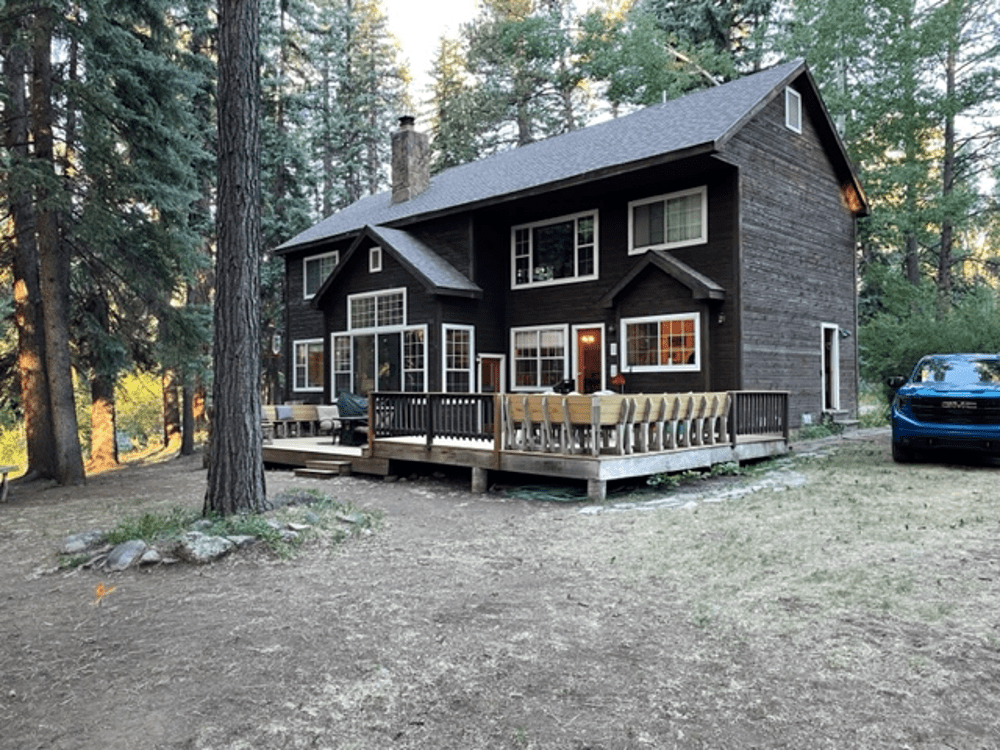
We’re all wearing jackets that we purchased for every member of the group that have the image of a black sheep (lamb) with the number 50 below it. We’re on the deck of our cabin, River Song. You can barely catch a glimpse of the river on the river on the right side of the photo.

Here’s a photo of the back porch of the cabin, which looks out on the river just 50 feet to the left.

River Song on the Florida

It was a great time to be with family and reflect on all the good things in our lives.

And we hope you’re staying cool, wherever you are.

I’ll be back next week with more silly things to write about.

All in all, you’re just another brick in the wall (or window)…

Most of us remember the phrase “Iron Curtain” from the cold war era to describe the Soviet Union’s shunning of the rest of Europe and the West. And of course there was the “Steel Curtain” to describe the Pittsburgh Steelers crushing defensive line during the 1970s.

I’ve discovered a new take on seemingly rigid and inflexible curtains in the town of Mesilla.

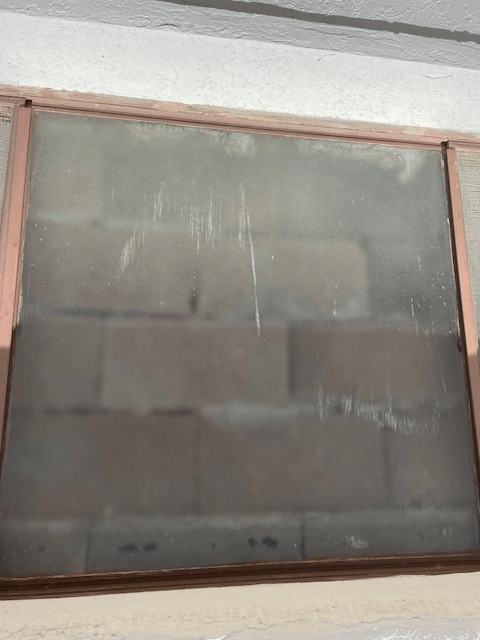
When we recently visited La Posta, the legendary Mexican restaurant on the corner of the Mesilla Plaza, I did a double take when I looked at a window of a home across the street from the eatery. I saw this:

Concrete blocks behind a home window in Mesilla,

Yes, those are concrete blocks, set in mortar, inside a home behind a window. Below is another view:

Not particularly good craftmanship, in my humble opinion.
View from a little further away. The bocks are harder to see in this photo.

This odd construction feature raises many questions.

First, wouldn’t regular heavy duty curtains have done the job? Whynot just cover up the window with plaster or stucco from the outside? Why not just put an opaque film or a layer of paint on the window? And then there’s the question of what the window-wall looks like from inside. I hope it features better craftmanship that what shows through the outside of the window.

And of course, the main question. Why???? Are the owners of the home hiding something sinister or illegal inside? Are they just antisocial? Were they trying to turn it into a solar Trombe wall? Or are they just goofing on us?

I await your interpretations while I listen to Pink Floyd’s “The Wall,” and the line that says, “We don’t need no education” — particularly when it comes to home remodeling.

An ice cream and Tabasco fiasco…

Our neighboring city to the south, El Paso, had a couple of interesting food-related incidents last week.

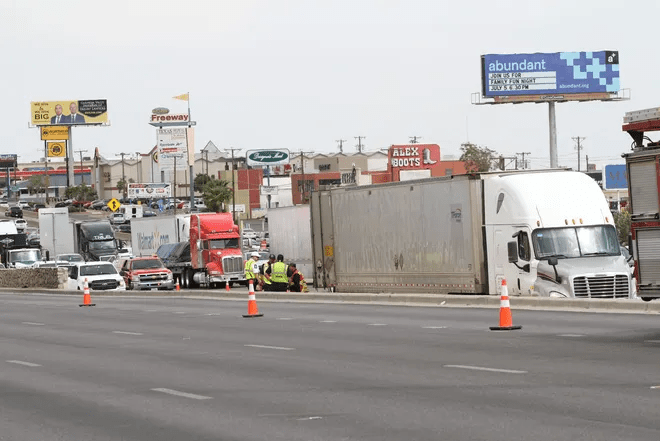
On Friday, an 18-wheeler loaded with thousands of gallons of Tabasco sauce in large containers suddenly sprung a leak on Interstate 10 in the central part of the city. The problem was discovered when the truck started spewing a trail of red sauce as it drove down the highway.

The truck pulled over and haz-mat teams were called to try to corral the leaking sauce.

Semi leaking hot sauce clogs Interstate 10 in El Paso

Officials estimate that ab out 100 gallons of the hot sauce escaped from the trailer before the leak was stopped. Traffic was snarled for several hours during the incident.

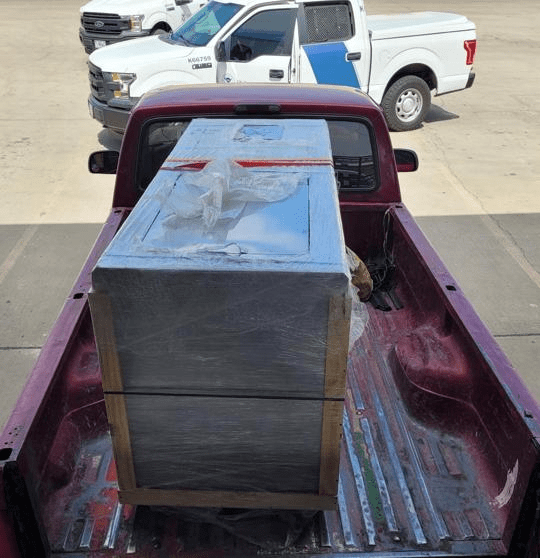
And over the weekend, U.S. Customs and Border Patrol officials said they recovered a large cache of cocaine during a routine stop at the Bridge of the Americas. A pickup truck that had crossed into the United States from Mexico was loaded with what appeared to be an innocent looking ice cream maker when authorities decided to examine it a bit more closely. Concealed inside the contraption was 146 pounds of cocaine.

Innocuous ice cream maker hiding 146 pounds of cocaine

Authorities arrested the driver and confiscated the drugs.

You may recall that I’ve written several stories in past months about confiscation of Mexican bologna at border patrol stops in our region. While officials still insist that confiscating Mexican bologna “is no laughing matter,” we all got a good chuckle out of our government’s intensity in tracking down supplies of encased meat. Luckily, they’re also busy watching out for things that I think are a lot more serious that are being brought across the border.

Journalistic integrity and the Montana pie…

My blog on Sunday focused on the new book “50 Pies, 50 States.” The book, by author Stacy Mei Yan Fong, focuses on pies which she felt were appropriate for each state based on history, locally sourced ingredients, state culture and other factors.

The New Mexico pie, as I mentioned, looked rather unappetizing. It had a blue corn meal crust hiding what were ingredients from a more or less traditional green chile stew.

I rambled off in another direction and said that if promoters wanted to shoot these pies into the stands at a football game, it would be a messy proposition. I had said that Runzas, a popular local food in Nebraska, are shot into the crowds at University of Nebraska football games using one of those t-shirt or hot-dog cannons. The pie in the “50 Pies, 50 States” for Nebraska was based on a Runza.

Well, my Nebraska born and midwestern rule-following wife, called me out on that report. She said Runzas were NOT shot into the crowd at Nebraska football games. I thought I had read or seen that somewhere, so I did some more research and found… zip, zero, nada on the internet about my claim.

I honestly think I remembered seeing or hearing about that. And why not? Runzas are the perfect shape for blasting out of a t-shirt or hot dog cannon. If Husker promoters are not doing it, they should.

When I began my blog more than three years ago, I said that I might occasionally bend the truth in favor of telling a good story. But because of my journalistic background, I will have to retract my Runza blasting report, thanks to my wife’s diligence.

Which brings me to another question raised about my pie story. My good friend who recently moved to Montana asked me what the pie was for that state in the “50 Pies, 50 States” book.

Well, Don, it’s about as unappetizing as it gets.

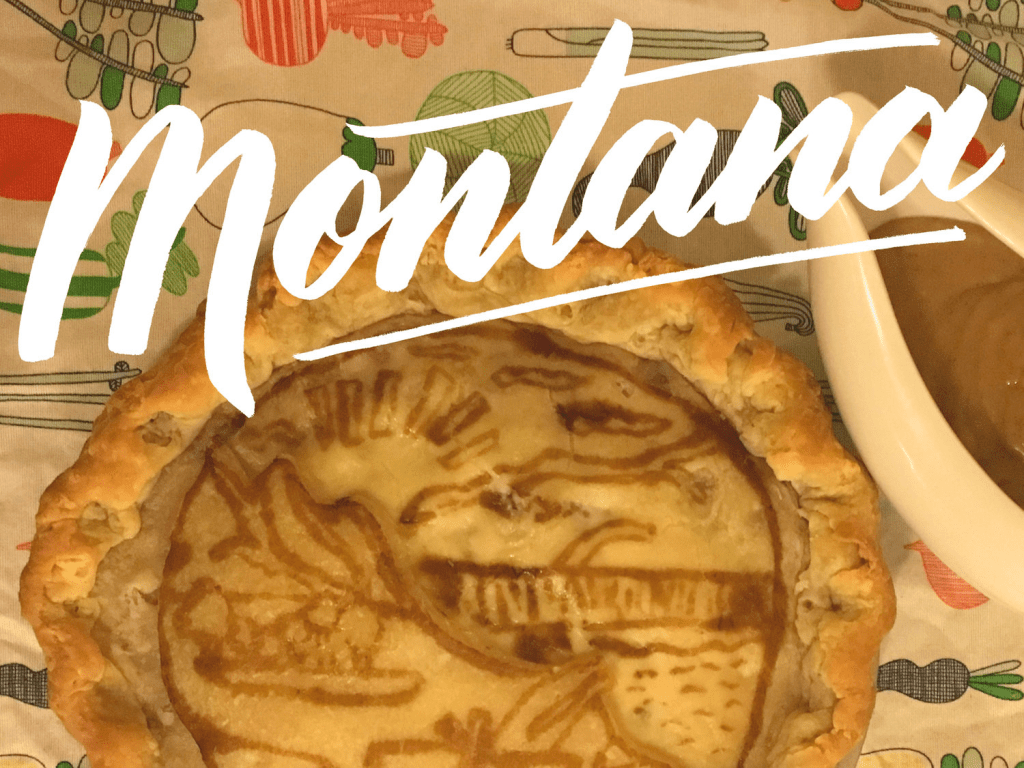
The Montana pie looks good on the outside.

Here’s the description from the book:

“The pie for this state is a pasty inspired pie. It’s dinner and desert in one with a buffalo & root vegetable and cherry filling to finish and is served with a brown gravy in a crust with the state seal painted on.”

I think I’ll pass on serving up that pie with ice cream on top and ask Don to join me in Nebraska for a Runza.

And if you want to find out what pie goes with your state, here’s a link:

https://fiftypies.squarespace.com/the-pies/

Fifty Pies…

I just listened to an interview on our National Public Radio Station with a woman who had created a unique pie recipe for each of the 50 states. The book, “50 Pies for 50 States,” was written by Stacey Mei Yan Fong, an immigrant from Hong Kong who now lives in New York.

She set out to identify a pie from each state that she felt would best represent its culture, local preferences, native ingredients and other factors. She’s included the recipe for each of the 50 pies in her book.

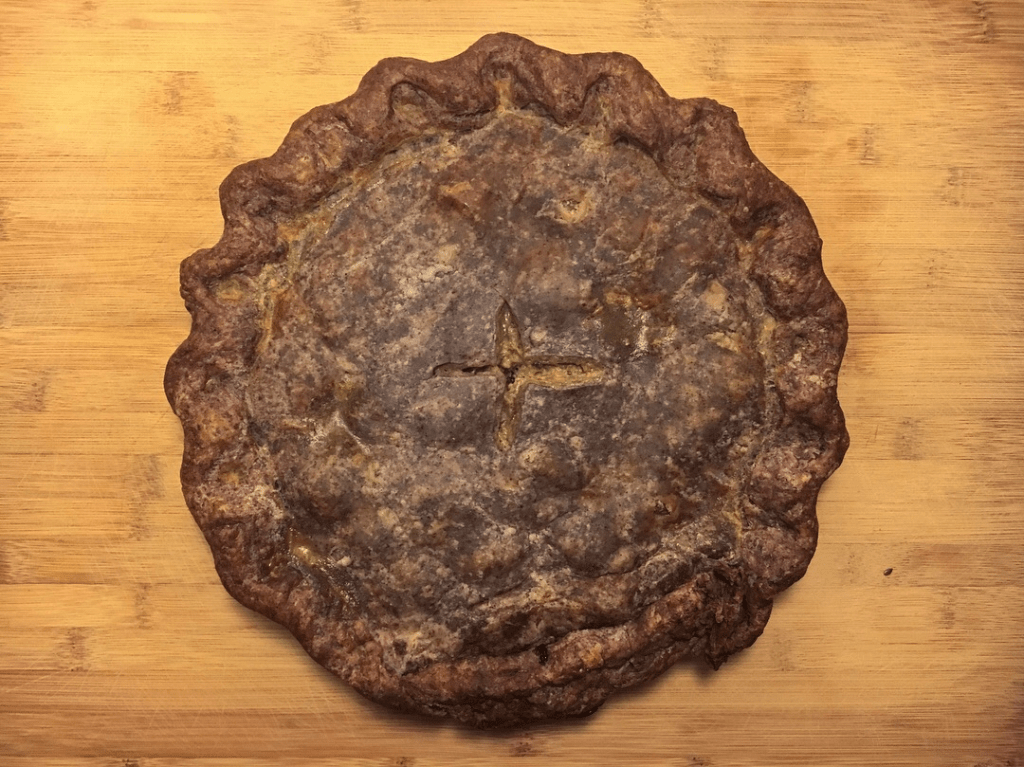
For New Mexico, it’s the rather unappetizing looking concoction below. She calls it a “beef and pork green chile stew pie with a blue corn crust. A real simple pie on the outside with complex robust flavors on the inside.”

Sorry, but blue corn only looks good to me in red enchliladas.

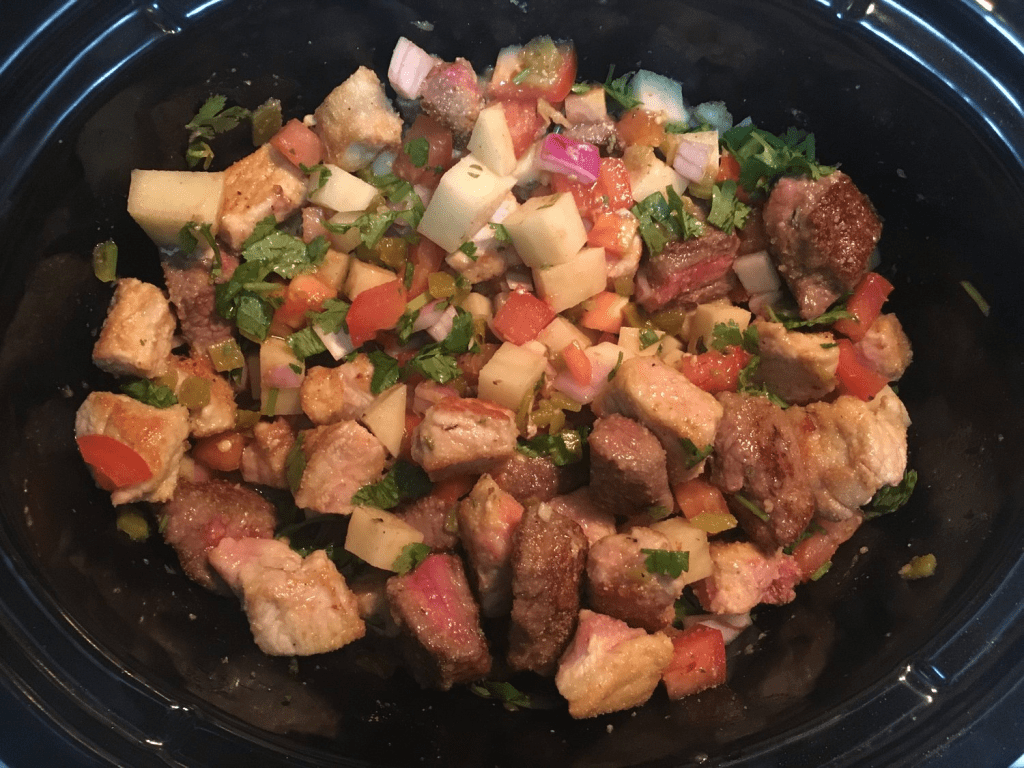
The ingredients that go into it look a lot better than the finished product, I think.

Beef, pork, green chile, potato and onion made into a stew that becomes the pie filling.

When I first heard about the book, I was anxious to see what pie would be picked for our state. I figured it would be an empanada, a compact traditional New Mexico pastry with fruit or meat filling, pictured below. But it turned out to be something I’d never heard of previously.

Empanadas

And then let’s not forget, New Mexico has what I believe to be the only village called “Pie Town,” where they actually make lots of pies and has drawn national attention for its unique name. I thought she might have worked that fact into her selection but I saw no reference to Pie Town.

I checked on the book’s pie selection for Nebraska, my wife’s home state. It is based on the popular statewide fast food “Runza.” That made a bit more sense.

A Runza meal

If you’ve ever spent much time in Nebraska, you’ve probably heard of a Runza or seen a franchise for them. It’s a spicy ground beef, cabbage, onion and corn filled bun that originated from an old German recipe.

Runza inspired pie from Nebraska

Runza outlets are everywhere in the state of Nebraska and are even in some areas of Western Iowa. At Nebraska home football games, promotional crews shoot Runzas into the crowd with machines normally used to blast T-shirts or hot dogs in the air.

I think it would be a lot easier to shoot an empanada into a crowd at a University of New Mexico or New Mexico State University football game than a green chile stew pie that would likely disintegrate en-route to its target. The stadium would probably smell pretty good, however.

Like the buzzards flying around our neighborhood…

There is a flock of turkey vultures that live in some very tall trees in our neighborhood. They disappear in the winter, then come back when the weather gets warmer and they can soar on the thermals and spring winds while looking for caron of a squashed frog or squirrel on the road. Most people simply refer to them as buzzards.

They’re fascinating to watch as they soar in the skies with their rocky flight pattern while riding thermals.

They’re also pretty disgusting critters. They poop on their feet to keep them cool in the hot deserts and their heads have no feathers so they don’t get stuck int he rotting flesh of the dead animals that they feast on.

Turkey vulture waiting for its next meal.

They’re really not threatening but always an ominous reminder that death that is always around us.

Which brings me to a bit of mail I got last week. It was from the “Neptune Society,” which I think I had mentioned in an earlier post.

Their business is cremation and their latest later to me asked for information on how much I’d like to spend on a funeral, who would be responsible for making those arrangements and whether I was aware that I could specify cremation as my perferred method of disposal after death.

Like the turkey vultures in our neighborhood, the Neptune Society is always circling around nearby.

Projectile medication expulsion…

I wrote last week about our dog’s bout with hematomas in his ears and his “cone of shame” treatment. In addition to the protective cone to keep Chester from scratching or flopping his ears around, he’s been given three medications to take. One is an antibiotic, another is to control any allergies that may have caused the condition and the third is a sedative to help him get through the ordeal.

Getting him to take the medicine has become an increasingly difficult twice-daily task. At first, we were wrapping the pills separately in bits of cheese, but he quickly figured out that we were trying to fool him into taking something he clearly did not want. Next we tried peanut butter squished around the pill. It worked for a couple of days but was extremely messy and he again figured out that we were trying to put one over on him. And he managed to coat the whiskers on his chin and the inside of the cone with peanut butter residue.

Our next method was to just jam the pills down his throat. Luckily for us, Chester missed his puppy class on how to bite someone. But he certainly figured out how to circumvent the “direct injection” method because he REALLY doesn’t like that approach.

After cramming the pill far down his throat, he cleverly moved the pill around his mouth and then spit them out at high velocity across the kitchen floor.

So today we came up with a new method, which seems to be working so far. It is called the “drilled meat” approach.

Using my electric drill and a 7/16 inch bit, I drilled a hole in the side of a leftover piece of brisket that I had smoked for Father’s Day. (It was really good, by the way.) I inserted one of the three pills into each piece of meat and gave it to him. It seemed to fool him and he gobbled down the chunks of brisket ravenously, apparently oblivious to the presence of the medication. A picture of my clever scheme is below. As you can see, I’m wearing safety goggles and Chester is ready to grab the chunk of meat. I don’t actually do the drilling anywhere near him, but he’s always hovering nearby.

Chester ready to grab a meaty morsel injected with medication.

Tune in later to see if he continues to fall for this trick.

We used to just let them limp around…

Our rambunctious Goldendoodle, Chester, has gotten himself into another fix. Last week, apparently irritated by a bug bite or allergies, he shook his head so violently that he broke blood vessels in the flaps of his ears. He ended up with a hematoma in both ears, leaving them with a squishy mass of blood and fluid inside.

It didn’t seem to bother him, but of course we were alarmed when it felt like someone had sewn wet sponges inside his ear flaps.

Off we went to the vet, who offered us three options. One included just leaving it be and hoping it would all work out without further complications. The second was draining the fluid in hopes it would not return and covering Chester’s head with what looked like a nun’s headgear and protecting it with the dreaded dog “cone of shame.” The third option was more significant surgery, including stitching and even more time in the “cone of shame.”

We went with option two, and I think Chester has been in a state of depression ever since. My wife says I’m reading too much into his reaction and I’m sure she’s right. A neighbor said he looks like an animated vacuum cleaner when he tries to sniff the ground or grab treats that have fallen to the floor.

Chester, contemplating the “cone of shame.”

The trip to the vet cost a little over $600. (Some of that was for some routine medicine.)

It made both of us recall some of our pets when we were kids. I don’t ever remember taking a dog to the vet when we were kids. I guess they got rabies shots somewhere, but I don’t think there was a small animal vet in our town when I grew up. I know our dogs had various bruises, cuts, infections, etc., but somehow, we just let them soldier on and get over whatever malady they had. It if was bad enough, you’d probably just let them go off to the big kennel in the sky. I’m sure many dogs were simply put out of their misery with a gunshot.

Chester has already been at the vet three times this year — none of it, of course, covered by insurance. I’ll wager that by the end of the year we will have spent more out of pocket cash on him that we do for ourselves on doctor bills. I remember that when I had my open heart surgery three years ago, my out-of-pocket doctor’s co-pay was $800 on a six-figure total hospital bill. Chester’s vet visits this year will easily exceed that amount.

But in the end, he’s worth it in terms of companionship and entertainment. Of course, I’m sure he doesn’t appreciate us laughing at him because he looks so silly right now.

“Wookin’ pa nub…”

Asha, the lonely female Mexican wolf who wandered hundreds of miles from southeastern Arizona into northern New Mexico and was finally captured near Taos, is still without a mate. I wrote earlier about her wanderings and her inability to read a road map and game management rules that said she was not supposed to venture north of Interstate 40 in New Mexico.

After she was captured by U.S. Fish and Wildlife officials in January, the wolf was placed in a wolf management facility near Socorro. She was paired up with a male wolf with the hope she would breed and have pups. And while she and the male got along, they apparently never “got it on.”

Realizing that the matchmakers’ dream was not to be realized, Asha — also given the ignominious official name of “Wolf #2754” — was relocated back to the mountains of southeastern Arizona earlier this month.

She’s apparently still on the lookout for a perfect mate and her amorous wanderings are being watched closely thanks to a radio collar which had tracked her adventures across New Mexico last year and early this year. The map below, courtesy of the Albuquerque Journal, shows her amazing wanderings, crossing heavily trafficked Interstate highways at least four times and skirting the northern part of White Sands Missile Range. She apparently spent quite a bit of time in the San Mateo Mountains of central New Mexico and in the Manzano Mountains just southeast of Albuquerque.

Blue dropped pins show Asha’s recorded locations.

For some obscure reason, this wolf’s wanderings made me think of a silly Saturday Night Live skit many years ago featuring Eddie Murphy. It the skit, Murphy was playing “Buckwheat,” a character in the 1922-1944 short film series “The Little Rascals.” Buckwheat, the only black character in the films, was sometimes hard to understand because of his thick accent. Wikipedia notes that Buckwheat’s character in the series was significant because it “broke new ground by portraying white and black children interacting as equals during the Jim Crow era of racial segregation in the United States.”

In the Eddie Murphy skit, Buckwheat had been given the opportunity to produce his own music video. While Murphy, as a talented black comedian could get away with poking fun at a young black kid with speech difficulty, it was probably on the edge of not being politically correct. Nevertheless, I and many others thought it was pretty funny.

I’m including a link from YouTube of the skit that I remember the most, in which Murphy as Buckwheat tries to sing “Lookin’ For Love in All the Wrong Places.” I think of Asha when I hear she has been “wookin’ pa nub.”

Clip courtesy of YouTube.

The Forrest Gump of reforestation…

Some years ago, my wife I were in Nebraska visiting her family farm when we decided to take a detour to Nebraska City, where Arbor Day was started in 1872. We visited the Arbor Lodge State Historical Park and Mansion and got on the mailing list or the Arbor Day Foundation. Every year, we receive multiple mailings for the organization, which has as its goal the planting of trees throughout the nation.

The idea for Arbor Day was started by J. Sterling Morton, who was a newspaper editor living in Nebraska City. He had a great fondness and appreciation for trees and proposed establishing a day when citizens of the State of Nebraska should go out and plant trees. It is estimated that on the first Arbor Day of April 10, 1872, more than 1 million trees were planted in the state of Nebraska alone.

The event was declared a state holiday by the governor of Nebraska in 1885, and the date was set for April 22. Over the years, other states began celebrating Arbor Day and it is now celebrated in all 50 states, most of them observing the last Friday in April as the official date.

Morton’s oldest son, Joy, had founded the Morton Salt Company in Chicago (yes that Morton salt that you have in your pantry), but continued his father’s passion for planting trees and looked to his father’s roots (pardon the pun) in Nebraska.

He acquired a piece of property just west of Nebraska city and then built a mansion on the site that he called “Thornhill.” By 1921, the work of transforming the property into an arboretum, or an outdoor museum of trees, became a meaningful pursuit for Joy’s later years, furthering his family’s tree-planting legacy as a supplement to his business success.

I mention all of this because we recently received yet another mailing from the Arbor Day Foundation, which we have continued to support. Here’s the website:

https://www.arborday.org/

The mailing prompted me to me think of an embarrassing experience I had with trees when I was marketing manager for Wells Fargo many years ago.

I regularly organized campaigns that offered incentives for customers who signed up for credit cards or other bank services. We gave away gas cards, soccer balls, baseballs and other such low-cost items to customers who signed up.

I guess I was feeling a bit guilty about some of the cheesy incentives we offered and thought we should take a bold step toward supporting the environment. I came up with the idea of offering a live pine tree for anyone who would sign up for a credit card (that they probably didn’t need. ) Like J. Sterling Morton, I envisioned hundreds of new pine trees being planted around New Mexico and helping save the environment as a result of my brilliant marketing scheme.

I did research and identified a company which could provide us with hundreds of five-inch pine trees to give away as a customer incentive. I was certain that displaying them in the lobbies of our bank branches was sure to drum up business. I envisioned a lobby with pine-scented air and looking like a 70s era fern bar. I saw customers flocking to the outdoors to plant the trees.

Below is what I thought we would be getting — a small ponderosa pine about five or six inches tall growing in a small pot:

My vision

When the shipment was due to arrive, I cleared out large space in the mail room at our main office to make room for what I thought would be an overwhelming shipment of small potted pine trees. I told branch managers to borrow their spouses’ pickups to be able to haul large numbers of the trees from the main office to their bank locations in preparation for the promotion.

When the shipment finally arrived, it came in six medium-sized boxes. Inside was this:

Teensy -tiny -bare root pine trees

There were only emaciated sprigs of bare-root pine trees wrapped in some moisture encasing mush and wrapped in plastic.

Needless to say, I was mortified and embarrassed. I sheepishly distributed them to the branch managers who had brought their giant four-wheel-drive pickups to haul them back to their offices. Then I apologized profusely to everyone in sight. knowing I would henceforth be known as the “Tree Teaser.” Or maybe the Forrest Gump of reforestation.

I suspect none of these ever got planted, and if they did, I’m sure they all died. So much for saving the planet.