I suspect when you think of organ music, long dark-themed dirges come to mind — like Bach’s Toccata and Fugue in D Minor during which the entire concert hall vibrates when the lowest notes are played.
My wife and I were pleasantly surprised last weekend when we attended a free local concert given by John S. Dixon, a British born concert organist and composer who has lived in Virginia since 1988. When he turned 50, he decided to perform a concert in each of the 50 United States by the time he was 70. He’s now 67 and has nine more states in which to perform. New Mexico was the 41st to hear his talents.
All of the music played was arranged or composed by Dixon and it was uplifting, with modern chording and entertaining descriptions of the music. It included arrangements of various American folk songs, some familiar tunes from Great Britain and a clever adaptation of the Irish folk tune “What Do You Do With A Drunken Sailor?“
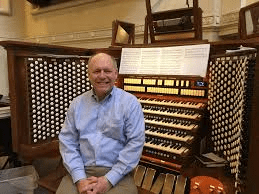
But most interesting to me was a segment that he does in every state he visits. He researches folk songs from that state, then composes short arrangements of them.
The folk songs he arranged from New Mexico were all from a huge collection of Hispanic folk music that I’d never heard of before. It is called “Hispanic Folk Songs from New Mexico and the Southwest,” written by John Donald Robb. Robb, a New York attorney who moved to New Mexico in 1941, and became fascinated by local Spanish and Mexican folk tunes which had been played throughout the state since the Spaniards arrival in 1540. Robb began recording these folk tunes in towns and villages around New Mexico and started writing a book compiling all the tunes he had recorded or had learned about. The book, first published in 1980 when Robb was 88, is gigantic. At least 5 inches thick and consuming almost 900 pages, it includes the music and lyrics (in both Spanish and English) of hundreds of songs that he gathered.
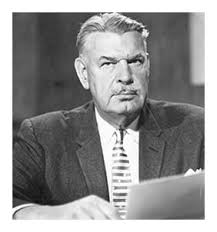
His collection of recordings in now held at the University of New Mexico. His son said of his father that the people he recorded over the years “…were not just performers, not just subjects to be recorded. They were genuine people…” whose music told much about the fabric and history of our state.
I’m fascinated by his book but it’s currently out of print, and if you find one, it will set you back $75. I’m not quite ready to splurge for that yet, but I think it would be great fodder for many posts on my blog. But thanks to New Mexico State University’s Zuhl Library, I’ve been able to look at some of the book online.
Songs are arranged by category, including romance, death, unrequited love, animals, places around the state, gambling, humor, and many other topics. Listening to Dixon’s arrangements, you could clearly hear how these songs were likely accompanied by a local musician with a lack of training while wrestling with poorly tuned hand-me-down battered guitar. The crude quality of some of the music and singing, as one observer said, was part of the magic of what Robb captured.
Three of the songs that Dixon arranged for the concert were in the “humor” category. One entitled “Yo No Me Quero Casar” was about a man’s frivolous reasons for not wanting to get married. Another, “Don Simon,” was about a man complaining about just about everything modern, especially young people.
My favorite was “El Senor don Gato,” a children’s song about a tomcat that was smitten by a “fluffy, white, and nice and fat” female cat. Here are the lyrics (in English, and not nearly as lyrical as they are in Spanish):
“I adore you, wrote the lady cat,
Who was fluffy, white, and nice and fat,
Oh there was no sweeter kitty, meow, meow meow,
In the country or the city
And she said she’d wed Don Gato.
Oh Don Gato jumped so happily,
He fell off the roof and broke his knee,
Broke his ribs and all his whiskers, meow, meow meow,
And his little solar plexis, meow, meow, meow,
Ay caramba! cried Don Gato.
Well the doctors all came on the run,
Just to see if something could be done, ….
But in spite of everything they tried,
Poor senor Don Gato up and died, ….
When the funeral passed the market square
Such a smell of fish was in the air,
Though his burial was slated, meow meow meow
He became reanimated, meow..
He came back to life, Don Gato.”
In a passing comment at the conclusion of the forward of the book by Robb’s friend and colleague Jack Loeffler I found this quote about New Mexico and why we love its richly textured history:
“…(In New Mexico) there is an extraordinary sense of cultural homeland. We call it querencia. People who are from New Mexico want to be in New Mexico. If they are not here, they are trying to figure out how to come home. Querencia means all of those things. It comes from the verb querer, to want or to love. It is a place you love. It is a place that you want to be that even has a sense of being the place that you prefer to die in.”


I was there.
LikeLike