My wife recently suggested that before I write anything historical about New Mexico in my blog posts that I should check first with our very good friend Cheryl, a retired librarian at New Mexico State University and a great researcher and diligent fact checker.
I mention this because of a recent blog about the big shootout that occurred in old Mesilla in 1871 that was triggered by conflicting political views. I learned about it from an article written by noted New Mexico historian Ralph Emerson Twitchell and included in a book edited by author Tony Hillerman.
After I had written about the incident, based on several sources, Cheryl sent me an article that appears to be the definitive piece on what became known as the “Mesilla Riot.” Cheryl has provided follow-up information about other blog posts I’ve written in the past, which are always appreciated.
The article, “Shootout in La Mesilla,” was authored by four men and a woman who called themselves “The Fat Boys Historical Research Group.*” Although the article confirmed the basic facts of what I had written, there was much more detail about the actual day the shootout happened, along with a look at what had led up to the incident.
A quick recap of the incident:
As the 1871 general election campaign got underway, a group of Republicans and a group of Democrats clashed when their marches during dueling political rallies on the plaza in old Mesilla on Aug. 27, 1871, confronted eachother. The two groups were marching in opposite directions and when they met, neither group budged or blinked. A skirmish ensued and by the end, nine people had been killed and an estimated 40 or 50 more were wounded. I drew my own conclusion that the Democrats were probably marching to the left around the plaza (counter clockwise) while the Republicans were marching to the right (clockwise). The article confirms I was right about that assumption.
I had at least three readers ask me who won the election a few months later — a obvious question that I forgot to answer. According to the article, the Democrats overwhelmingly won all their races in Dona Ana County during that election. Cheryl’s discovery of the Fat Boys article helped me close that loop.
I also found two interesting anecdotes about the shooting that day in which two different people were spared serious injury from bullets because of some random metal they were carrying.
In one case, a member of a band supporting the Republicans was shot. According to the article, a bullet struck the musician’s flugelhorn and he was “only stunned and he shortly gathered his horn and ran home for cover.”
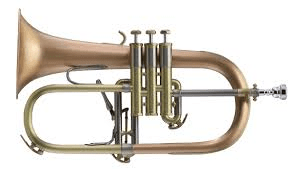
And a groom who had unfortunately picked this same day for his wedding in Mesilla was shot in the lower rib cage by a random .36 caliber bullet when the clash started.
“Fortunately, the young man was only stunned and bruised,” the article says. “By chance, the bullet had only penetrated his vest and coin purse and torn a small hole in an 1851 copper one-cent piece…”

What I also found interesting was the names of many of the participants in the event. I read an article several years ago about the lyrical Hispanic names that were once common in New Mexico but are no longer seem to be in favor. This story seems to have many of these names:
Apolonio Barela, Felicito Arroyo y Luera, Tiburcio Lopez, Florencio Lopez, sisters Magdelena and Isabella Lopez; Rafael Bermudes, Mariano Barela, Cristobal Ascarate, Jose de Jesus Baca, Perfecto Armijo, etc.
And finally, there was even a small song written about the event, apparently sung to the tune of “Marching through Georgia,” which the Democratic band played on that fateful day. The song made fun of the Republicans, many of whom reportedly ran away to Asencion, Mexico, after the skirmish. It goes like this:
(Spanish)
Las Republicanos se van
Se van a La Ascencion
Porque las Democratas
Ganaron la eleccion
(English)
The Republicans are going
They’re going to Ascencion
Because the Democrats
Won the Election
*According to my internet search, “Fat Boys Historical Resarch Group” has no website. If you look it up online this is what pops up:
“The Fat Boys Historical Research Group is not a formal organization with a publicly accessible website or a well-defined structure. However, the name “Fat Boys” appears in the title of a book series, “On the Road with the Fat Boys,” which focuses on the history and geography of Southern New Mexico.”

