The September 2026 issue of Trout magazine, the official publication of the organization Trout Unlimited, featured a brief story about the 50th anniversary of the Norman Maclean novella A River Runs Through It.
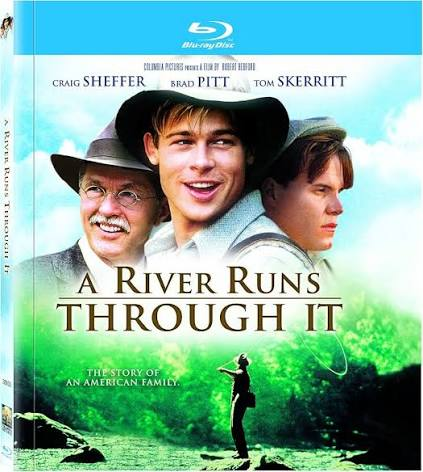
Often considered to be a breakthrough piece of writing about fly fishing for our generation, the 104-page tale is more about two brothers’ relationship and their family rather than about the beauty and intricacies of fly fishing. Yet it and the movie which followed seemed to have propelled fly fishing to a new level of interest in our country. The movie itself launched the then young Brad Pitt into stardom with his first major role as the younger of the two brothers.
Norman Maclean’s son, himself an author, was interviewed in the Trout magazine article about his father’s book.
“I don’t think there is anything like it,” John N. Maclean wrote of the work. “It is singular. In this case, a retired English professor in ill health who had never written a published or finished book … at the age of 73, he wrote a 104-page piece of world class literature.”
If you haven’t read the book, I’d recommend that you do so. As mentioned before, it’s a very quick read at just 104 pages. And If you don’t have time, watch the movie of the same name produced by Robert Redford, who also narrates it. The movie follows the book very closely, including much of the dialog and some very subtle actions by its characters.
I think it was the first book I’d read about fly fishing. (Later on, I became a great fan of John Gierach’s writings about fly fishing, whose books combined a good dose of common sense philosophy with vivid descriptions of the joys of fly fishing. Sadly, Gierach passed away unexpectedly almost two years ago.)
A few days after I read the article about the book’s anniversary in Trout, the online forum for Trout Unlimited (TU) began posting some readers’ comments about it.
The one which surprised me most was from a TU member in Austin who suggested the movie has led to the degradation of the sport. His point, although not fully explained, seems to suggest that the spectacularly filmed movie opened the idea of fly fishing to many people who had never considered the activity before. By doing so, favorite streams became crowded with “newbies,” water that had been accessible for free became privatized and the whole experience likely became more expensive. And if you were a long time purist of the sport, you could conclude that its “purity” had been defiled by commercialism and the entrance of all the newcomers who didn’t follow the rules or traditions.
“I am reminded that the movie is one of the worst things to happen to fly fishing and that in the book fly fishing is a literary device used to help tell a tragic story, fly fishing is not the story,” the Austin TU member wrote.
Others entering the online thread suggested that instead of fly fishing, Maclean could have used baseball, hunting or another activity/sport as the backdrop to the story about the two brothers and their family.
The Austin TU member suggested that fly fishing might have been “saved” if Maclean had written instead about brothers who “fished with a cane pole, worm, and grasshopper…”
I guess I understand the point of the his post. We all like to think we were among the earliest to participate in fly fishing, know the best places to fish, understand and practice the best techniques and use the most appropriate equipment. Basically, I think, we want to believe we invented the activity (Actually it might have been Sir Izaak Walton’s 1653 book The Compleat Angler that first celebrated the art, philosophy and joy of fishing.)
But as with many things in which we participate and love passionately, we don’t want to share it with any newcomers. It’s kind of like wanting to be the last person who ever moves to Santa Fe, Aspen or Jackson Hole.
Another person who chimed in on the post made this humorous analogy:
“A River Runs Through It no more ruined fly fishing than Thelma and Louise ruined driving cross country in a convertible.”
My always perceptive wife also commented that the Covid epidemic likely led to an increased interest in fly fishing, as it did with many other activities involving the great outdoors and not requiring being part of a large group.
But there’s another side to more people becoming interested in fly fishing. If you fly fish, you want the waters where you cast your line to be clean, cold and pure and the surrounding landscape to be undefiled. You don’t want those places to be bulldozed by land developers or mining interests. It’s something that all of us, I hope, can believe in regardless of what political views we have. In my mind, having more people advocating for the retention and recovery of clean, cold watersheds is a win for our environment and future generations.
I think that’s why membership in Trout Unlimited has grown so much over the last few years and why it has become one of many voices advocating for preservation of our public lands.
And while I’ve been contemplating the comments about the anniversary of “A River Runs Through It,” it has made me reflect on my own journey through fly fishing. I’ve concluded that although I’ve had other avocations — skiing, rugby, ballooning, hiking, writing, tinkering with classic cars — fly fishing is the thing I’ve always thought about and enjoyed the most.
I’m glad that I introduced my wife and our two children to fly fishing, and am especially pleased that I’ve exposed our grandchildren to fishing — two of them who actually caught trout on a fly rod last summer.
I’ll probably do some more reminiscing about fly fishing in future posts, since I don’t spend as much time these days doing that actual thing. But as I always do, I’m going to promise myself that I’ll be going on more fly fishing adventures soon.

