This weekend is the 50th anniversary celebration for the New Mexico State University Chiles rugby team, which I am proud to say I coached for many years in the 1980s and 1990s.
My proudest achievement with the team was when we made it to the Final Four in collegiate rugby competition (college rugby is a club sport in the United States, not under the auspices of the NCAA), finishing third in a competition held in Greeley, CO, in 1982. I’d like to say that it was my great coaching that got the team that far, but in truth I inherited a group of very talented young athletes who were never intimidated by the fact that they were always seen as the underdog and never gave up.
The team, which included some unlikely characters, actually lost all three of its matches in the tournament, which also included the University of Michigan (they cheated), Life Chiropractic College (a team of south African ringers), and perennial rugby powerhouse University of California at Berkeley. We ended up getting third because we later discovered that the Michigan team included some ineligible graduate school members on its team and was disqualified.
We won the Western Rugby Union collegiate championship in a match in Denver against Kansas State to advance to the Final Four. I’ll always remember when winger Gary Steele ran in for a last minute try in the corner. The mostly pro Kansas State crowd was in stunned silence, never expecting a rag-tag team from a cowboy college somewhere near the Mexican border to put up much of a contest.
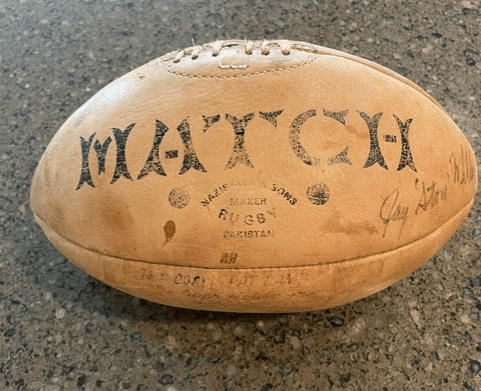
NMSU Rugby was founded in 1976 by my very good friend Joel Diemer, who had played rugby in Australia where he attended boarding school while his Lutheran missionary father worked in Paupau New Guinea. Originally from Iowa, Diemer also started a rugby team at Iowa State University 10 years earlier.
The first team, which Diemer coached, initially had to use hand-me-down jerseys from the NMSU football program. The name Chiles was given to the team by Diemer who also specified the colors of the squad would be dark green and gold, the same colors used by the Australian national rugby team. The team later changed its jerseys to reflect the NMSU crimson and white color scheme.
I had started playing rugby in Santa Fe after first witnessing the sport when my wife and I visited Aspen, CO, during that town’s annual “Ruggerfest” tournament. I also helped start and played for rugby teams in Albuquerque and Cheyenne, WY. I knew Diemer through rugby associations before we moved to Las Cruces in 1981. He asked me if I would consider coaching the team, which I did after the then coach, Ron Tarazoff, retired.
What was most enjoyable about coaching was the enthusiasm and spirit of the young men I coached. Many of them had played football in high school, but had never been exposed to rugby. What I taught them was a completely new sport and they were eager and willing to learn and did not have any pre-conceived notions about how to play it.
They were also many memorable “characters,” participating in an outlier sport that had a bit of an “outlaw” aspect to it. They did things like “borrowing” the green flags from the NMSU golf course one evening, stripping naked in the bed of a pickup truck barreling down Interstate 10, shaving off another player’s eyebrows during a party, and often showing up looking “green” for a match after partying too much the night before. The pranks were largely innocent and didn’t harm anyone, and yes, I did have to lecture them from time to time about being responsible representatives of the University.
In general, coaching young people in any sport is always a rewarding experience.
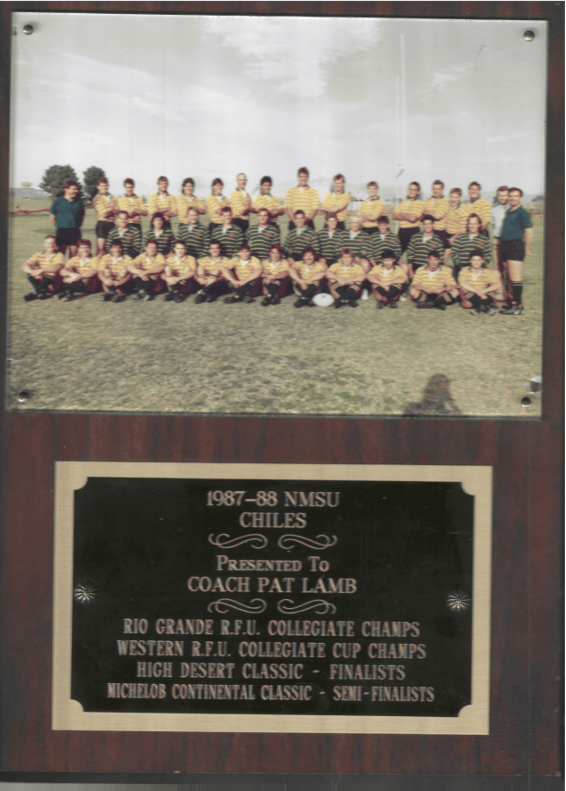
The photo above is of probably one of the most memorable teams I coached. We had enough players for three full sides of 15 men each and won various tournaments. Two of the young men shown in the photograph, Brent Jaquess and Adam McPherson were named to the collegiate All-American rugby team.
The 50th anniversary celebration this coming weekend will feature receptions, matches (in which the better part of discretion says I should not participate) and a banquet. It was organized by several of the young men who I coached who have shown they have matured beyond “borrowing” golf course flags to being able to put together a big event and establishing a successful social network.

