I expressed my worries about declining horny toad numbers in an earlier blog — remembering how plentiful they were when I was growing up in Ruidoso and how much everyone enjoyed finding one.
Well, I got some good news this week from my sister Wendy, who lives in Cochiti Lake between Albuquerque and Santa Fe. It’s a pretty rural area, and as such, apparently has not been too impactful on the horny toad population.
Below is a baby she spotted in her yard last fall, and below that is another tiny one found by her late husband’s son near her home.
He really blends in
Not even a handful
Hopefully these two critters are still doing well, eating lots of red ants and maybe, if they were the right gender, hooked up and had more cute babies.
______________
On another topic, my good friend and fellow writer Mary from Albuquerque came up with another “official state” suggestion for the New Mexico Legislature to consider. Keeping in mind the explosion of cannabis stores in the state, she suggested this:
“Official state of NM: HIGH”
_____________
On another positive note, I just finished helping set up an aquarium at G.W. Stout Elementary School in Silver City for another of Trout Unlimited’s “Trout in the Classroom” programs. This one, hosted by teacher Keith Rogers with the assistance of TU Staffer Eric Head, will feature Gila trout, which are native to southwestern New Mexico. We are not sure when we will get the eggs for this project, but the equipment is ready to go. Plans are to release the fish in nearby Lake Roberts sometime late spring or early summer. I’ll keep you posted.
The “TIC” project at White Mountain Elementary in Ruidoso is still moving along, with three juvenile trout swimming around in the classroom of teacher Rachel Lutterman. The fish have been named “Big Momma,” “Baby Shark” and “The One over There.” “Big Momma apparently is the alpha of the group, chasing “Baby Shark” to hide behind some of the equipment while “The One Over There” occasionally but unsuccessfully tries to challenge the alpha fish.
The New Mexico Legislature, which I covered as a reporter for seven years, always seems to have time in between debate on major issues to bring a bit of levity or silliness into their work.
Witness in the last few years that we have added adopted legislation that declares the “official” state almost everything.
We have the official state question — “Red or Green.”
Then the official state answer — “Red, green or Christmas.”
The official state aroma — Roasting green chile.
The official necktie — Bolo tie.
The official cookie — Biscochito
The official state aircraft — Hot air balloon.
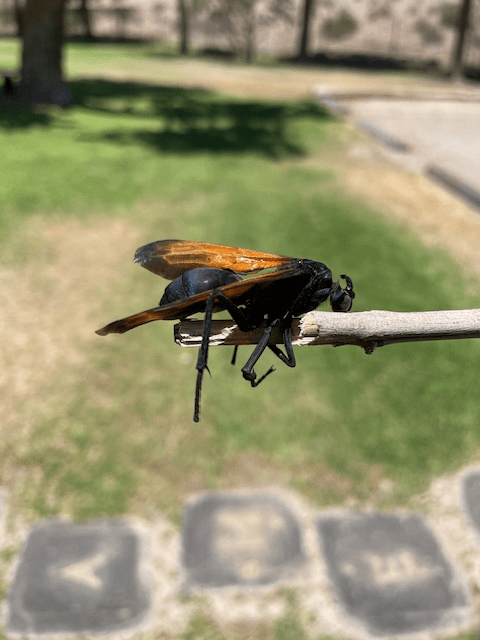
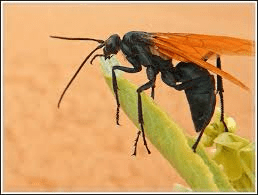
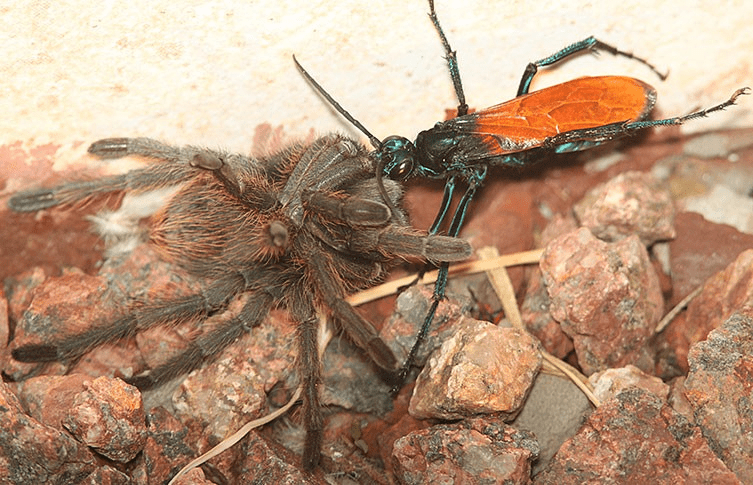
The official insect — Tarantula hawk wasp
And the list goes on. New Mexico had of them as of 2024. You can click on this link to see the entire list in proposed legislation to add a new one:
The new “official” something is being proposed in Senate Bill 498. It declares the “lowrider” be designated as New Mexico’s “state vehicle.” As of this writing, the legislation has not been given final approval and is pending in a Senate Committee. A copy of part of the legislation is shown below:
The actual wording in the legislation is: W. The lowrider is adopted as the official vehicle of New Mexico.“
Margo posing in front of a cool local lowrider.
Somehow, I always thought a battered Ford F-150 pickup truck with mismatched wheels, faded paint, mangled bumpers and non-working turn signals would be our official state vehicle.
And not to be outdone, a bill has been introduced in the New Mexico House of Representatives declaring August as the “New Mexico Red and Green Chile Month.”
That bill is pending in a Senate committee as of this writing.
All of this brings to my mind other things that we might need to declare as “official” in New Mexico. How about these?
Official state noxious weed — Tumbleweed.
Official state weather phenomena — Howling spring winds.
Official state burrito — Breakfast burrito.
Official state road hazard — Pothole.
Official state eyesore — Plastic Wal-Mart bag fluttering in the wind on a mesquite bush.
Official state butt of jokes — Espanola.
Official state bad government poster city — Sunland Park.
Official state building material — Adobe brick.
Official tacky souvenir — Carved howling coyote.
And of course, the official state state — New Mexico.
If you have others to offer, send them my way and I’ll publish them.
I believe the last time I saw (and briefly captured) a horny toad was about 20 or more years ago after I had landed my hot air balloon in the desert on the east side of the Mesilla Valley. I’m not sure why horny toads wandered into my brain this week, but somehow thoughts about the unique critter popped into my mind and I decided to see what I could find out about their current status.
Scientific name: Phrynosoma cornutum
As a kid growing up in Ruidoso, we had lots of horny toads around. We caught them all the time, played with them and released them back into the wild. It was especially fun to find a batch of just born horny toads, no more than an inch in length, observe them, play with them and then release them. And of course, when you found adults, it was fun to turn them on their back and then gently stroke their underbelly to mesmerize them temporarily. I don’t think I ever harmed any of them. I think anyone else who has captured one ever felt the urge to harm one of the critters.
They look so ferocious but are just very gentle creatures that somehow make you feel good and generate excitement when you find one. Native Americans legends say horny toads are a positive thing and that they represent “healing and renewal.” Seeing one is supposed to be good luck.
My most memorable experience with a horny toad was when I discovered one on a hike on the far west side of Sierra Blanca, the mountain on the Mescalero Apache reservation. I picked it up and suddenly my hands were covered in blood. Upon further inspection, I realized, as I had heard once, that it could shoot blood out of its eyes in a defensive technique. It’s actually true that they do this and you can read more about it on the link below.
I was on the receiving end of this scary defensive maneuver in my youth.
Anyway, I’ve known that horny toad populations seem to be on the decline in the Southwest and I decided to see what research I could discover about that trend. (First of all, it irks me that all the research seems to refer to them as “Texas horned lizards” instead of just the folksy “horny toad” moniker that we all used as kids growing up in New Mexico. After all, they’re not just in Texas. They are in all of the Southwest and northern Mexico.)
Some sites on the internet say that the horny toads are still out there, but that they have moved away from urban population areas. Another says that since horny toads only diet is red ants, the decline of the red ant population due to pesticides, climate change, etc. has led to the lizard’s decline.
A story from two years ago on Albuquerque TV station KRQE had this to say:
“… the communications director for the New Mexico Department of Game & Fish and says a main factor in the declining horned lizard population in the state’s major cities is (due to) population changes. “A lot of that is caused by like, people using poison on ants; which, if you poison the ants, that takes away one of the primary food sources for those horned lizards,” he said. He also notes that vehicle traffic is an issue for the horned lizard, along with being prey for feral cats and dogs.”
There are lots of internet sites about the horny toad, some very scientific, including one on why some horny toad “horns” are getting bigger because of certain predator activity. See if you can digest this:
“We quantified selection (3,4) on relative horn lengths of flat-tailed horned lizards by comparing skulls (n=29) of shrike-killed (a variety of predator bird) lizards with the heads of live lizards (n=155) . …The average parietel horn length of live horned lizards was 10.0% longer (x+-SE: 9.65 +- mm) than that of shrike killed lizards (8.77 +- 0.21 mm and the average squamosal horn length was…”
Well, you get the picture. If you want to read more and put yourself to sleep, here is the whole scientific study…
Some states, including Texas and Oklahoma, have declared the species as endangered. They not yet listed as endangered in New Mexico but are legally “protected,” but if you find one, you shouldn’t pick it up (or try to mesmerize it like I used to do when I was a kid).
And I hope you spot one on your next walk through our New Mexico landscapes. I’m sure it will bring you good luck.
I suspect when you think of organ music, long dark-themed dirges come to mind — like Bach’s Toccata and Fugue in D Minor during which the entire concert hall vibrates when the lowest notes are played.
My wife and I were pleasantly surprised last weekend when we attended a free local concert given by John S. Dixon, a British born concert organist and composer who has lived in Virginia since 1988. When he turned 50, he decided to perform a concert in each of the 50 United States by the time he was 70. He’s now 67 and has nine more states in which to perform. New Mexico was the 41st to hear his talents.
All of the music played was arranged or composed by Dixon and it was uplifting, with modern chording and entertaining descriptions of the music. It included arrangements of various American folk songs, some familiar tunes from Great Britain and a clever adaptation of the Irish folk tune “What Do You Do With A Drunken Sailor?“
John S. Dixon at the keyboard
But most interesting to me was a segment that he does in every state he visits. He researches folk songs from that state, then composes short arrangements of them.
The folk songs he arranged from New Mexico were all from a huge collection of Hispanic folk music that I’d never heard of before. It is called “Hispanic Folk Songs from New Mexico and the Southwest,” written by John Donald Robb. Robb, a New York attorney who moved to New Mexico in 1941, and became fascinated by local Spanish and Mexican folk tunes which had been played throughout the state since the Spaniards arrival in 1540. Robb began recording these folk tunes in towns and villages around New Mexico and started writing a book compiling all the tunes he had recorded or had learned about. The book, first published in 1980 when Robb was 88, is gigantic. At least 5 inches thick and consuming almost 900 pages, it includes the music and lyrics (in both Spanish and English) of hundreds of songs that he gathered.
John Donald Robb
His collection of recordings in now held at the University of New Mexico. His son said of his father that the people he recorded over the years “…were not just performers, not just subjects to be recorded. They were genuine people…” whose music told much about the fabric and history of our state.
I’m fascinated by his book but it’s currently out of print, and if you find one, it will set you back $75. I’m not quite ready to splurge for that yet, but I think it would be great fodder for many posts on my blog. But thanks to New Mexico State University’s Zuhl Library, I’ve been able to look at some of the book online.
Songs are arranged by category, including romance, death, unrequited love, animals, places around the state, gambling, humor, and many other topics. Listening to Dixon’s arrangements, you could clearly hear how these songs were likely accompanied by a local musician with a lack of training while wrestling with poorly tuned hand-me-down battered guitar. The crude quality of some of the music and singing, as one observer said, was part of the magic of what Robb captured.
Three of the songs that Dixon arranged for the concert were in the “humor” category. One entitled “Yo No Me Quero Casar” was about a man’s frivolous reasons for not wanting to get married. Another, “Don Simon,” was about a man complaining about just about everything modern, especially young people.
My favorite was “El Senor don Gato,” a children’s song about a tomcat that was smitten by a “fluffy, white, and nice and fat” female cat. Here are the lyrics (in English, and not nearly as lyrical as they are in Spanish):
“I adore you, wrote the lady cat, Who was fluffy, white, and nice and fat, Oh there was no sweeter kitty, meow, meow meow, In the country or the city And she said she’d wed Don Gato. Oh Don Gato jumped so happily, He fell off the roof and broke his knee, Broke his ribs and all his whiskers, meow, meow meow, And his little solar plexis, meow, meow, meow, Ay caramba! cried Don Gato. Well the doctors all came on the run, Just to see if something could be done, …. But in spite of everything they tried, Poor senor Don Gato up and died, …. When the funeral passed the market square Such a smell of fish was in the air, Though his burial was slated, meow meow meow He became reanimated, meow.. He came back to life, Don Gato.”
In a passing comment at the conclusion of the forward of the book by Robb’s friend and colleague Jack Loeffler I found this quote about New Mexico and why we love its richly textured history:
“…(In New Mexico) there is an extraordinary sense of cultural homeland. We call it querencia. People who are from New Mexico want to be in New Mexico. If they are not here, they are trying to figure out how to come home. Querencia means all of those things. It comes from the verb querer, to want or to love. It is a place you love. It is a place that you want to be that even has a sense of being the place that you prefer to die in.”
For those of you who might not be aware of ski racing history, Hermann Maier was a phenomenal racer for Austria during the late 1990s and early 2000s. He was known for overcoming an almost fatal motorcycle accident to win two gold medals in the 1998 Olympics in Nagano, Japan. He won many other Olympic and World Cup racing events over his career, becoming the most decorated male skier ever from Austria.
Hermann Maier in his heyday on the slopes
Austrian-born movie actor and former California Governor Arnold Schwarzenegger gave Maier the nickname “The Hermanator” after the actor’s lead character in the “Terminator” movies in the 1980s.
I was involved in a citizens’ ski racing league in the early 2000s and much admired Maier’s performances, particularly in the downhill event. At that time, Maier raced on Austrian- made Atomic skis and the skis he used for many of his wins were known as “Red Sleds” because of their red color and the speed they gave him.
Of course, I figured that if I had a pair of those, I might become dominant on the citizens’ ski race circuit. (Full disclosure: I won lots of gold medals on the race circuit, but mostly because I got a generous handicap for being, well, um, advanced in age. There were many faster racers, but at least I could say I won gold medals).
So I bought a pair of 200 cm Atomic Titanium Beta Race skis (they even came with a sticker that said “Hermann Maier’s skis”) and raced on them for one year and did well. But then almost overnight, ski design changed. Provoked by the introduction of severe side cuts and the move toward much shorter skis (You can thank American ski race phenom Bode Miller for that trend), my Red Sleds were no longer the cool skis to have. on the race circuit.
Having seen the light, I got the next generation of Atomic race skis and left my old Red Sleds to be abandoned in a corner of the garage. I think I sometimes I could hear them whimpering when I walked by them and noticed the dust they had accumulated.
So what does all of this have to do with anything?
Over the years, I owned many different skis and as I replaced them with newer models, I did not part with them, foolishly thinking they might still have some value. Then about three years ago, I stumbled across an article about making an “Adirondack” style chair out of old skis. Perhaps from wintertime boredom, I finally decided to try to make a chair out some of the nine pairs of old skis that were in the garage.
I was hoping that I had enough skis to avoid cutting up my Red Sleds and also to save my wife’s favorite skis, Rossignol ROC 550s (also long and narrow). The math worked out. I was able to make the chair out of five different pairs of skis, including one set that I bought and never used.
Some of the old skis in my garage. The beloved “Red Sleds” are the red Atomic skis in the middle.
I used two 2X4 eight-foot studs and one 2×6 eight-foot piece of wood to make the frame. I stained the wood, then coated it with urethane spar varnish to protect it from the weather. I attached a 1/4″ layer of plastic on the bottom of the legs to keep the wood from absorbing water when it sits outside on my patio.
Assembled chair frame. Note the small red level that assured me the work was square.
Next, I began sawing the skis into two sections. I had to use a carbide blade to cut through the metal used for the ski edges and other internal metal reinforcement. I then attached the tail end of the skis on the seat frame first.
Placing ski tails on frame to check positioning
Next I attached the front of my newer Atomic skis upside down on the front of the frame to serve as arm rests. Then I started attaching the tips of the skis to the back of the seat frame, arranging them in an arch with the highest point in the center of the back.
Tails of skis attached to the rear seat frame. Also note the upside down arms from the tips of the newer Atomic skis.
Finally, I reinforced the back of the back of the chair with a 2×4 that connected the tips and the arms of the chair.
Below is the finished product in my back yard.
It’s actually quite comfy.
And here’s a video showing it after completion in my garage.
The cost of the project was pretty cheap, less than $50 for wood, various screws, a metal-cutting blade and stain/sealant. I worked on the project on and off for about four days.
Enjoying the fruits of my work before moving it to final resting place.
Yes, I know it’s kind of tacky and looks like a remedial high school shop woodworking project, but I think it will be an interesting conversation piece in my back yard. But unless I want to sacrifice the Red Sleds and my wife’s ROC 550s, I’m out of material to make another one. I’ll just enjoy this one for a while as I relax in it and dream about my glory days of slicing through the gates on the slopes. “:^)
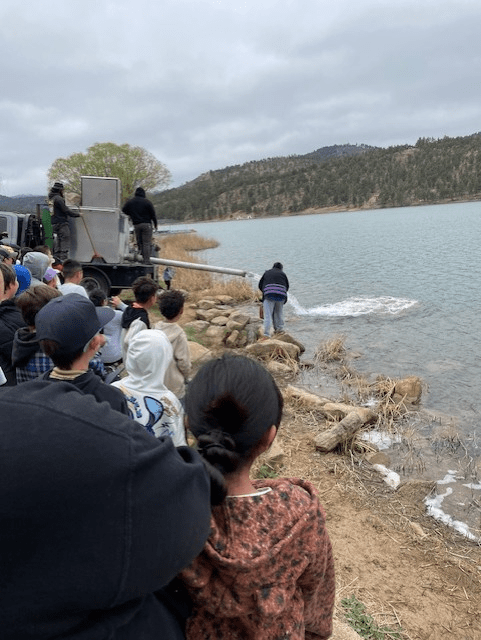
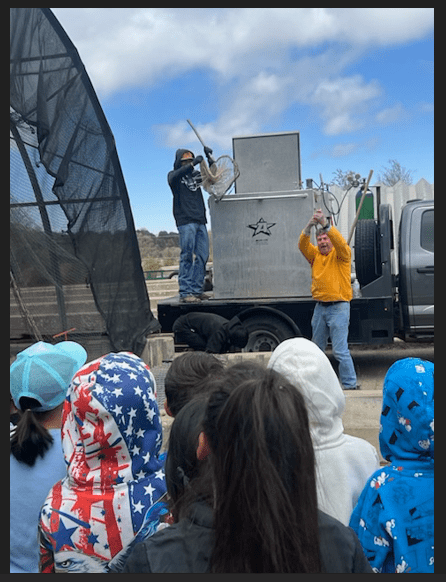
The Mescalero Apache Tribe’s Mescalero Fish Hatchery has come through again with help for the Ruidoso White Mountain Elementary “Trout in the Classroom” project. Trout in the Classroom is a nationwide program of the non-profit Trout Unlimited organization. The program is aimed at teaching students the value of preserving clean cold-water fisheries, educating them on biology and ecology, and encouraging them to participate in fishing. I’ve been Trout Unlimited’s coordinator for the program in southern New Mexico.
If you’ll recall, the New Mexico Game and Fish Department delivered 40 triploid rainbow trout eggs to the 3rd grade classes in Ruidoso in late October. By December, all but one of the eggs had hatched and the alevin were swimming around the 50-gallon tank to the amusement of the constantly gawking students.
Then, there was an unexpected die-off of the tiny fish right before the holiday break. By the time the students got back to school in January, only three of the trout were still alive. At least two of those succumbed a short time later, possibly leaving one lurking in the gravel at the bottom of the aquarium.
We’re not sure what caused the die-off, but it was obviously very disappointing to the students at the school.
Last spring a similar program was conducted at the Ruidoso School. However, when it appeared some of the fish food had gone missing, I reached out to the Mescalero hatchery to see if they might be able to spare a small amount of fish food to keep the program going. They willingly agreed to help out, and I stopped by the hatchery on a drive up to Ruidoso to pick the trout chow.
Assistant hatchery manager Tori Marden and administrative assistant Robert Morgan were especially helpful.
The Mescalero hatchery was called again this year to see if they could help with the loss of fish. They agreed to give the Ruidoso school two fingerlings that could be placed in the tank so that students could continue to see the fish grow until their planned release in May.
The two juvenile fish are still doing well, as you can see in the photo below. The teachers thought there might still be one surviving fish from the original batch that hid somewhere in the recesses of the gravel-bottomed aquarium. (Latest report — no recent sightings of the surviving fish which they had named “The Lone Ranger.”)
Rainbow juvenile right above the blue bubbler strip.
I drove up to Ruidoso two weeks ago to check on progress of the program and was joined at the school by three members of the Mescalero hatchery. They gave an informative presentation to the students about trout and the Mescalero program and the fully engaged students had lots of questions. Later, one of the Mescalero team helped with some maintenance of the aquarium, including changing out water in the tank.
Robert Morgan from the Mescalero hatchery helps change out water in the aquarium while teacher Rachel Lutterman assists and a student watches.
The students continue to be engaged in the project as well. They help teachers check for water quality in the aquarium and help clean the tank.
A third grade student, with the help of teacher Rachel Lutterman, helps clean bottom of the aquarium while other students watch.
So despite a huge setback, the program is still moving along and the teachers report that the two trout in the tank are “growing bigger every day.”
In the meantime, work continues on plans to implement a similar program at Stout Elementary in Silver City, where we hope once-endangered native Gila trout can be raised in the classroom. Stay tuned for more developments.
As you may remember, our dog Chester picked the Philadelphia Eagles to win this year’s Super Bowl, using his enigmatic canine selection process to choose between a green and a red squeaky ball tossed into our back yard. His selection process is made even more incomprehensible since dogs are essentially color blind.
When he picked the green ball, last week we assumed his selection would not bode well for the Eagles. After all, he picked the wrong team for the previous three Super Bowls.
This time, however, he hit the nail on the head — or squeaked the right ball as it were.
Proudly displaying his green squeaky ball
He was so proud that he actually took a moment to pose for a photo with the ball that he picked. Normally, he runs away the minute he gets a squeaky ball in his mouth in hopes that I will chase him around the back yard for several minutes before finally running out of breath and giving up. And if I do manage to grab the ball from him, I instantly regret it because of the coating of dog slobber it leaves on my hand.
So he’s anxious to make his next Super Bowl pick, but he’ll have to wait a year. By that time, however, the ball will have rotted away, have been ripped to shreds or is no longer an appropriate color for a team in the contest. But we have time to figure out where to get his next selection tokens. I’m sure Chewey.com can help.
If I were a betting man, I wouldn’t pick the Philadelphia Eagles to win this weekend’s Super Bowl. That’s because Chester, our overly enthusiastic Goldendoodle, has made what is likely to be his fourth bad pick on which team will win the football game.
As we’ve done for the past four years, we’ve tossed two different colored squeaky balls in the air in our back yard to see which one Chester prefers. This year, he picked the green one, representing the Eagles. For the last three Super Bowls, Chester has used this scientifically accurate platform to pick the team he thought would win. But all three times, he picked the wrong team.
Green Philadelphia Eagles squeaky ball on left, red Kansas City Chiefs on the right.
Here is the dramatic video of Chester’s scientific selection of the winning team’s squeaky ball:
Chester’s careful analysis of who will win the 2025 Super Bowl.
We’ll report back next week to see how Chester’s selection this year turned out. I hope your wallet isn’t lighter than it was when you first viewed this insightful video. Remember, you were warned.
When we picked up an order from a grocery store earlier this week, we discovered one item which had taken all the space in a single bag.
Ready to explode…
This bag of potato chips had apparently been packaged at a plant at or near sea level, then shipped to our 4,000 foot elevation in the high desert of southern New Mexico. I’m concerned that if we try to open it, it will be raining potato chips throughout the house after the explosion.
This reminded me of an incident that I must confess I helped create years ago and about which I wrote a blog four and one-half years ago. Once I saw this bag, I thought it was worth repeating.
When I was a regional marketing manager about 20 years ago for Wells Fargo, my territory covered all of New Mexico and about one-third of Texas. We worked closely with another regional marketing team from central Texas and were always looking for promotions that would engage and reward our hard working employees in the regional bank branches. One such promotion we came up with was to send each regional branch a “Fiesta in a Box,” consisting of some tortilla chips, salsa, various decorations and even a small plastic box of Mexican jumping beans.
The plan first went awry when the pilot of a small commuter plane transporting the boxes to branches in West Texas suddenly started hearing popping noises coming from the cargo hold. The alarmed pilot declared an emergency and quickly landed at the nearest airport. It turns out that the sound was salsa jars exploding or popping off their lids because of the change in altitude. The aircraft was not pressurized, so when the pilot flew as high as 10,000 feet along the route, the internal pressure of the jars — apparently manufactured somewhere near sea level — could no longer be contained. The pilot was left with a salsa-coated cargo area and our team was left red faced.
But it gets worse. One of the boxes that did make it through ended up at the local post office in a remote far West Texas town. As the local post master began to take the “Fiesta In a Box” to the local branch, he or she began hearing a ticking sound coming from inside it. Apparently, the Mexican jumping beans had awakened and began bouncing around in their small plastic boxes.
The postmaster assumed the worst — a ticking time bomb — and immediately closed the post office and summoned local police. After gingerly disassembling the box, the police discovered the lurching beans and declared the emergency over.
Imagine, if you will, that you are exploring the high desert country west of Los Lunas in the 1930s and you stumble across the inscription above carved in a 60-ton boulder in an arroyo near an extinct volcano. You’ve discovered the “New Mexico Mystery Stone” and triggered almost 100 years of debate about whether it’s something left behind by a really early Greek explorer, Mormons or a lost tribe of Israel — but could be something completely fake.
I consider myself to be fairly knowledgeable about New Mexico history, but when I ran across a story about the Mystery Stone — also called the “Los Lunas Decalogue Stone” — I was very surprised. The article was contained in a book I’m reading that is a collection of classic writing from the American West that was edited by famous New Mexico author Tony Hillerman. My wife had given me the book because she knows that Hillerman is a favorite author of mine, was one of my college professors and someone I considered a friend.
I was intrigued by this bit of New Mexico history that I had never heard about, so I looked it up online and found several sources about the mystery rock. If you enter “mystery stone Los Lunas” on your browser, you’ll find several entries about the strange pink/gray basalt rock. You can pick which want you choose to believe.
The article says people knew about the stone as early as the 1850s — more than 60 years before New Mexico statehood — but that no one could translate the inscription. In the 1950s, one researcher concluded that the writing was an example of Phoenician, Hebrew, Moabite, Cyrillic or Etruscan. The first recorded mention of the rock was in the 1930s.
The actual Los Lunas Mystery Stone
In the 1950s, A Harvard professor named Robert H. Pfeiffer concluded that the inscriptions were the 10 commandments — hence the name of “Decalogue Stone” that some have proffered.
In the 1950s, a writer named Dixie L. Perkins offered another explanation, saying it was the work of a Greek sailor who was somehow wandering around central New Mexico about 500 years before the birth of Christ. That translation read:
“I have come up to this point… to stay. The other one met with an untimely death a year ago… I remain a hair of rabbit. I, Zakyneros… out of reach of mortal man, am fleeing and am very much afraid… I become hollow or gaunt from hunger.”
Another theory was that it was the work of one of the lost tribes of Israel.
Further complicating the story was the visit to the stone by noted New Mexico archaeologist Dr. Frank Hibben of the University of New Mexico in 1936. He concluded that it might have been inscribed by Mormons when they were migrating through the region, even though New Mexico was not exactly on the way from Illinois to Utah.
Hibben’s take is often discounted because the archaeologist had a somewhat checkered background, having been accused of “salting” archaeological sites in the Sandia Mountains of New Mexico and in Alaska. Hibben denied those allegations up until his death.
The best description of all the theories was found in an article called “Archaeological Fraud of the Month: Los Lunas Stone” in a site called “Archaeological Review.”
So it’s time for my opinion on the subject. I want to believe that the writing on the rock was identical to the strange writings on what was left of the UFO that crashed near Roswell in 1947. My theory is that the rock was left by an advance team to guide the UFO to the that specific location so they could watch the first atomic bomb blast at nearby Trinity Site in 1945. But because interstellar road maps were somewhat inaccurate back then, the UFO crew got lost somewhere between Saturn and Uranus, wandered around the asteroid belt for a couple of years, then finally got to earth, took a left turn at Albuquerque and crashed on a ranch near Roswell. They completely missed the big bang at Trinity site southeast of Los Lunas, were captured by the U.S. Air Force, were probed and then sent to Area 51 in Nevada to live out the rest of their lives. Like he plans to do with the JFK assassination files, perhaps our new president will release the Roswell UFO incident files and we can finally interview these guys about what the Mystery Rock of Los Lunas says.
As many of you are probably aware by now, President Trump signed an executive order on his first day of office to rename the Gulf of Mexico the “Gulf of America.”
Whether he has the authority to do this and whether the change would be recognized worldwide is not something I’ll delve into, given my desire to keep my blog apolitical.
However, when the incoming President first floated that idea before his inauguration, it generated a flurry of comments, including a suggestion from one pundit that New Mexico might have to be renamed “New America.”
Some of you readers may remember that I wrote a blog several months ago about the possibility that other names may have been suggested for our state. I also questioned whether the name of our state had in some way been responsible for our seemingly endless low rankings on various performance indexes when compared to other states in the union. I’ve always felt that was the case, but have no proof to support my conviction.
However, it true that the name “Montezuma” was once considered as a name for our state, which would make the phrase “Montezuma’s Revenge” an even more pejorative reference to the Land of Enchantment. I also mentioned that my father had once determined that the name “Lincoln” was considered to have been considered as the name for our state. (Think “Lincoln, Lincoln — a town so nice they named it twice.”) I’ve found no evidence of this, but I did discover that alternate names were once considered for several other states.
I offer these as examples:
The name Idaho was at one time considered as the name for Colorado.
Oklahoma might have been named “Sequoyah,” after an indigenous person who taught reading and writing to the Cherokee nation.
A naturalist, Alexander von Humboldt, might have been the namesake for the state of Humboldt — now commonly known as Nevada.
Utah, named after an indigenous peoples in that state, might have been named “Deseret,” after a chapter in the Book of Mormon.
Several alternative names were considered for Maine — New Somerset, Yorkshire, Columbus and Lygonia.
New York almost became New Netherlands and the name Kanawha was considered for the current state of Kentucky.
At one point, a proposal was made to name a western portion of Virginia “Franklin,” after Benjamin Franklin. However, at some point, that western portion of Virginia (named after the “Virgin Queen” of England) became Tennessee.
And Kentucky could have become the horror capital of the nation with a once considered name of — wait for it — Transylvania.
In my online research, I found that at least 23 states’ names were of indigenous people’s origins (including New MEXICO which is of Aztec origin.) Eleven other states were named after individuals and New Mexico might have been the 12th if we had become Lincoln.
It’s an old adage that having four wheel drive in your vehicle only gets you stuck further away from help.
I experienced this first hand when I was in high school and owned a surplus World War II Jeep (made by Ford) and did my best to prove it could go anywhere.
Unfortunately it didn’t always work out that way.
I remember one such foray onto an old logging road in the Upper Canyon area of my home town in Ruidoso. As I was moving slowly along the long abandoned road, the right side of the roadway began slipping away, thanks to some recent rains and my inattention to exactly where I had pointed my front wheels.
The Jeep suddenly slipped sideways on the road and left me hanging in suspension between the front and rear axles. I managed to get out of the vehicle without tipping it further over to its right side, then took a humiliating four mile hike back to town to let my father know about my predicament.
A heavy duty tow truck (also of World War II vintage and with four-wheel drive) managed to get close enough to my stranded Jeep that it was able to snatch it from its precarious position with a long cable. In the end there was no damage to the Jeep — only to my ego.
I mention this because of the car I spotted last week while taking a load of trash to our landfill on the East Mesa. The driver apparently figured he could turn off the paved road and park on a flat spot adjacent to it. I’m not sure if his (or her) intention was to start going on a hike or perhaps find a secret spot just off the highway where the driver could spend a few amorous moments with his or her partner.
The turn out ended up being covered with very soft sand and left the vehicle stranded without any way to gain traction once the rear wheels had spun out any sand that might have provided the footing needed for a slow retreat.
Dodge Challenger up to its axle in soft sand.
You can tell from this photo that the tire is no longer touching anything but air beneath it.
I’m sure the owner was able to find someone with a stout winch or tow rope to extricate the vehicle, but I suspect they’ll give a second thought to where they park in the future.
Last week, we experienced an unusually heavy (for southern New Mexico) snowfall. The snow began in the morning and lasted most of the day. At our home, we accumulated about three inches, which was more than the frosting that the Organ Mountains received.
The snow was very wet. It was perfect for snowball fights and crafting snowmen. Oddly, the snowmen we saw in our neighborhood looked like they were wearing a layer of fur because of leaves that stuck to them during the rolling process to create their various sections. I wish the storm had come a week or so earlier so all of our grandchildren — who are geographically deprived of much or any snowfall — could have enjoyed it when they were here over the holidays.
Frosted trees on ditch road in our neighborhood following last week’s snow.
Growing up in the mountain community of Ruidoso, I remember lots of heavy snowfall events fondly. As a kid in school, we always hoped it would snow enough to lead to cancellation of school so we could go out and make dangerous runs for our sleds or engage in snowball fights with neighborhood arch enemies. But of course the downside was that in the late spring toward the end of the semester, we would have to make up any snow days on Saturdays. Yuk!
I remember the sound of snow scrunching under my rubber galoshes. I remember making snow ice cream with a little milk, some vanilla and lots of sugar. I remember how much trouble it was to put on all the layers of cold weather clothing our mother thought we needed to play outside during a storm. I remember snow being piled so high in the middle of our main street that you could not see vehicles in the opposite lane. I remember having the exhausting task of shoveling heavy snow accumulations off our outside deck because my father was afraid it would collapse from the weight. And perhaps in a case of revenge, I remember driving my father’s Jeep station wagon out to a paved parking lot and spinning it in endless donuts in the snow.
And I especially remember the quietness during a heavy snowfall. With large fluffy snowflakes falling in the air and muffling many normal ambient sounds, it was strangely quiet. The only exception seemed to be when vehicles that had been chained up to get through the snow would drive nearby and you could hear the constant click, clack, clack sound of the end of the chain slapping against the inside of a fender. The snowfall was usually so heavy that you could not actually see the vehicle making the noise — just the constant clicking telling you it was somewhere nearby.
I also remember how much I enjoyed skiing in heavy snow storms, most memorably one about 20 years ago when my daughter and I rode a slow chairlift together at Ski Apache. It was a very heavy snowfall and we could barely make out the chair in front of us, creating a sense that we were away from the rest of the world inside some kind of white, soft, fluffy cocoon It was a magic moment that I’ll always remember and doubt I’ll ever be able to replicate.
With climate change looming larger every day, I suspect many of my other snow memories won’t be repeated either. (Not that I’d actually want to eat snow ice cream again.)
In 1973, when I was Santa Fe bureau chief and political reporter for United Press International, a particularly sensitive topic was on the agenda of the New Mexico Legislature.
It was a vote on whether the Legislature would approve the national Equal Rights Amendment to the United States Constitution. Although New Mexico was one of 30 states that eventually ratified the amendment, the required number of 38 states needed to make it take effect was never met. In fact, five of the states which had at one time voted to approve it later tried to rescind their approval of the amendment.
Opposition to the amendment came largely from conservatives. Leading the charge was political activist and attorney Phyllis Schlafly whose supporters claimed the ERA was a threat to the traditional role of women as homemakers. Schlafly made many arguments against the ERA, including that it would dismantle financial support for women as legal dependents of their husbands and would lead to gender-neutral bathrooms, same-sex marriage and women in military combat. Liberal supporters claimed there was a conspiracy by old white men to keep women barefoot and pregnant in the kitchen and out of the executive suites of the nation.
On the day on which a vote for approval of the amendment was scheduled, a severe snow storm had moved into northern New Mexico. Tension was already high in the state capitol that day, with rumors being spread that women had been seen using men’s bathrooms in the capitol building and that violent demonstrations would break out if the amendment was either approved or defeated. As the debate moved into the evening in the packed Senate chamber, snow-packed roads into and out of Santa Fe became treacherous.
As proponents and opponents to the amendment came to the podium during the debate to express their views, I could feel the tension in the room rising. The Democratic Lieutenant Governor at the time, Roberto Mondragon, was chairing the Senate session when unexpectedly, he was tapped on the shoulder by an aide and halted the debate.
He said there was an important announcement that needed to be made. Many of those in the Senate chamber, including me, wondered if it was going to be an announcement of some kind of political maneuvering that would put the process in turmoil.
But when a State Police Major (and I can’t recall his name) stepped up to the speaker’s platform, we are all a bit alarmed about what might be happening.
“Ladies and gentlemen, or gentlemen and ladies,” he began as he addressed the packed chamber. His words captured the essence of the debate and left some in the room worrying about whether something inappropriately political might come next.
“You are all aware that there is a serious snow storm outside right now,” he began, while dressed in his somewhat intimidating black uniform. “I wanted to advise you that the roads out of Santa Fe, this evening… (a long pause)… are all paved.”
The room burst into laughter and we all felt an immediate release of tension with his perfectly timed bit of humor.
He went on to describe the road conditions, urged everyone to use caution when going home and left the podium to a round of applause.
The state’s approval of the amendment was eventually approved that evening without incident.
I mention this because of what happened at former President Jimmy Carter’s funeral services last week.
One of those who gave a eulogy was Andrew Young, former U.S. Ambassador to the United Nations during Carter’s administration, Civil Rights leader, former mayor of Atlanta and Congressman from Georgia. His praise for Carter’s many accomplishments was woven with a tapestry of references to the South and the the relationships the former president had with minorities — particularly Blacks.
Former U.N. Ambassador Andrew Young
At one point during Young’s eulogy praising Carter and his accomplishments, he paused for what seemed like a very long time, then confessed that he hoped the the next thing he said would not be “anything disrespectful.”
For many of us listening, I think we feared he may be making an uncomfortable mark directed at incoming President Donald Trump, who was in sitting front and center at the funeral. Similar to that moment in Santa Fe many years ago, you could feel the tension in the room rising.
But instead, Young said:
“Uh, (long pause)… I still find it hard the believe that a future president of the United States could come from Plains, Georgia.”
The audience at the National Cathedral burst into laughter. It was perfect timing for a tension relieving comment like that. In my mind it was a example of what makes some individuals great statesmen (or stateswomen).
I’ve attached a link to Young’s comments at the Carter funeral. I hope you find it as uplifting and refreshing as I did. (His comment comes fairly early in the video clip.)