Twice in the past month, I’ve driven along New Mexico highway 61 between Deming and San Lorenzo on the way to Lake Roberts. It’s a seldom traveled route worthy of a detour if you’ve ever looking for a slightly longer and more scenic drive to Silver City from Las Cruces.
The road wanders along the Mimbres River valley, passing through a rapidly changing southwestern landscape with fascinating rock structures, groves of cottonwoods, hills dotted with pinon and juniper, and eventually leading to ponderosa pine forests as you approach Lake Roberts.
On my last two trips, I stopped to photograph an old homestead in the village of San Juan that in my mind was once probably one of the finest residences in the Mimbres Valley. I am sure most people driving along New Mexico 61 just zip by the house and don’t register it as anything more than just a ramshackle adobe home from a past era.
It caught my eye because I think it exhibits what is classic northern New Mexico territorial style architecture.
If you search “New Mexico territorial style architecture,” structures fitting that description usually include the following elements: The walls are traditional adobe, but with white-trimmed Greek Revival arches over the windows and doors, formal porches with square (instead of rounded) posts and rows of red bricks along the top of the walls. Homes of this genre in the most northern reaches of New Mexico often had pitched corrugated tin roofs to shed more frequent snow and heavier rains. The bricks along the tops of the walls on flat-roofed homes were added to help stabilize the adobe walls and keep them from melting away in the region’s monsoon rains.
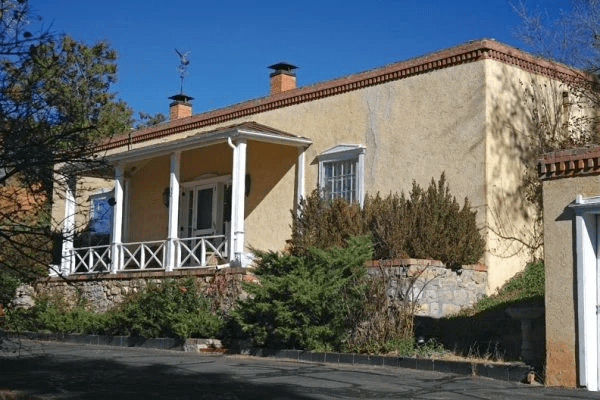
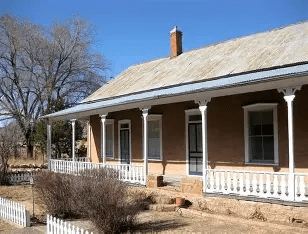
The “New Mexico Territorial” design was introduced New Mexico beginning in the 1800s by Americans who lamented the lack of architectural detail they had come to expect in homes and other buildings in the eastern United States. As one early American general observed, cities in northern New Mexico were nothing but a collection of “a few mud huts.” A U.S. Dragoon, William Bennett, described the town of Las Vegas as “a great pile of unbaked brick” adding, “Upon closer inspection everything about the town was dirty and filthy… [with] miserable dirty streets [that] all look alike.” And, as U.S. soldier Frank Edwards described his first visit to the village of Mora: “nothing could be more discouraging to me… than the first view of this town.”
The wooden trim for the windows, doors and porches was not immediately available in New Mexico in the time period when American first began arriving in the early 1800s. Gen. Stephen Watts Kearny, who was assigned to New Mexico in 1846 to lead American troops in the Mexican-American war, apparently agreed with the dearth of architectural detail in the region. A search about New Mexico Territorial style said the general himself ordered machinery to establish a mill to cut wood to allow addition of Greek Revival elements to enhance the appearance of the “mud huts” so prevalent in the state.
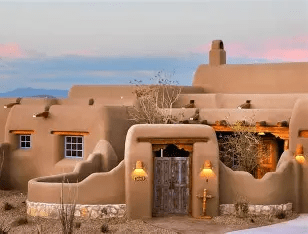
New Mexico Territorial style is different than the Pueblo Revival architecture that was introduced by famed New Mexico architect John Gaw Meem in the 1920s and 1930s. That style featured multi levels, more rounded walls and protruding round vigas similar to those features found in New Mexico’s historic pueblos.
It was clear to me that the home along the Mimbres Valley in the village of San Juan was carefully designed and constructed by its proud owner. The windows all exhibited the Greek Revival arches and the tin roof included two dormers that would not have appeared on an ordinary “mud hut.” The yard was once fenced in and landscaped, from what I could observe. I was not able to see the west side of the home, where I suspect there was a porch and entrance that welcomed residents of the home and visitors.
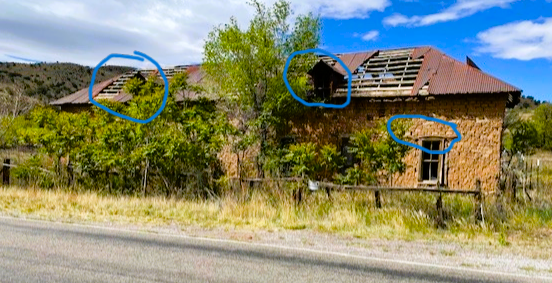
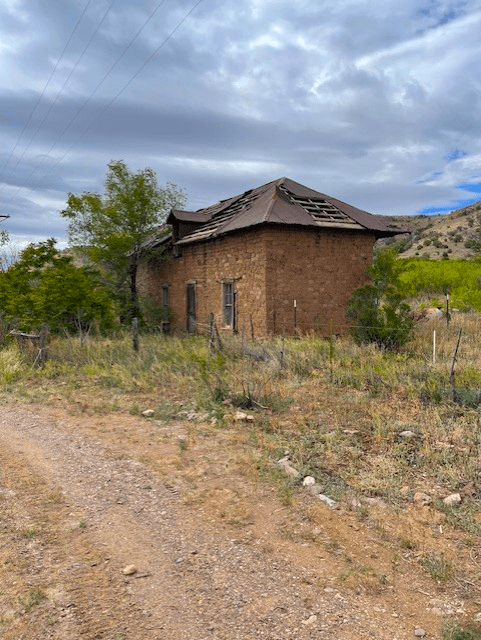
As I said earlier, I suspect it was one of the finest homes in this remote part of southwestern New Mexico. I wonder what stories this old home could tell about its occupants. So if you’re driving on New Mexico 61 some day in the future, stop in San Juan and take a look at the old homestead, then ponder what stories it might tell.
 aero-cordero.com