Thanks to two unusually heavy rains this spring, our bed of hollyhock flowers has exploded into a sea of bright red, pink, pale pink and a very dark red blooms.
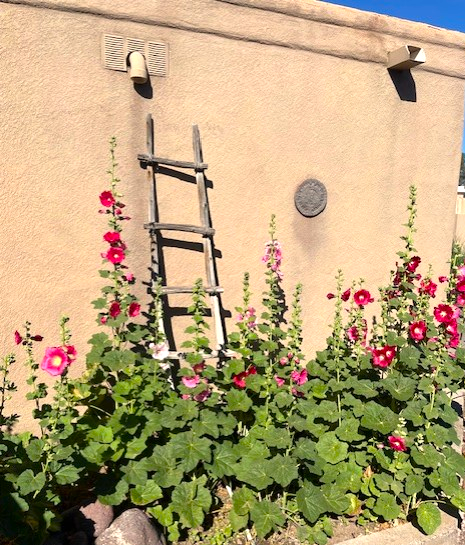
This is the best year we’ve had for the flowers, which seem to do well in New Mexico’s high-dry climate. If the state had not already picked the yucca as the official state flower, I think hollyhocks would be a logical choice for that honor since they always seem to be associated with gardens alongside adobe homes — particularly in northern New Mexico.
As I mentioned we had two unusually heavy rains this spring — usually our driest season. One in late February brought almost two inches during a four day span. And another storm last week dropped about two-thirds of an inch. We’ve done nothing additionally to cultivate them except scattering seeds from the existing plants in the late fall when the blooms turn into dry seed pods. It seems to me that the more you work to make them grow, the less success you have. As the owner of a nursery once told me when I lamented an earlier less than successful effort to grow hollyhocks, “You’re just loving them too much. Let them be and they’ll do great.” I think she was saying that they are basically just sophisticated weeds and that they know how to perpetuate themselves once they are established.
We got our live plants years ago from a good friend who warned us that transplanted hollyhocks could be “pretty finnicky.” They somehow survived and then over the years, we’ve added seeds from other hollyhocks we’ve seen on trips around the area. Our best find were the deep red (almost black) hollyhocks that were growing in the courtyard of the famous Ranchos de Taos church just south of Taos.
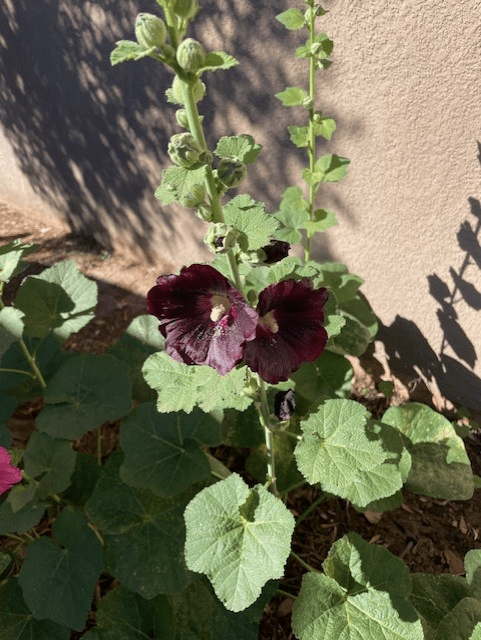
We’ve sent seeds from our hollyhocks to our daughter in Austin, who has not had much success in growing them. It may be too wet/humid from them to do well there. I also sent a batch of seeds — including some of the dark red variety of plant — to a good friend in Billings, MT. My friend told me last week that those seeds have not yet sprouted into plants, likely because of the much cooler weather in that northern clime.
I did some research on the flowers and determined that they apparently first originated in the far east, then became popular in Europe and eventually were brought to the western hemisphere when the region was first colonized by Europeans. They are known by their scientific name Alcaea, most often A. rosea, Family Malvaceae.
If you’re interested in learning more, I ran across this rather technical article on the internet, written in 2019 by former University of Washington professor Dr. John Palka: https://na01.safelinks.protection.outlook.com/?url=https%3A%2F%2Fnaturesdepths.com%2Fthe-intimate-life-of-a-hollyhock-flower%2F&data=05%7C02%7C%7C0f243addf52349c8f5a808deac5735d3%7C84df9e7fe9f640afb435aaaaaaaaaaaa%7C1%7C0%7C639137687719712423%7CUnknown%7CTWFpbGZsb3d8eyJFbXB0eU1hcGkiOnRydWUsIlYiOiIwLjAuMDAwMCIsIlAiOiJXaW4zMiIsIkFOIjoiTWFpbCIsIldUIjoyfQ%3D%3D%7C0%7C%7C%7C&sdata=Cy1duCJwwCGZpLLKSWTZNpJOsmeGmyrC%2FDCoMy2jT%2FQ%3D&reserved=0
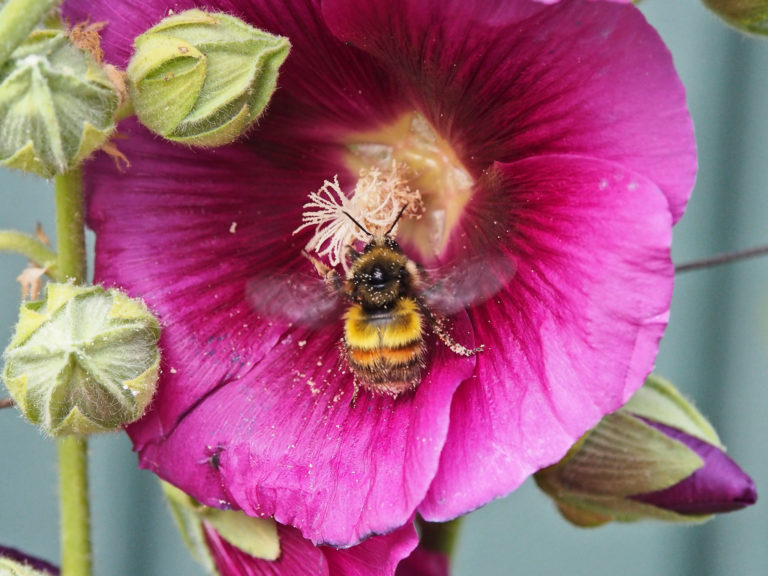
One of the great things about hollyhocks is their ability to attract bees to your garden. Ours crop this year has certainly accomplished that. We’re hoping the buzzing sounds in the garden are leading to some great honey production that will be sold by a local beekeeper who has an operation just west of us in Old Mesilla.
If you’re interested in growing them, I think a sunny area next to a wall or your house works best, with the taller flowers serving to accentuate the lower growing flowers in a garden. Good luck. And remember, they’re basically just weeds.

