The New Mexico primary election is Tuesday, June 2, 2026 and I’m working again as a volunteer election official for the early voting phase, as well as on election day.
It’s been pretty slow so far, with only a handful of races being contested. The biggest focus statewide is on the governor’s race, with multiple candidates from both Republicans and Democrats vying for the their party’s nomination for the fall general election. There also are a few contested races locally that are generating a lot of yard signs.
I’m doing the same day registration job during the early voting phase for about two weeks before the election. I’ll do that again on election day and also serve as a “machine judge” on June 2.
The top official at our polling place is the “Presiding Judge.” That seems pretty self explanatory. He or she is the head person at the polling location. Two of the other workers here are categorized as simply “judges” who are called in to work with the presiding judge to help resolve any dispute or challenge about a voter’s ballot. The rest of the workers are simply called election “clerks.”
So what is my job as a “machine judge?” It sounded fairly important in my mind when I was offered the post about four years ago for my first election. I kind of fancied myself as the No. 2 person in the pecking order of the polling location, but I don’t think that’s exactly correct. (Nevertheless, I’m going to try to foster that impression, mostly to stroke my own ego. :”^)
I went online to search for “election machine judge” and did not find anything to help clarify the matter. The search seemed to try to turn the question into whether humans judge machines — which of course we all do when they perform well or in the alternative, spectacularly malfunction.
Artificial Intelligence on my search engine produced this suggestion:
A “machine judge” can refer to an AI evaluator in machine learning (where one large language model assesses another), automated voting equipment, or the broader theoretical concept of using predictive algorithms and AI software to assist or replace human judges in legal and administrative decisions.
We do have automated voting equipment (voting machines) at our polls, but they only capture data from ballots filled out by voters. It does not do any automated voting by itself.
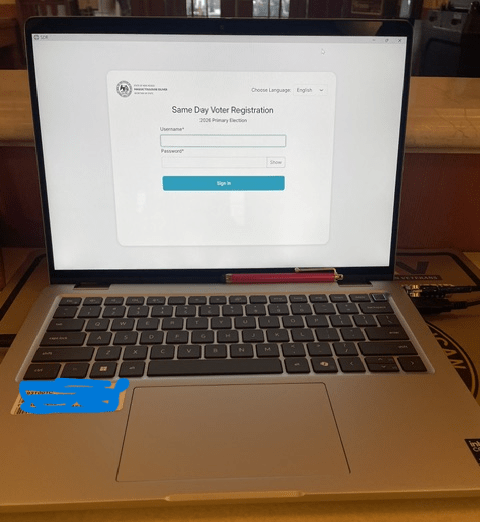
The only machine that I have regular interaction with is the small laptop computer which captures same day registration data from a potential voter and then sends it to the County Bureau of Elections or the Secretary of State’s office for processing and verification.
I did not find evidence of the term “machine judge” being used in other voting jurisdictions, so I decided to ask our very competent and professional head of the Dona Ana County Bureau of Elections, Karen Hernandez, why the term was used.
She said the term was used in this jurisdiction before she assumed her current position, so it has been retained. Since the “machine judge” transports secured data captured on special electronic devices (similar to flash drives) from the voting “machines” directly to the election warehouse immediately after the polls close, the term implies that the holder of the position is a courier of voting “machine” data. I also transport other things to the warehouse immediately after the polls close, like spoiled ballots, provisional ballots an unofficial printed tape signed by all workers at the poll and other documents. The purpose of my job is to help get election results posted as soon as possible after polls close. I’m not really a “judge” of anything.
Karen said she had been considering whether to change the title. I said I preferred it be kept because “machine judge” sounds more important than just “courier” and in my mind hints at being a bit mysterious.
“Okay, you can be a machine judge,” she confirmed.
 aero-cordero.com