A 40th anniversary I missed a year ago…

No, not our wedding anniversary. That was 51 years ago on Feb. 13, 1971.

This anniversary was March 30, 1982, when the Space Shuttle Columbia landed at what was then called Northrup Strip on White Sands Missile Range, virtually in our back yard here in southern New Mexico.

Columbia, which began its mission on March 22, 1982, was forced to change landing locations because of poor weather conditions in southern California at Edwards Air Force Base. As happens so often, the weather conditions from southern California moved to New Mexico and caused high winds for the next several days.

I remember watching the landing on live on television. What I remembered was that the shuttle’s landing gear did not extend until the last minute — it looked to me like it was only about 20 feet off the ground when the gear came down. I was afraid it was going to do a belly landing on the hardpack gypsum landing strip. After the gear game down, the aircraft, which had no brakes, rolled for what seemed forever before coming to a stop. At one point as it rolled along the ground, the nose pitched up as if it was planning to do a touch-and-go landing maneuver.

Below is a video link provided by KOAT-TV in Albuquerque of the landing. It was posted on Twitter this week.

A few days later, the public was invited to view the Columbia as it waited on the ground to be attached to its Boeing 747 mothership and flown back to Florida.

As it turned out, I was on a road trip somewhere to coach the New Mexico State University rugby team and could not go. My wife, Margo, however, was determined for our kids to see it. She drove herself and our children — Tyler was three and Lindsay had just turned one — on a circuitous route to Northrup Strip. Attached is a faded photograph of Tyler holding (it looks like a choke-hold) Lindsay, who was not at all happy to be there.

Tyler holding a recalcitrant Lindsay with the Space Shuttle Columbia in the background

The end of many young men’s dreams…

I read with sadness last week that Chevrolet was planning to end production of the Camaro, introduced in 1966 to combat Ford’s wildly successful Mustang. That car, as well as the Mustang and many other followers, fueled the desire of young men to look cool in a sporty but relatively inexpensive set of wheels.

I have to admit that I was one of those testosterone-driven young men who sacrificed a lot of his paycheck to buy a Camaro when it first came out. I remember distinctly that my car payment was $67.50 per month for three years. I had a full-time job while I was a full-time student at the University of New Mexico — burning the candle at both ends — for a $75 per week paycheck that I was glad to devote to the car purchase.

My 1966 version was spectacular. It was yellow, with a yellow interior, black vinyl top, red striped tires, the Rally Sport package (a black stripe across the nose and hidden headlights) and the SS package, which included the legendary 350 cubic inch small block Chevy engine and a four-speed transmission. It also had factory fake mag wheels, which I was certain would be stolen every night I parked it. (They never got stolen, but my four-track stereo did one night when it was parked across the street from the Albuquerque Police headquarters.)

1966 Chevy Camaro Super Sport.

My brother teased me that the name “Camaro” was French for “loose bowels.” A friend’s mother could never remember the name and dubbed it a “Canaedra.” A work associate called it the “Yellowjacket.”

The car was based on the platform of the Chevy II, a loser in the car wars against the Ford Falcon. The chassis was pretty uninspiring and the live rear axle hopped like mad and made the entire car shudder when you tried to do a burnout.

It wasn’t my first car. My first was a 1943-45 Ford-built surplus World War II Jeep, which had been brush-painted blue, with a yellow T-stripe of duct tape which I had applied to make it look cool. I wrote in an earlier blog about the many misadventures I had in that Jeep. I wish I still had it.

My next car was a real dog — a 1960 black Chevrolet Corvair made infamous by Ralph Nader’s “Unsafe at Any Speed” expose. I broke my leg in a skiing accident at Taos and could no longer drive a standard transmission car, so my parents loaned me their bland white 1963 Chevrolet station wagon with an automatic transmission for the next six months. When it came time for my cast to be removed and return to manual transmission driving, they offered the wagon to me as a trade in on the new Camaro. I’m not sure why they did that, but I’m eternally grateful.

Had I kept the Camaro and refreshed it over the years, I’m sure it would be worth more than $100,000 today.

It’s a passing of something especially memorable in my life. It was a time when anything was possible if you had a cool car, a rewarding job, an exciting future ahead and no worries except for whether you’d remember to wake up in time for the final exam in your Political Science 352 class.

Being handsome and sartorial wasn’t enough to save him…

But first things first, my good friend Don in Montana spotted another error in my writing. And to make it worse, it was in an article about how careful we need to be with writing style. I apparently inserted a semi-colon in place of an apostrophe in the word “it’s.” I blame my fat fingers and deteriorating fine motor skills for the error. Or maybe it was spell check. Anyway, thanks Don, for the catch. At least someone is reading my drivel.

And now to the real story, which is about Tom “Black Jack” Ketchum, the notorious train robber outlaw hanged on April 26, 1901, in the only public hanging ever held in the northeastern New Mexico town of Clayton.

I occasionally dig through newspaper clippings available to me through Newspapers.com about interesting and oddball events happening in our state. I was looking up “bungled robberies” when several stories about Black Jack Ketchum popped up. I decided to pursue the story about this man.

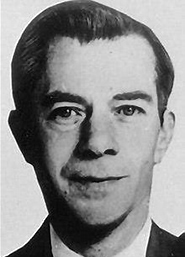
Thomas Edward “Black Jack” Ketchum

Ketchum was born in San Saba, Texas, in 1863. He moved to New Mexico in 1890 as a cowboy working on ranches in the Pecos Valley. By 1892, he and his older brother Sam apparently became bored with the cowboy life and poor pay and turned to more lucrative but dangerous train robberies. His first job was the heist of a train near Nutt, NM, carrying a fat payroll to nearby Deming.

He associated himself with such nefarious figures as “Bronco Bill” and “Kid Curry” and ended up being a member of the “Hole in the Wall Gang,” made famous in the movie “Butch Cassidy and the Sundance Kid.” He continued his lawless ways and participated in many train robberies and other acts of general badness. His last attempt at a train robbery occurred on Aug. 16, 1899, when he was shot off his horse when attempting to rob a train in northeastern New Mexico between Folsom and Des Moines, where his brother had been killed in an attempted robbery about a month earlier. Ketchum was found badly wounded the next day lying next to the railroad tracks and was taken to a hospital Trinidad, CO, where his arm was amputated.

When he recovered, he was taken to Clayton, NM, where he was convicted “for felonious assault on a railroad train” and sentenced to hang. That law, apparently pushed through the New Mexico Legislature by the all powerful railroad industry, was later found to be unconstitutional.

While in prison, Ketchum apparently porked up as a result of not having much excercise. He tipped the scales at 215 pounds on the day of his hanging.

Clayton had never conducted a public hanging before, so the gallows were something new. The person in charge of the hanging only had a spindly rope for the noose that likely had seen better days and was rotten. He apparently didn’t think through the implications of a puny rope and a rotund soon-to-be victim.

As he was led to the gallows, Ketchum’s last words were “Bury me deep, boys, so the coyotes don’t get me.”

When the trap door was opened, Ketchum’s body was so heavy that his head snapped off. The headless body plummeted to the ground and stood straight up for a few ghoulish moments, then toppled to the ground. Ketchum’s head rolled out of the noose that also had also given way because of the body’s weight. It fell on the ground, drawing gasps from a horrified crowd of observers. Thankfully, by the time he was buried, the undertaker had sewn Ketchum’s head back on his body.

A story written by a New York newspaper reporter who had traveled to witness the hanging described Ketchum as being extremely handsome and impeccably dressed.

“Black Jack Ketchum was a handsome man, they say, the best looking outlaw ever to terrorize New Mexico,” wrote Edfrid A. Bingham of the New York Express.

Bingham said Ketchum, at six feet, two inches tall, had penetrating dark eyes and always insisted on being photographed in the finest of clothing. Even after his arm was amputated, he insisted on having his final photo taken before his hanging with his hair perfectly coiffed and his suit being fashionably impeccable.

“He was dressed in the most picturesque clothes his keepers could find,” noted Bingham.

“Nature is fond of choosing the saddest occasions for her most gracious beneficiaries,” wrote Bingman about the day of the hanging. “The breeze across the green-brown levels was Sebean (reference to areas of the Middle East), the sky was a benediction in blue, the sun was a gentle as a baby’s smile.”

“A great stillness fell upon the town and rough men talked in whispers,” said Bingham of the moments before the hanging. “…they gazed at the thing that in two minutes more would be blotted off the map of life…”

We just don’t write ’em like that any more.

A correction and an observation…

As a former journalist, I pride myself on proper spelling, being grammatically correct and being consistent in my writing style. In my more than 50 years as a journalist, the United Press International Stylebook was THE proper way of writing. It;s my writing Bible, so to speak.

For example, it says to always spell out numbers one through nine (then use digits thereafter), don’t over-capitalize, use punctuation sparingly (take that, you supporters of the Oxford comma!) and don’t use the word “over” when you mean “more than.”

So I was embarrassed last week when my nine-year-old grandson spotted an error in one of my blogs. I used the words You Tube instead of the proper YouTube (no space between the words). Sorry Max, you were right and thanks for the catch.

On another subject, it was interesting to read about the report by the Rodey law firm of Albuquerque concerning recommendations to correct problems which led to a fatal shooting at the University of New Mexico by a New Mexico State University basketball player. The NMSU administration asked the law firm for a complete and independent review of the incident, with recommendations to make sure it doesn’t happen again. I’m sure most of you have read about the matter many times, so I won’t repeat the details, but I will list what the recommendations were:

  • Establish a more detailed policy about weapons on campus.
  • Have a procedure for how coaches should cooperate/communicate with law enforcement officials involving possible crimes involving players.
  • Make sure that student athletes adhere to integrity and values of the school.
  • Create more detailed policies for team and individual player curfews.
  • Revise student athlete handbook.
  • Better administrative oversight of student athletes.

Well duh. I may not be the brightest guy around, but I suspect that almost anyone who followed the story could have come up with that list. I’m not sure how much NMSU paid for the review by the Albuquerque law firm, but I’m sure it was in the tens, if not hundreds of thousands of dollars. I’m just wondering what would have been a better use for that taxpayer money.

When I see things like this, I always go back to the cornerstone of being a good person: “Remember what your mother told you.” Maybe we need a “house mother” in the athletic department.

Elvis and the chihuahuas…

A couple of quick updates.

First, my good friend Don in Montana sent me an update about plans to auction off Elvis Presley’s private jet that had been left on the tarmac for years at the Roswell Industrial Air Center (old Walker Air Force Base).

The plane, complete with a red velvet interior, was a 1962 Lockheed Jetstar that was considered to be the first of corporate jets. It was one of several planes that Elvis owned and somehow ended up wasting away in New Mexico for 40 years after he sold it.

Elvis’ 1962 Lockheed Jetsar on the tarmac in Roswell.

I wrote a story about it on my blog on Dec. 13, saying that the current owner of the aircraft had decided to auction it off at a Mecum auto auction in Florida.

The interior of the King’s plane, giving new meaning to “Velvet Elvis.”

The plane, which Elvis originally paid $840,000 for, was picked up at the auction for $234,000 by Florida You Tube star Jimmy Webb, who says he plans to turn it into a recreational vehicle. The plane was dismantled for its 1,600 mile road trip to Florida.

Awaiting transmogrification into an RV.

And while it was “Nothin’ But a Hound Dog” of an airplane, there is good news for some other dogs in New Mexico.

I wrote in January that 64 Chihuahua dogs had been rescued after the van they were in crashed near Vaughn in east central New Mexico. Police suspect as many as 110 of the dogs were in the van when it crashed head on into a semi-truck. Several of the dogs were killed in the accident and others escaped, no doubt to become snacks for nearby hungry coyotes. It is believed that the animals had been bred in an illegal puppy mill and were being transported to a location where they would be sold.

In the March 16 Albuquerque Journal, a story said that 32 of the dogs are now available for adoption new homes after having been kept for observation and rehabilitation for several weeks at the East Mountain Companion Animal Project near Moriarity. The organization says 15 other dogs were adopted in late January

If you’re interested in one of the remaining pups, information is available at:

emcompanionanimalproject.com

Mesilla, Arizona???

I’ll bet that many of you remember 5th or 6th grade geography class, in which we had to remember the names of each state capitol. Montpelier, Vermont, always stood out in my mind, for some obscure reason. So when it came to Arizona, it was always easy to remember Phoenix as the capitol because it was the state’s best known and largest city.

But did you know the Arizona capitol might have been our own humble little town of Mesilla, in New Mexico? Read on.

I did more research about my recent post about how the states of New Mexico and Arizona, along with bits of Colorado and Nevada, were once lumped together in what would have been the largest state in the nation in 1850.

A map I found in a 1969 book entitled Historical Atlas of New Mexico by Warren A. Beck and Ynez D. Haase shed some more light on the transition of our state’s borders.

According to the authors, there was a proposal submitted by President James Buchanan in 1857 to divide the New Mexico territory into two states horizontally, rather than in a vertical fashion that was ultimately finalized in 1875. Below is a copy of the map showing the proposed division of the territory.

The states would have been divided along the 33 degree 40′ line north latitude. And yes, under that arrangement, the now sleepy little town of Mesilla, highlighted in yellow, would have been the capitol of Arizona.

Capitol of Arizona???

My friend Lon sent me a message following my original post about why it took so long for New Mexico and Arizona to become states. He discovered this passage in a book entitled Las Cruces by Gordon Owen.

“Stephen B. Elkins (Congressional delegate from New Mexico territory and former Secretary of War) went to congress to lobby for statehood. He walked into congress just as a speaker delivered a barn-storming speech denouncing the KKK and the South in general. The speaker bumbled into Elkins and he, noticing the rousing and approving response, vigorously shook the speaker’s hand. Southerners noticed this and ended any hope of statehood for the next thirty years by only seven votes.”

(More historical drivel you probably didn’t want to know: Elkins began his law practice in Mesilla and served as congressional delegate for New Mexico from 1873 to 1877. He was also a former U.S. District Attorney for the state and was said to have been a member of the infamous “Santa Fe Ring,” which included his brother in law, Thomas B. Catron. Catron, you may remember, was also involved with Albert B. Fall in the Teapot Dome scandal.)

As I had also mentioned earlier, I have read reports that many in Congress did not want Arizona and New Mexico to become part of the union because of the large population of residents of Mexico who lived in the territory and because so many of them preferred to speak Spanish over English.

It’s interesting how boundaries evolved over the years. The Arizona under the 1857 plan would not have been included the Grand Canyon, the red rocks of Sedona, the Navajo Nation and many alpine landscapes. The New Mexico under that plan would have been spectacular, but I’m glad we ended up with the boundaries we have today.

Stating the obvious…

I’ve been driving past this place in Las Cruces Several years. It was the location of Church’s Chicken franchise which apparently did not do well in our city, perhaps because of its location on a busy one-way street, and was forced to close because of limited business. (Truth be told, I ate there one time and promptly got sick, so maybe that was the reason it folded.)

Well, duh!

As you can see, the entire building has been torn down, the lot has been leveled and the sign was gutted, except for the marquee which still has the words “closed” on it (circled in blue). The picture may be a little fuzzy, but the word “closed” is still there — with perhaps the letter “E” about to slide off.

That made me think of some other strange signs I’ve seen around the state.

In Espanola, there is a long-vacant paved lot with the words “Espanola’s Best Used Cars” above it. It suggests to me that there aren’t really any good used cars in that city.

And just north of town, there was once a billboard announcing that a local dentist could “cure anything but potty mouth.”

I once visited a location in Arizona where a street leading to a cemetery announced that the road was a “Dead End.”

And as I think I mentioned in an earlier blog, a good friend of mine who was a college professor at the time flew into a rage when he saw an official state highway sign advising trucks with “trailors” should slow down. He was afraid it reflected on the lack of intelligence in our state — which it clearly did.

But my all-time favorite sign was the one I spotted on the Navajo Nation on a roadside stand on the highway between Farmington and Shiprock which read:

New Mexizona???

The Territory of New Mexico was established on Sept. 9, 1850. At that time, the territory included a vast swath of land in the Southwest, including all of our current state and what is now Arizona, the southernmost portion of Nevada and a portion of Colorado which included the headwaters of the Rio Grande.

The map below shows what an immense territory it was. Santa Fe was the designated capitol.

Map (ca 1850) of New Mexico Territory

I’ve seen this map before and wondered what a spectacular state, geographically it would have been had it been left this way. It would have included the Grand Canyon. The highest point in the state would have been more than 14,000 feet high in the Sangre de Cristo range of what is now central Colorado. The San Luis Valley would have been part of New Mexico.

Las Vegas, Nevada, would have been in the state, confusing everyone since there would have been two towns with the same name. Hoover Dam and Lake Mead would have been in New Mexico.

The red rocks of Oak Creek Canyon, Canyon de Chelly, Humphrey’s Peak and the Flagstaff area would have all been in the Land of Enchantment.

And of course we’d still have our spectacular Sangre de Cristo mountains, Sacramentos, Gila country, beautiful plains, White Sands, Carlsbad Caverns and the Rio Grande valley — among many other geographical features.

And to top it off, it would have been bigger than Texas. Take that, Lone Star State!

But things were afoot in Washington at the time that led to the separation of the western part of New Mexico into what became Arizona territory. The Civil War and the issue of slavery played into the drama of granting statehood to either state. President Abraham Lincoln signed legislation in 1863 — during the height of the Civil War — called the “Organic Act” which designated Arizona as a separate Territory.

The two states finally joined the Union in 1912 — New Mexico on Jan. 6 and Arizona on Feb. 14 — but not without a last-minute effort to join the two states again.

The then Speaker of the House, John Gurney Cannon of Illinois, was behind the effort to re-unite the two states. Known as someone who ruled the House with an “iron fist” and often referred to as “Czar Cannon,” the Illinois lawmaker failed to gather the 33 additional Republican votes he needed to merge the states.

No doubt his failure to achieve his goal led to this famous quote, possibly referring to some lawmakers who failed to support him on the issue:

“Sometimes in politics one must duel with skunks, but no one should be fool enough to allow skunks to choose the weapons.”

Even then, Arizona’s road to statehood was bumpy because of a provision in their proposed constitution which allowed judges to be recalled. There was also speculation that New Mexico’s path to statehood was delayed because of its large Spanish-speaking population that some politicians back East felt were not worthy of being U.S. citizens. The political cartoon below shows some of the thinking at the time. Note the snake with the words “judiciary recall” attached to the Arizona character and how the New Mexico character is represented in a Mexican sombrero.

Political cartoon ca 1905

I also ran across another bit of information in the 1905 Santa Fe New Mexican, which said then territorial Gov. Manuel Antonio Ortero was planning a month-long vacation to California to recover from what he said was an exhausting session of the New Mexico Legislature. On his way back from California, he said he traveled through Arizona and talked with residents of that state about the possibility of the two states being joined again. He said he found “little interest” in the concept.

So the die was cast and New Mexico and Arizona retained their own identities. It’s hard for me to imagine us being one state these days. Of all our bordering states, my opinion is that we have less interaction with Arizona than any of the others. And in past years, I think we’ve become increasingly separated by political ideology.

In retrospect, it’s probably good that we remained separated. But wow, what spectacular and beautiful state we would have been.

Moveable Art…

On one of our daily walks about three years ago, my wife and I discovered some spectacular artwork on the side of an arroyo just east of the New Mexico State University golf course.

Images of various animals, reptiles, birds and insects were created out of rocks, tiles, glass and other materials were displayed in a truly creative menagerie where you wouldn’t expect to find it.

The artwork was done by Las Cruces artist Kathy Morrow who started the project in January of 2017 while walking her dog along the top of the Tortugas Dam. She discovered that someone had started lining the top of the dam with a small different colored rocks. She took the rock artwork a step further and began creating her designs on the side of the arroyo and the dam.

Fast forward to 2022, when the Elephant Butte Irrigation District, which owns the Tortugas Dam, announced it was planning to upgrade the structure. That meant that Morrow’s work would likely be erased in the process.

She spent much of last year dismantling what she had created and is now moving it — along with some new creations — to the side of a hill just south of the NMSU golf course clubhouse. NMSU, which owns the land, has given its approval for creation of the new art project. Morrow has several volunteers now helping her with the project. The work involves haling large buckets of heavy rock and other materials so it can be placed on the side of the hill.

In an article in a recent Las Cruces Bulletin, Morrow explains that because of the shallow slope of her new hillside “canvas,” she has to consider the perspective from where the work will be seen and distort the images to be wider on top so they look more natural when viewed.

Kathy Morrow’s new artwork project underway just south of the NMSU golf course clubhouse. Note workers on the side of the hill.

I’m glad she has agreed to move her artwork to be seen by more people. However, one of the things that made her original project so great was that it was completely unexpected when you stumbled upon it as you walked through the desert.

If you’re interest in learning more about the project, or want to help with donations to help complete it, you can go to her website below:

kathymorrowstudio.com

Open season on balloons???

I’m glad I’m not flying a hot air balloon these days — especially an all white one.

The recent shoot-down of four high altitude balloons by the U.S. Air Force over the U.S. and Canada made me wonder if some loose cannon might decide that any large orb seen floating in the sky might be fair game for target practice. I really doubt that will happen, but it certainly crossed my mind and I suspect it has crossed the minds of other hot air balloon pilots recently.

I didn’t fly it, but I worked with another pilot several years ago who had a solid white balloon. It was used in a television commercial that advertised a European fragrance called “Joop.”

The filming took place in the dunes at White Sands National Park (then just a National Monument). The balloon owner from California did logistical support for movies, television and video productions and shipped the balloon envelope to Alamogordo. Because of problems associated with shipping a balloon basket with propane tanks, he contacted me to see if he could borrow the basket from the balloon I was flying at the time that was compatible with his envelope. My late friend and fellow pilot Bob Haynes and I jumped at the chance to be on the set of a video production and drove our basket from Las Cruces to White Sands to assist with filming the commercial.

Illustration of what the all whitehot air balloon looked like.

The script for the commercial went something like this:

A beautiful woman is running away from her love interest because she wants to establish her freedom. She spritzes herself with “Joop” cologne, then hops into an illogically waiting hot air balloon and flies away across the White Sands to her freedom.

As you might expect on the set of any movie/video production, there was a lot of standing around and waiting, but it was all interesting. (We at least got a great lunch out of the deal). The balloon owner did inflate the all-white balloon and tethered it for the scene of the beautiful woman flying away to freedom. But in the end, the director decided to go with a close-up shot of the woman in the basket as it was lifted into the air by a hidden large fork-lift.

I got a VHS video tape of the commercial after it was produced, but I’m not sure I can find it anywhere.

However, if the guy from California still has that balloon, I suspect he’s keeping it out of the air these days.

And in conjunction with that, I found this on the Internet a couple of days ago. It was from a woman who claimed to have been following a suspicious all-white spy balloon for several miles over California, only to come to the realization that it was just a splotch of bird poop on her windshield.

Looks pretty suspicious to me.

Again, the Chinese spy balloon incident continues to provide endless comedic diversions.

Ends and odds…

As usual, New Mexico has been hijacked again.

With the kerfuffle surrounding the New Mexico State University basketball team this week, NBC and its various offshoots seem to have grabbed the wrong name and the wrong video when attempting to link the incident to the correct school.

Much to the chagrin of Lobo fans, the University of New Mexico’s name showed up in bottom-screen crawlers during TV newsfeeds about the incident. Then to add insult to injury, a video of Lobo players and the UNM basketball court showed up in stories the NBC group was proffering on its newscasts.

I’ll bet NBC never gets Michigan and Michigan State or Florida and Florida State mixed up when they do stories about those universities.

But as a UNM graduate but a converted Aggie fan, I’m okay that we stay under the radar as much as possible on this one.

And then last week I got the following in the mail from Progressive insurance.

Yeps that’s a saguaro cactus right next to the words “Land of Enchantment.” And no, Progressive, saguaros do not grow naturally in New Mexico. A green chile pod might have been a better icon.

As I think I mentioned before, I have found two saguaro cacti growing in Las Cruces, both transplanted very close to heat absorbing southwest facing adobe walls. One of those is below.

A transplanted but stunted saguaro next to a warm southwest facing adobe wall in our neighborhood.

And finally, not related to our misplaced state, but to another rant I’ve made about the dearth of proofreaders.

Our ever watchful, detail oriented good friend Cheryl spotted this in a story about Lee Trevino in Golf Digest, a major publication about the sport. Here’s how the article quoted him:

“At the age of 22 I got out of the Marine Core.”

Beyond the lame use of Core for Corps, the quote should have had a comma after “22.” We must fight back against the impending death of the English language.

And for Pete’s sake, the Oxford comma is just dead wrong. Read Eats Shoots and Leaves Lynn Truss.

You just can’t get enough balogna from me…

Well, Mexican bologna is in the news yet again.

The first notable item occurred when President Biden visited El Paso last month to see what was happening with the large influx of migrants from Mexico, Central and South America. He spent a lot of time with U.S. Border Patrol Agents, and one of the things he was shown was the effectiveness of the service’s contraband sniffing dogs.

Contraband sniffing dog, ready to get to work.

The task they gave the dog was pretty lame, I thought. The pooch sniffed out a six-pound roll of Mexican bologna stashed in the trunk of a car. I mean really, our dog Chester can sniff out a cheese snack from 100 yards away. I think sniffing out six pounds of especially pungent processed meat is something most any dog could do without special training.

Anway, the story about Biden’s Mexican bologna encounter was part of a larger article on how USDA officials continue to be concerned about the large amount of that meaty concoction that crosses the border at El Paso and then makes its way up through New Mexico. An article in the El Paso Times said that although other ports of entry from Mexico to the United State seize shipments of bologna, the Border Patrol’s “El Paso field office is the only one that consistently reports large seizures of the lunch mean known in Spanish as salchichon.”

You may recall that this intrepid reporter was able to score Mexican bologna in Las Cruces last year and perform a taste test without getting busted by either Border Patrol or U.S. Customs agents. 

How the bologna I bought made its way into Las Cruces was not revealed, but stories about the lengths to which smugglers try to conceal the meat are pretty entertaining. Large rolls have been stuffed inside spare tires, under car seats and intermingled with underwear in suitcases.

Well, the latest trick to bring in bologna was pretty ingenious. Smugglers were able to find a loophole that if Mexican bologna was in a sandwich, it could not be confiscated. Their response was to slice six-inch thick slabs of the meat and stuff it between two pieces of bread and call it a sandwich.

Image result for baloney sandwich
Only about an inch thick — not in the same league as my proposed Subway six-incher.

I think I’ll recommend that Subway add the six-inch balogna stack to its menu.

Overly inflated…

I’m not going to get into the arguments that have erupted about the Chinese “spy balloon” in recent days. I will say it has created a treasure trove of comedic responses on both sides of the issue.

I’ll say that the one below made me laugh out loud the most.

F22 Raptor marking its first balloon kill. And yes, it was Phtoshopped.

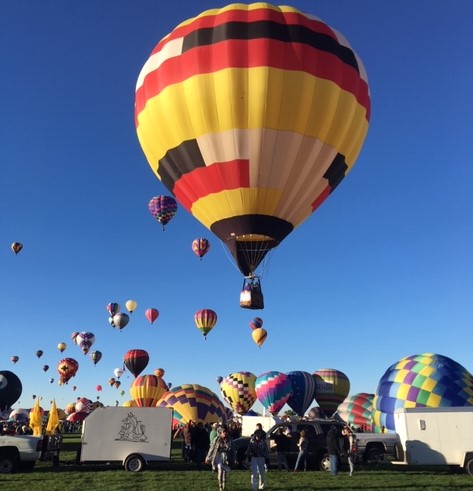
So here’s what I know about balloons, having flown them for almost 35 years. If you are flying one in the sky, it will be noticed. They move very slowly, they are unique from other aircraft and other items in the sky, they are spectacularly colorful (not the spy balloon) and they always attract attention. If you screw up and you crash a balloon, hit a neighbor’s fence with one land somewhere you shouldn’t, it will be noticed.

When I was considering purchasing the first hot air balloon promoting a bank in the United States, the vendor told us a story about how a balloon they manufactured flew over a major highway in an urban area with nothing more than a large telephone number displayed on the envelope of the aircraft. Within hours, hundreds of calls came into that number inquiring what the promotion was about. Balloons get noticed.

It’s no surprise that people in Montana and other states noticed the Chinese balloon, even though it was flying at an altitude far above where hot air balloons normally fly.

In the past, I’ve seen high altitude weather balloons where I live and largely dismissed them, thinking I knew what they were. In retrospect, maybe some were spy balloons.

Here’s another thing that occurred to me. In 1947, the U.S. Air Force reported the crash of an alien spacecraft near Roswell. Within a couple of days, the Air Force retracted the report and said what crashed was a weather balloon.

So now that we’re recovering debris from the “spy balloon” which China says was a “weather balloon,” is the U. S. military now recovering alien bodies from the debris field? I’m proud to stay I may have started this rumor, and hope others will pile on with equally silly suggestions.

And on a final note, when I asked my very good friend Don in Billings, MT, about whether he had spotted the spy balloon over his state, he said he had not. However, my other very good friend, Victor, suggested that it might have been me flying over Montana in my own balloon trying to get current (according to FAA regulations) and trying to spot a perfect fly fishing stream down below.

I have to confess, it was me.

Smelling your way around the USA…

I’m sure many of you saw recent news accounts that the New Mexico Legislature is considering legislation to make the scent of roasting green chile the state’s “official aroma.”

My first response is a big thank you to the lawmakers for giving me a wonderful topic for my blog.

My second response is amusement about how these proposals get hatched. If you’ll recall, New Mexico got national attention when it passed legislation declaring “Red or Green” the official state question. And of course, we have the bolo tie as the official state neckwear (even though Arizona also claims this sartorial appendage as its own official state necktie).

Me, roasting chile last fall with my own hand-cranked roaster and enjoying the smell.

At the time of this writing, I’m not sure how far this important piece of legislation has moved through the Legislature. I’m sure it’s getting as much attention as a bill which prohibits senators and representatives from consuming alcohol during important voting events during the session (yes, another post will be issued soon on that — again, thank you New Mexico Legislature for giving me great fodder for my blog.)

But here’s the question. If each state has their own “official aroma,” what would that be? A few are obvious:

  • Nebraska — Feedlot odors
  • Texas — Crude oil vapors
  • Arizona or Florida — Airborne notes of analgesic smeared on aging human joints
  • Nevada — Casino cigarette smoke
  • Maine — Various sea odors mixed with indistinct lobster smells
  • Oregon or Colorado — Marijuana smoke wafting through the air
  • Kentucky — Thoroughbred horse manure

I’m sure you have your own suggestions. I’d be glad to post them if you send them to me. In the meantime, enjoy what you’re smelling. But I hope whatever it is doesn’t trigger a sneezing attack like I’ve had the last couple of days from cedar and juniper pollen.