Open season on balloons???

I’m glad I’m not flying a hot air balloon these days — especially an all white one.

The recent shoot-down of four high altitude balloons by the U.S. Air Force over the U.S. and Canada made me wonder if some loose cannon might decide that any large orb seen floating in the sky might be fair game for target practice. I really doubt that will happen, but it certainly crossed my mind and I suspect it has crossed the minds of other hot air balloon pilots recently.

I didn’t fly it, but I worked with another pilot several years ago who had a solid white balloon. It was used in a television commercial that advertised a European fragrance called “Joop.”

The filming took place in the dunes at White Sands National Park (then just a National Monument). The balloon owner from California did logistical support for movies, television and video productions and shipped the balloon envelope to Alamogordo. Because of problems associated with shipping a balloon basket with propane tanks, he contacted me to see if he could borrow the basket from the balloon I was flying at the time that was compatible with his envelope. My late friend and fellow pilot Bob Haynes and I jumped at the chance to be on the set of a video production and drove our basket from Las Cruces to White Sands to assist with filming the commercial.

Illustration of what the all whitehot air balloon looked like.

The script for the commercial went something like this:

A beautiful woman is running away from her love interest because she wants to establish her freedom. She spritzes herself with “Joop” cologne, then hops into an illogically waiting hot air balloon and flies away across the White Sands to her freedom.

As you might expect on the set of any movie/video production, there was a lot of standing around and waiting, but it was all interesting. (We at least got a great lunch out of the deal). The balloon owner did inflate the all-white balloon and tethered it for the scene of the beautiful woman flying away to freedom. But in the end, the director decided to go with a close-up shot of the woman in the basket as it was lifted into the air by a hidden large fork-lift.

I got a VHS video tape of the commercial after it was produced, but I’m not sure I can find it anywhere.

However, if the guy from California still has that balloon, I suspect he’s keeping it out of the air these days.

And in conjunction with that, I found this on the Internet a couple of days ago. It was from a woman who claimed to have been following a suspicious all-white spy balloon for several miles over California, only to come to the realization that it was just a splotch of bird poop on her windshield.

Looks pretty suspicious to me.

Again, the Chinese spy balloon incident continues to provide endless comedic diversions.

Ends and odds…

As usual, New Mexico has been hijacked again.

With the kerfuffle surrounding the New Mexico State University basketball team this week, NBC and its various offshoots seem to have grabbed the wrong name and the wrong video when attempting to link the incident to the correct school.

Much to the chagrin of Lobo fans, the University of New Mexico’s name showed up in bottom-screen crawlers during TV newsfeeds about the incident. Then to add insult to injury, a video of Lobo players and the UNM basketball court showed up in stories the NBC group was proffering on its newscasts.

I’ll bet NBC never gets Michigan and Michigan State or Florida and Florida State mixed up when they do stories about those universities.

But as a UNM graduate but a converted Aggie fan, I’m okay that we stay under the radar as much as possible on this one.

And then last week I got the following in the mail from Progressive insurance.

Yeps that’s a saguaro cactus right next to the words “Land of Enchantment.” And no, Progressive, saguaros do not grow naturally in New Mexico. A green chile pod might have been a better icon.

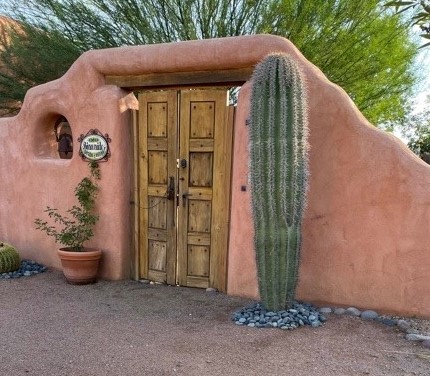
As I think I mentioned before, I have found two saguaro cacti growing in Las Cruces, both transplanted very close to heat absorbing southwest facing adobe walls. One of those is below.

A transplanted but stunted saguaro next to a warm southwest facing adobe wall in our neighborhood.

And finally, not related to our misplaced state, but to another rant I’ve made about the dearth of proofreaders.

Our ever watchful, detail oriented good friend Cheryl spotted this in a story about Lee Trevino in Golf Digest, a major publication about the sport. Here’s how the article quoted him:

“At the age of 22 I got out of the Marine Core.”

Beyond the lame use of Core for Corps, the quote should have had a comma after “22.” We must fight back against the impending death of the English language.

And for Pete’s sake, the Oxford comma is just dead wrong. Read Eats Shoots and Leaves Lynn Truss.

You just can’t get enough balogna from me…

Well, Mexican bologna is in the news yet again.

The first notable item occurred when President Biden visited El Paso last month to see what was happening with the large influx of migrants from Mexico, Central and South America. He spent a lot of time with U.S. Border Patrol Agents, and one of the things he was shown was the effectiveness of the service’s contraband sniffing dogs.

Contraband sniffing dog, ready to get to work.

The task they gave the dog was pretty lame, I thought. The pooch sniffed out a six-pound roll of Mexican bologna stashed in the trunk of a car. I mean really, our dog Chester can sniff out a cheese snack from 100 yards away. I think sniffing out six pounds of especially pungent processed meat is something most any dog could do without special training.

Anway, the story about Biden’s Mexican bologna encounter was part of a larger article on how USDA officials continue to be concerned about the large amount of that meaty concoction that crosses the border at El Paso and then makes its way up through New Mexico. An article in the El Paso Times said that although other ports of entry from Mexico to the United State seize shipments of bologna, the Border Patrol’s “El Paso field office is the only one that consistently reports large seizures of the lunch mean known in Spanish as salchichon.”

You may recall that this intrepid reporter was able to score Mexican bologna in Las Cruces last year and perform a taste test without getting busted by either Border Patrol or U.S. Customs agents. 

How the bologna I bought made its way into Las Cruces was not revealed, but stories about the lengths to which smugglers try to conceal the meat are pretty entertaining. Large rolls have been stuffed inside spare tires, under car seats and intermingled with underwear in suitcases.

Well, the latest trick to bring in bologna was pretty ingenious. Smugglers were able to find a loophole that if Mexican bologna was in a sandwich, it could not be confiscated. Their response was to slice six-inch thick slabs of the meat and stuff it between two pieces of bread and call it a sandwich.

Image result for baloney sandwich
Only about an inch thick — not in the same league as my proposed Subway six-incher.

I think I’ll recommend that Subway add the six-inch balogna stack to its menu.

Overly inflated…

I’m not going to get into the arguments that have erupted about the Chinese “spy balloon” in recent days. I will say it has created a treasure trove of comedic responses on both sides of the issue.

I’ll say that the one below made me laugh out loud the most.

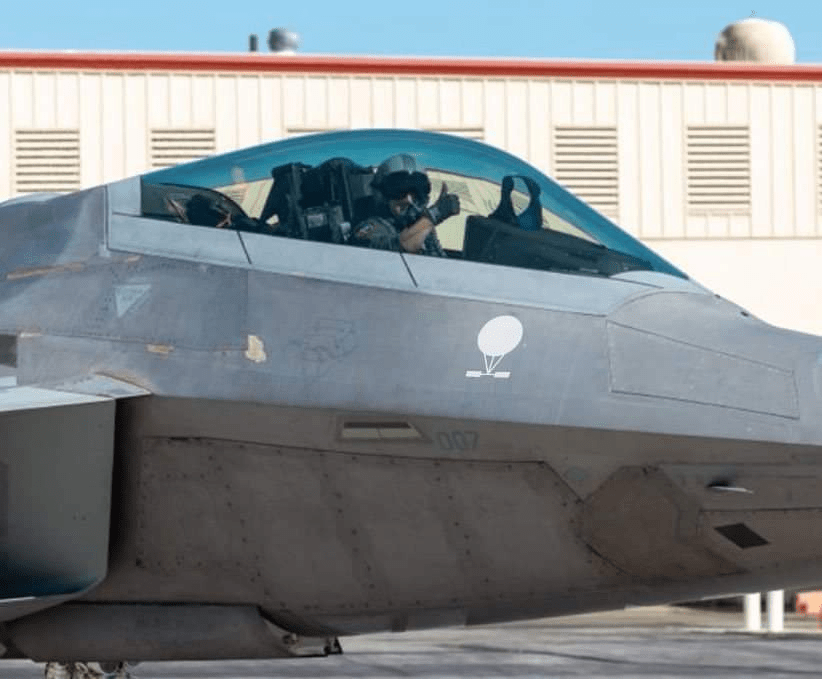
F22 Raptor marking its first balloon kill. And yes, it was Phtoshopped.

So here’s what I know about balloons, having flown them for almost 35 years. If you are flying one in the sky, it will be noticed. They move very slowly, they are unique from other aircraft and other items in the sky, they are spectacularly colorful (not the spy balloon) and they always attract attention. If you screw up and you crash a balloon, hit a neighbor’s fence with one land somewhere you shouldn’t, it will be noticed.

When I was considering purchasing the first hot air balloon promoting a bank in the United States, the vendor told us a story about how a balloon they manufactured flew over a major highway in an urban area with nothing more than a large telephone number displayed on the envelope of the aircraft. Within hours, hundreds of calls came into that number inquiring what the promotion was about. Balloons get noticed.

It’s no surprise that people in Montana and other states noticed the Chinese balloon, even though it was flying at an altitude far above where hot air balloons normally fly.

In the past, I’ve seen high altitude weather balloons where I live and largely dismissed them, thinking I knew what they were. In retrospect, maybe some were spy balloons.

Here’s another thing that occurred to me. In 1947, the U.S. Air Force reported the crash of an alien spacecraft near Roswell. Within a couple of days, the Air Force retracted the report and said what crashed was a weather balloon.

So now that we’re recovering debris from the “spy balloon” which China says was a “weather balloon,” is the U. S. military now recovering alien bodies from the debris field? I’m proud to stay I may have started this rumor, and hope others will pile on with equally silly suggestions.

And on a final note, when I asked my very good friend Don in Billings, MT, about whether he had spotted the spy balloon over his state, he said he had not. However, my other very good friend, Victor, suggested that it might have been me flying over Montana in my own balloon trying to get current (according to FAA regulations) and trying to spot a perfect fly fishing stream down below.

I have to confess, it was me.

Smelling your way around the USA…

I’m sure many of you saw recent news accounts that the New Mexico Legislature is considering legislation to make the scent of roasting green chile the state’s “official aroma.”

My first response is a big thank you to the lawmakers for giving me a wonderful topic for my blog.

My second response is amusement about how these proposals get hatched. If you’ll recall, New Mexico got national attention when it passed legislation declaring “Red or Green” the official state question. And of course, we have the bolo tie as the official state neckwear (even though Arizona also claims this sartorial appendage as its own official state necktie).

Me, roasting chile last fall with my own hand-cranked roaster and enjoying the smell.

At the time of this writing, I’m not sure how far this important piece of legislation has moved through the Legislature. I’m sure it’s getting as much attention as a bill which prohibits senators and representatives from consuming alcohol during important voting events during the session (yes, another post will be issued soon on that — again, thank you New Mexico Legislature for giving me great fodder for my blog.)

But here’s the question. If each state has their own “official aroma,” what would that be? A few are obvious:

  • Nebraska — Feedlot odors
  • Texas — Crude oil vapors
  • Arizona or Florida — Airborne notes of analgesic smeared on aging human joints
  • Nevada — Casino cigarette smoke
  • Maine — Various sea odors mixed with indistinct lobster smells
  • Oregon or Colorado — Marijuana smoke wafting through the air
  • Kentucky — Thoroughbred horse manure

I’m sure you have your own suggestions. I’d be glad to post them if you send them to me. In the meantime, enjoy what you’re smelling. But I hope whatever it is doesn’t trigger a sneezing attack like I’ve had the last couple of days from cedar and juniper pollen.

Looking for love without a GPS gizmo…

I recently wrote that a Bengal tiger found inside an apartment in Albuquerque was deemed not to have had enough proper credentials to be placed permanently in an American zoo. It almost seemed that the animal was expected to be carrying some kind of ID card with its proper credentials.

I mean really, even if the critter didn’t follow the rules, you could tell it was a tiger just by looking at it. I’d be glad to see it safely kept in a zoo, even if it didn’t follow the rules.

I theorized that might have been easier for the large cat to have been admitted to Harvard Law School than to get the proper clearance for a safe home at an American zoo.

Well now we have another wild animal in a predicament about not following the rules.

Mexican gray wolf,

The U.S. Fish and Wildlife Service recently reported that a member of the Mexican gray wolf population that was introduced in southwestern New Mexico several years ago had wandered north of Interstate 40 and was tracked as far north as Taos. The Fish and Wildlife Service has said that under the agreement to relocate the wolves in New Mexico, the animals were not to roam north of I-40.

The wolf known as Asha — a name given to her by schoolchildren — has an electronic collar which allows authorities to track her movement. The problem is that Asha doesn’t know exactly where she is and has not been given the proper equipment or training to track herself on a GPS device. Humans, however, seemed to know her every movement and eventually captured her somewhere north of I-40 and returned her to southwestern New Mexico.

Ranchers don’t care much for Mexican wolves because they believe they pose a threat to domestic livestock. Although I don’t know where you could find accurate information, I suspect that there are more cows north of I-40 in New Mexico than there are in the southwestern part of the state. So it’s just natural that wolves would want to go somewhere where they might have an easier time finding a snack.

Also, authorities say Asha may have been looking for a mate. You have to admit that traveling several hundred miles away from home is a sign that Asha was pretty lonely.

The bottom line is that Asha didn’t follow the rules — even if she didn’t know what they were — and is now back home pondering her next move.

I’m imaging a scene when Fish and Wildlife Service authorities were about to let Asha out of her cage and gave her a last-minute lecture on the error of her ways.

“Bad wolf! Bad wolf,” a sternly voiced Fish and Wildlife agent might have said. “Now you stay near home and don’t cross any highways. Remember what your mother told you when you were a pup — don’t cross any roads because you might get squished by a Ford F-150. And besides, it’s against the rules.”

Glad to be done with the lecture, I’m sure Asha dashed off into the wilderness the second the gate in her cage was opened. She’s probably not thinking about the rules but is pondering hooking up with that cute male wolf who wandered over from Arizona a couple of weeks ago.

The “hook” on chile…

“It ain’t worth the cook if it ain’t got that hook!– doo wah, doo wah, doo wah, doo wah
Doo wah, doo wah, doo wah, doo wah
.”

(with apologies to Duke Ellington)

I’ve run across a couple of articles recently on work done at New Mexico State University to bring back the original strain of flavor and heat consistency of the legendary “Big Jim” variety of New Mexico-grown chile.

Originally developed by chile guru Dr. Roy Nakayama at NMSU in 1975, the variety was known for its distinctive flavor, medium heat, size and thick “meat.” Unfortunately, over the years, the variety became diluted with repeated plantings and cross-pollination and lost some of its valued characteristics — flavor being the most important.

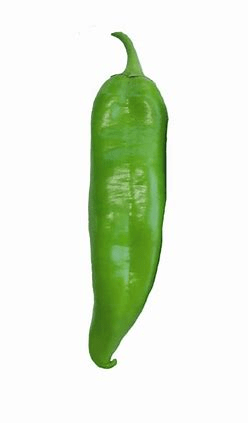
Notice the “hook” at the bottom of this Big Jim chile

Luckily, Dr. Paul Bosland of NMSU had assumed research work on chile started by Dr. Nakayama and his efforts have been instrumental in reviving the Big Jim variety, now known as “NuMex Heritage Big Jim.”

In 1975, seeds of the original Big Jim variety were stored at the National Center for Genetic Resources Preservation in Ft. Collins. Bosland was able to retrieve some of those seeds and began working at the NMSU Plant Science Research Center to re-create a variety as close as possible to the original Big Jim. By 2013, the new variety was available for commercial production. It still has all of the qualities of the original variety — size, thickness of meat, and taste. However, it is slightly hotter than the original Big Jim — not quite as hot as the Sandia variety, but enough heat to please the palates of the most discriminating chile connoisseurs.

I visited the New Mexico Chile Pepper Institute on the NMSU campus earlier this month to learn a little more about the variety and to also attempt to verify or debunk some “urban legends” about chile.

What was most interesting about Big Jim — both in the original and newer variety — is that they can easily be visually identified by a distinctive hook at the tip of the chile. Most other chile varieties have a sharp, rounded or even double pointsat the bottom of the pod.

I also asked about where in chile pods the “heat” is concentrated. Over the years, I had heard it was in the veins on the inside of the pod or in the seeds themselves. Turns out, it is mostly concentrated in the “placenta” of the chile — the whitish pithy part of the pod in the center of the top and surrounded by seeds. Because seeds are next to the placenta, heat often gets transferred to them, giving rise to the belief that the seeds were the culprit for chile heat.

I also had heard stories that chile grows hotter the long it is left in the freezer. Not so, says the Chile Pepper Institute. Barring freezer burn, chile left in the freezer has a long shelf life and its heat level will remain stable.

If you want more information on New Mexico grown chile, go to the Chile Pepper Institute’s website. There you’ll find lots of information about how each current strain was developed, a store to order chile nick nacks, salsas, books, other items and the seeds of many varieties. You can also become a member of the Institute for just $25, which I have done to stay on top of this fascinating part of New Mexico culture.

https://cpi.nmsu.edu/

I’ll be back with more stories about chile in the future, so stay tuned. And in the meantime, when you get depressed about New Mexico being at the bottom of lists measuring us against other states, remember, we are NO. 1 IN CHILE PRODUCTION in the United States.

Foaming at the front door…

Earlier this month, we discovered a large box on our front door mat that appeared to be leaking some sticky and high viscosity clear liquid.

Upon further investigation, we determined that it had been shipped by UPS from Sam’s Club. We were pretty sure it was an order we had placed for two refill jugs of hand soap.

When we opened the box, the packing material and the sides of the box had been soaked in leaking hand soap. At first, I suspected one of the jugs had been accidentally punctured during the shipping process.

Nope, that’s not what happened. It appears that at the time it was shipped, the cap on top of one of the jugs was very loose and fell off during shipping or was simply never attached at the time it was shipped.

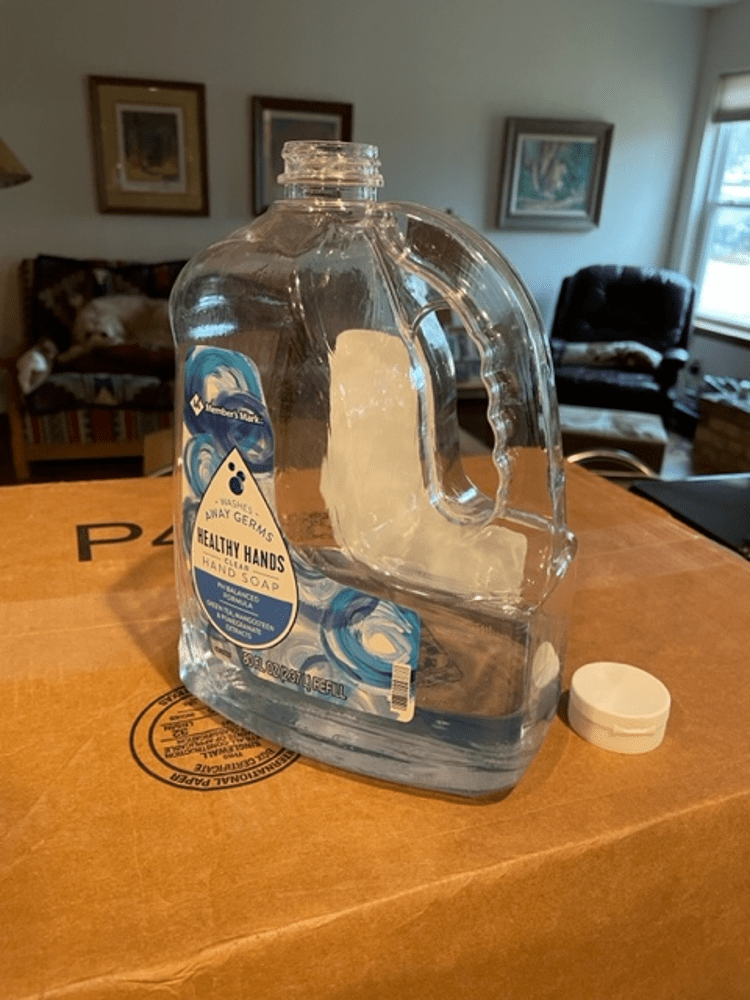
The offending jug, as it arrived at our home. More than 3/4 of the bottle had spilled before it got to our house.

I guess we’ll never know how the cap actually came off the jug. If it was just loose, I think a quick visual inspection of the product before it was placed in the shipping box would have prevented the spill. I guess no one had time to do that, even while stuffing packing paper around the jugs in the box.

At any rate, I think the jug began leaking almost immediately when it began its journey to our home. That means that when the UPS driver delivered it at our front door, he or she could clearly have seen that it was leaking. He or she seemed to not want to deal with the problem. However, I suspect the delivery person found a gooey mess inside the UPS delivery truck which probably got onto other packages delivered that day. It might have even dribbled all over the cargo hold of a UPS Boeing 777 aircraft before it was placed in the delivery truck. And yet, no one seemed to care. What it if had been some kind of really toxic liquid?

Once dropped off at our house, the soap leaked on to our very absorbent front door mat and I had to spray off as much as I could. It created an embarrassing sea of white foam in our front driveway which took at least half an hour to disperse. I don’t think I got all of it out, and I suspect the mat will continue foaming until we finally decide to pitch it in the trash.

I get that pushing stuff through the shipping process is a fast-moving and largely unappreciated job. But don’t you think that at least somewhere along the line, the packer or the UPS driver could have noticed that something was amiss? 

The good news is that Sam’s agreed to a refund of the entire order. So we got one full jug and one jug about 1/8th full for free. The compromised door mat, however, was not part of the refund equation. We’ll probably have many sleepless nights wondering if a white foam monster might appear at our front door when we step out to get the morning newspaper.. 


Cranky and slow…

Yes, that describes me these days, but I’m referring to something else. Read on…

I stumbled across a recent story about how the Union Pacific Railroad was instrumental in the development of the world’s first ski chairlift.

The chairlift was developed for use at the Sun Valley, ID, ski area which had been acquired by the Union Pacific as a destination resort along its vast east-west railroad system. The chairman of the UP at the time, Averill Harriman, thought the destination could lure more visitors by offering a safer, faster way to get skiers up the slopes. Up to that time, awkward tow ropes were the only uphill transportation at ski areas. He asked the railroad’s mechanical engineers to develop something new.

The first ski lift at Sun Valley, ID

What was interesting to me was that the actual development of the lift was done in Omaha, NE — not a place that you would expect to be the center of emerging ski technology. It was first tested in Omaha using the bed of a pickup truck to simulate the movement that a skier could expect when loading onto the chair. Even Harriman agreed to try out the design and found it acceptable.

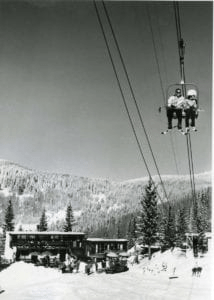
The story made me think about the first chairlift installed in New Mexico, at Santa Fe Ski Basin in 1949 by Ernie Blake, the New Mexico skiing pioneer from Germany who later developed Taos Ski Valley.

The lift, affectionately referred to as the “Old Red Chair,” was quite a contraption and I’m glad to say I rode it many times before it was eventually retired and then dismantled sometime in the late 1960s.

Santa Fe’s Old Red Chair, with original lodge in background

Since no company was fabricating chair lifts in large quantities at the time the Santa Fe Ski Basin was being developed, Blake concluded he would have to make his own lift.

Blake discovered that there was an abandoned cable ore carrier from a mine in Silverton, CO. He was able to acquire it, along with pilot’s seats from mothballed World War II vintage B-24 bombers. The seats were welded together in pairs, then attached to one of two cables used in the ore carrier. One cable was used to support the chairs and the other was used to move the contraption as it hauled skiers up a 2,600 foot route to the top of the mountain. The cables were apparently manufactured in 1888 by a famous steel maker in Sheffield, England. When it was determined they could be repurposed for use on the Santa Fe ski lift, the rust that accumulated on them over the years was removed and they were tested for strength and safety.

Because the lift was not originally designed to haul people, it had its share of idiosyncrasies.

To begin with, it was very slow and clunky. Many times the hauling cable would slide off its tracks, requiring those on the lift to be lowered down by ropes. The width of the cable tracks was very narrow, requiring some corrugated tin guards to be placed next to each lift tower so riders would not catch the tips of their skis in the open framework.

As a skier in my college days, I remember rides up the chairlift. You’d always expect multiple stops and starts as it moved you slowly up the mountain. I can remember the clunky noises it would make as it passed over the support towers. I remember how close you’d come to the towers on the way up and how you’d always try to get the outside seat of the two chairs so you’d avoid any accidental contact with structures. And you always breathed a sigh of relief when you had made it successfully to the top of the mountain.

The original lodge at Santa Fe, now midway up the mountain, still has a set of the original red bomber seat chairs. They’re great to sit in while sipping a beer after your last run down the mountain. But because there is no padding (there was never any to begin with), your butt can get kind of cold while you’re taking in the scenery.

You can find a story about the Old Red Chair and other early chairlifts in New Mexico on the Ski New Mexico website. I’ve posted a link below.

https://skinewmexico.com/?s=santa+fe+red+chair#

Only pedigreed tigers need apply…

I’m sure many of you have read or seen stories in the last couple of weeks about a real Bengal tiger cub that was found in a mobile home in Albuquerque during a drug investigation.

Although cute and cuddly for now, the wild animal will need to be placed somewhere safer and more appropriate as it grows into its natural wild animal persona.

Not your usual mobile home indoor pet…

When first discovered by Albuquerque police, the New Mexico Game and Fish Department was contacted about keeping the cub. As far as I know, there are no naturally occurring tigers in New Mexico, so it’s doubtful that the Game and Fish department had a lot of expertise in taking care of such an animal.

The next call was made to the Albuquerque Zoo, which had a temporary place for the cub.

But when asked if it could be placed permanently at the Albuquerque Zoo or some other zoo, officials at that facility said that “because the genetic lineage of the animal is unknown, it will not be placed in a zoo accredited by the Association of Zoos and Aquariums.”

That makes it sound like it might be easier for the critter to get into Harvard Law School than to find a safe place to live in one of hundreds of zoos across the United States.

There is an addendum to the story. Albuquerque police were tipped off about a tiger living in an apartment in the city last summer but could never find it. Based on the information they had at that time, police do not feel the cat found earlier this month is the same animal. That means, Albuquerque residents, that a tiger may still be lurking around your neighborhood.

In the meantime, I hope the still missing tiger is working on perfecting its genetic lineage record, its resume and other credentials so that it might have an easier time getting into an “accredited” zoo if and when it is captured.

Waiting for Nicholas Cage to appear…

On our morning walk with our dog last week, I came across this odd posting in a concrete culvert that is part of our local irrigation canal network.

“NIC WAS HERE” and what appears to be a photograph of actor Nicholas Cage

It appears to suggest that actor Nicholas Cage was somewhere in our neighborhood and posted a picture of himself on the concrete wall of the irrigation ditch box. The picture was attached to the concrete with what appeared to be black electrical tape. A closeup is below. 

Closeup of the photograph taped on the concrete wall

We’ve found weird things in our neighborhood in the past, some of which I’ve written about in this blog. There was an abandoned pair of serviceable cowboy boots along an irrigation ditch beside a rock wall about three years ago. That same year, there was a 1977 Camaro that had been stripped in broad daylight in a field just off a busy road. We’ve found a sea of sparkling glitter along another section of the ditch road. 

Those might be explained fairly easily. This one, however, is not so easy to decipher. As far as I know, Cage has never been to Las Cruces to film a movie. He might have passed through on Interstate 10 on his way from somewhere down south to Hollywood, but I really doubt he stopped long enough to post pictures of himself around town — especially in an irrigation ditch. 

I Googled “Nicholas Cage in Las Cruces, NM,” but got nothing.

I did check to see if he has filmed anything in New Mexico and came across a May 2018 article in the Albuquerque Business First publication saying he was scheduled to film a movie entitled “Running with the Devil” in the Albuquerque area later that year. The movie, released in 2019, co-starred Laurence Fishburne in a plot involving a drug smuggling operation. 

If he somehow snuck down here to post his picture and graffiti tag an irrigation ditch box at that time, I doubt it would have survived almost four years of harsh weather. My wife said she and our son had spotted the “posting” on the ditch box around Christmas, so it’s weathered a few rainstorms since then.

I am at a loss about what to think about this. Is it the work of a deranged stalker fan who wishes Cage would actually come here? Is Cage just trying to randomly goof on people in Las Cruces.? Was he the guy who left his cowboy boots on the irrigation ditch road a couple of years back and is now wanting them back?

I’ll leave this for you, dear readers, to offer a suggestion. 


I’ll pick my own words, thank you…

When spell check first appeared on the scene of electronically enabled writing, there were some major learning hurdles that the programs had to sort out.

Local or regional words were especially confusing to the programs. For example, when I would type in the word Mogollon, the program would offer such corrections as “Mongolian,” “moron” or “moose gallon.” For my street, Capri Road, I once got “Carp River.” And of course, this one still comes up: when you type in the name of the most famous New Mexico Christmas decoration, luminarias, the word processor always wants to change it to “luminaries, ” a word that I doubt many people use these days.

Now, Word Press, my platform for my web page and blog has started filling in entire words for what it thinks I should write next. For example, it just wanted me to say “for example” three times when I started this sentence. And it wanted “me to” use the word “sentence.”

Aaarrrgh!!! (No suggestion for that word, thank you, Word Press).

I suspect there is a toggle somewhere in the system that allows me to turn off that feature. It’s becoming more and more intrusive as I write. I suppose I could just ask it to write an entire blog for me, starting with a single word: “annoying.”

In the meantime, it makes me worry that we are all being dumbed down by technology. We don’t have to know how to spell any more. We don’t have to go to reference books in libraries to find information. We can just mumble some generic words into our TV remote or watch to find something that we want to see or hear, even if an Artificial Intelligence algorithm completely misses our intention.

Andy Rooney, of the CBS 60 Minutes TV show

I know, I sound like a current day Andy Rooney, who was notorious on his TV segment on CBS’s “60 Minutes” for speaking his mind on a variety of subjects in a populist kind of way. He got in trouble for some of the things he said, but many of them rang true.

In my opinion, his best comment, especially pertinent today was:

“People will generally accept facts as truth only if the facts agree with what they already believe.”

I wish he was still around. I think he’d have some interesting things to say about what is going on in politics these days. And I wish Word Press would stop trying to tell me how to write.

Ay Chihuahua!!!

Let me begin this post by saying I am not a fan of Chihuahua dogs. I’ve been bitten, barked at, charged, herded and growled at many times by the breed. A friend of ours in the neighborhood once told me that the canine breed most likely to bite a human is a Chihuahua. They just seem to have been born grumpy.

And to prove my point, this story showed up yesterday in the Hartford (CT) Courant newspaper. The local animal shelter is waiving an adoption fee for an ill-tempered four-pound Chihuahua named “Pixie” who “doesn’t like men, children or affection except on her own terms.” A Facebook post about the dog said: “She will hate you AND expect her dinner to be served on time.”

But it was sad to read in last week’s Albuquerque Journal about 64 Chihuahua dogs who had been rescued after a van transporting them had collided with a large truck near Vaughn, NM. Police said they believed as many of 110 of the dogs were in the van. Of those, 18 were killed outright, 64 were rescued and the others escaped, no doubt to become snacks for area coyotes.

Police said it was likely the dogs were coming from a “puppy mill” because of the poor condition of many of the animals. My hope is that the operators of the Chihuahua puppy mill, along with the people who were transporting them, get arrested, convicted and sentenced with cleaning up dog poop in animal shelters for the rest of their lives. In the meantime, the East Mountain Companion Animal Project has set up a GoFundMe account to help the animals and arrange for their adoption. You can go to the site at:
https://gofund.me/8cfa0b77

I think certain people like Chihuahuas because they are small and easily portable, fiercely loyal to their owners and provide some degree of protection.

Bruiser Woods, Reese Witherspoon’s Chihuahua in the movie ” Legally Blonde”

Unlike Reese Witherspoon’s pet Chihuahua, Bruiser Woods (real name Moondoggie) in the movie “Legally Blonde,” our dog Chester is not “easily transportable.” And he’d just as soon beg for a treat from an intruder than protect us.

Chester (at a fluffy70 pounds) can’t be easily hoisted into a handbag. Not only is he big, but his legs flail around wildly when anyone tries to pick him up. He also takes up the entire back seat of our pickup truck or the back of our SUV when we travel and commandeers our entire couch when he wants to relax — which is a good part of his every day routine.

Chester, in one of his favorite locations in our house

Even so, I’d take him over a Chihuahua any day. But I do hope the Chihuahuas from the traffic accident near Vaughn find happy homes — even if they love to hate their new owners.

Gators in Lake Mead…

I read, with equal doses of amusement and astonishment, an op-ed piece in the Albuquerque Journal a few weeks ago about one man’s idea to build a pipeline from Lousiana to Lake Mead to transport water from the Mississippi to the Colorado River basin.

The plan, put forward by a retired engineer from California, suggested water could be piped almost 1,500 miles across Louisiana, Texas, New Mexico, Arizona and Nevada to fill up Lake Mead in just 254 days. Since the water would come from an old river control structure intended to reduce flooding risk in the Mississippi delta, no one — except a lot of migratory birds — would really miss the water.

The pipeline would be tasked with pumping 250,00 gallons of water per second through an elevation gain of at least 5,000 feet (my conservative estimate) to get from a spot about 200 miles north of New Orleans to Lake Mead. In my estimation, that would be a large enough section of pipe that could suck lots of alligators — not to mention jillions of crawdads, water moccasins and other slimy swamp critters — into a hugely popular recreational lake on the Colorado River.

Environmentalists who have heard of the plan are immediately calling “fowl,” since it would displace a lot of migratory bird habitat. Maybe those birds could divert their winter route and end up spending time on the shores of Lake Mead while occasionally making a trip to the Flamingo Hotel in nearby Las Vegas for R & R.

Then, of course, there’s the big question of how much it would cost, who is going to pay for it and how long it would take. One story I read suggested that the litigation involved in securing a right of way for the pipeline, disputes over water rights, challenges by environmental group and just general public grumpiness could take 30 years to resolve. By that time, Lake Mead probably would likely have deteriorated into a big stinky mud put — but at least without alligators.

So here’s my alternative. We’ve read recently about the impending separation of a big chunk of shelf ice from Antartica. Maybe we could employ fracking techniques used by oil producers to bust up the ice shelf in manageable chunks, load them aboard a fleet of aging Boeing 747s (they’ve stopped making new ones and there bunches of them mothballed in the Arizona desert) and then fly to Lake Mead and drop the mini-iceburgs into what’s left of the reservoir. I estimate it would take 3,769 flights to raise the level of the lake by 10 feet (okay, I wasn’t a whiz in math at school).

The only danger I see is that you might end up with colonies of penguins waddling along the shore of the lake.